 Save
Save The first time I assembled a proper Turkish meze platter, I was trying to impress someone at a dinner party and ended up learning far more than I expected. My kitchen filled with the smell of tahini and lemon as I whisked together hummus while my neighbor stopped by—she took one look at the spread and asked if I'd learned to cook in Istanbul. I hadn't, but that platter taught me something crucial: the beauty of Turkish food isn't in complicated techniques, it's in honest ingredients arranged with care. Ever since, whenever I want to create something that feels both effortless and special, I return to this one.
I remember setting this platter down at a friend's birthday dinner on a warm September evening, and what struck me most wasn't the compliments—it was watching people instinctively reach for it over and over. Someone grabbed a piece of kasseri, then a dolma, then circled back for more hummus. There's something about the variety and the way the flavors build together that makes people linger longer than they expect to.
Ingredients
- Chickpeas (1 can, 400g): The heart of your hummus—always rinse them well to remove that starchy liquid that makes the texture grainy instead of silky.
- Tahini (2 tbsp): This is where the magic lives, but use good quality or it tastes bitter; store it in the fridge after opening.
- Extra-virgin olive oil: Use it generously here and as a drizzle at the end—it's not a luxury, it's essential to the flavor.
- Garlic (1 clove): Mince it finely so it distributes evenly; you can always add more but you can't take it back.
- Fresh lemon juice (2 tbsp): Squeeze it fresh—bottled changes the whole character of the dish.
- Ground cumin (1/2 tsp): Toasting it lightly in a dry pan before adding brings out a warmth you can't get from the jar.
- Salt and pepper: Taste as you go; hummus is forgiving but underseasoned hummus is forgettable.
- Stuffed grape leaves (12): Store-bought is perfectly respectable—look for ones that feel tender when you open the jar, not hard.
- Feta cheese (100g): Crumbly, salty, the anchor of any Turkish cheese board.
- Beyaz peynir or extra feta (100g): If you can find it, beyaz peynir has a creamier texture that contrasts beautifully with the crumbly feta.
- Kasseri or halloumi (100g): This one has a higher melting point, so it holds its shape and gives you textural variety.
- Mixed Turkish olives (100g): Buy them from a good source if you can; they should smell briny and taste complex, not one-dimensional.
- Cucumber: Slice it just before serving so it stays crisp and cool.
- Tomato: Choose one that's ripe but still firm enough to slice without falling apart.
- Lemon wedges and fresh parsley: These aren't decoration—they're flavor and brightness that tie everything together.
- Warm pita or flatbread: Warm it just before serving; cold pita is one of the small disappointments in life.
Tired of Takeout? 🥡
Get 10 meals you can make faster than delivery arrives. Seriously.
One email. No spam. Unsubscribe anytime.
Instructions
- Build your hummus base:
- Drain and rinse your chickpeas, then add them to a food processor with tahini, olive oil, minced garlic, fresh lemon juice, cumin, salt, and pepper. Pulse first to break everything down, then blend steadily until the mixture goes from chunky to creamy—this takes longer than you'd think, usually 2-3 minutes of actual blending. Taste it; if it needs more lemon, add it a half-tablespoon at a time.
- Finish the hummus with style:
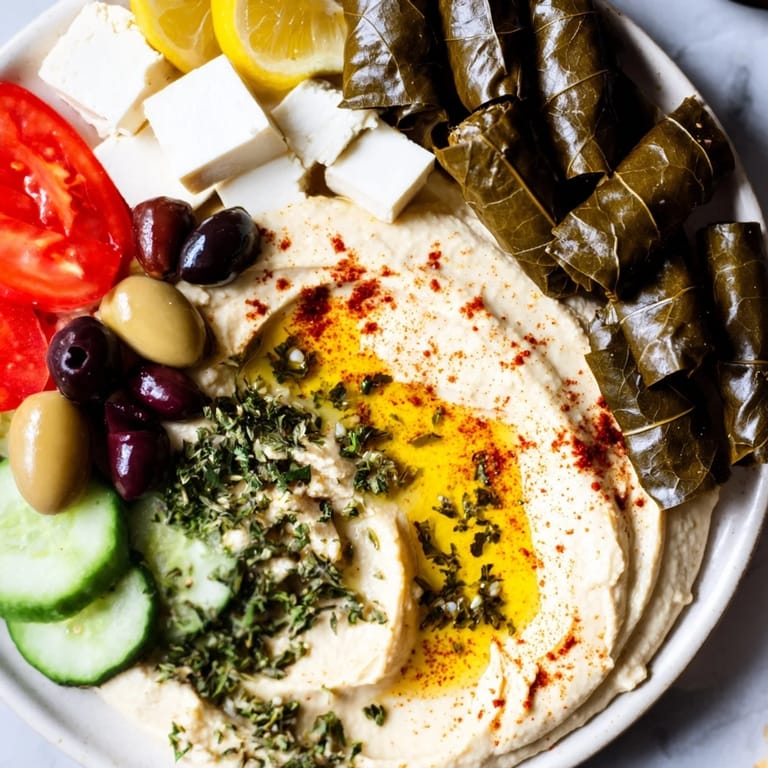
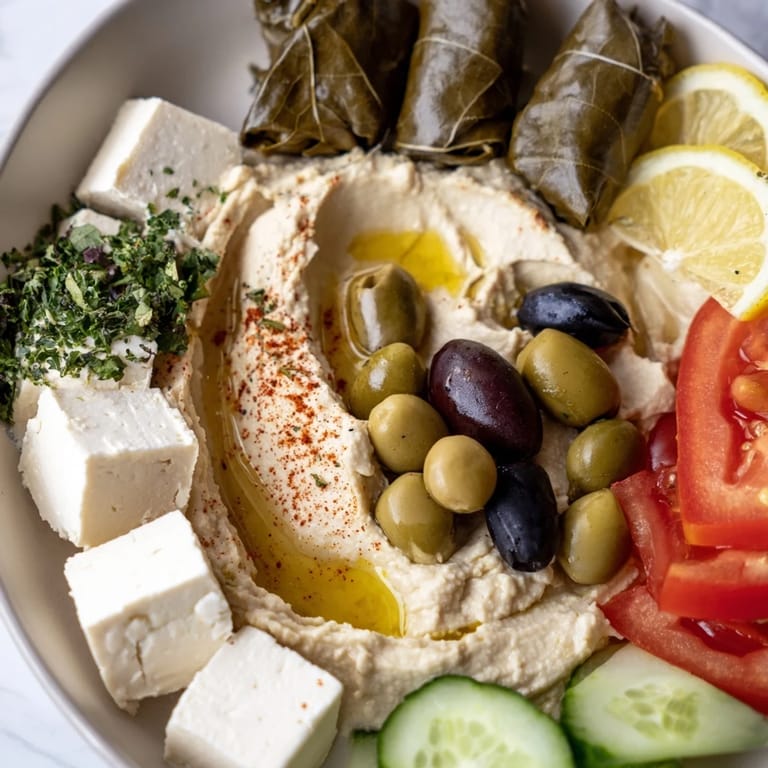
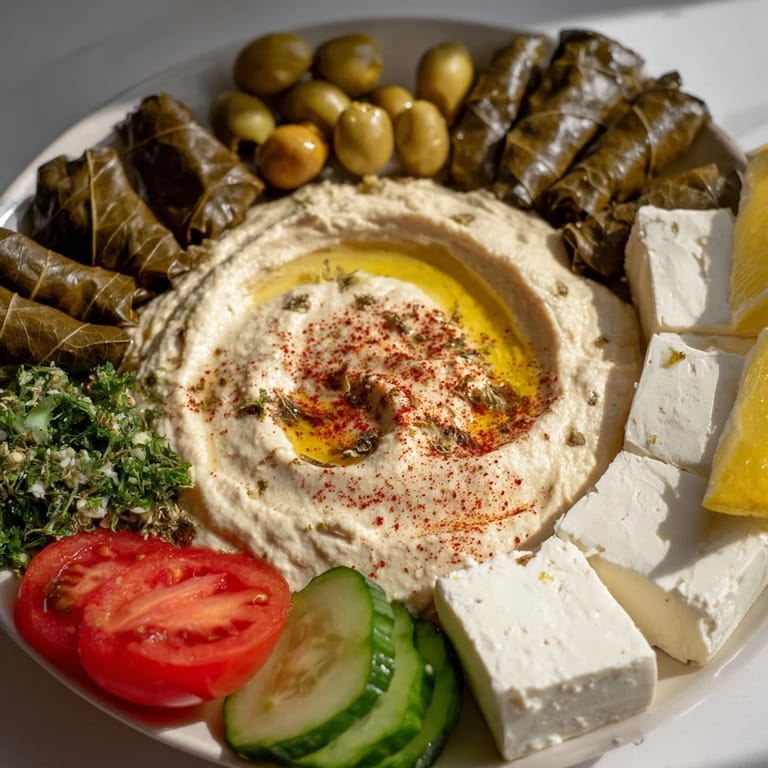
- Transfer your hummus to the serving bowl and drizzle with a little more olive oil, then dust lightly with paprika or sumac if you have it. This isn't just for looks—it adds a hint of color and a subtle warmth that changes how people experience it.
- Arrange the dolmas:
- Unwrap your stuffed grape leaves gently and place them seam-side down on the platter, arranging them in a little cluster or a gentle line depending on your mood and the shape of your platter.
- Cut and group your cheeses:
- Cut each cheese into bite-sized pieces—roughly 1-inch cubes or smaller—and create little groups on the platter so people can see the contrast between the crumbly feta, the creamy beyaz peynir, and the pale yellow kasseri.
- Season and place the olives:
- Toss your olives with a tablespoon of good olive oil and the dried oregano, giving them a gentle shake so the oil and herb coat everything evenly. Nestle them into a small bowl or scatter them across the platter where they'll catch the light.
- Build the color with fresh elements:
- Slice your cucumber and tomato, arrange them around the platter, add lemon wedges, and scatter fresh parsley over everything. The freshness of these elements matters—they're not just garnish, they're palate cleansers.
- Warm and serve:
- Cut your pita into triangles and warm it gently—either in a low oven for a few minutes or wrapped in a clean kitchen towel—then arrange it alongside. Serve everything at room temperature except the pita, which should be still warm enough that people want to eat it.
 Save
Save What I love most about this platter is how it turns eating into conversation. People slow down around it, they ask each other questions, they try things they might not have tried alone. It became the centerpiece of how I think about hospitality now—not about impressing, but about creating a moment where everyone feels welcomed.
The Story Behind Turkish Meze
Meze isn't just appetizers in Turkish food culture—it's a philosophy. It's about sitting down with others, about sharing small bites that are meant to linger and be savored rather than rushed. The tradition comes from centuries of hospitality in the Mediterranean and the Ottoman kitchen, where abundance and variety were signs of respect and joy. When you create a meze platter, you're not just serving food; you're inviting people into that same tradition of togetherness.
Making It Your Own
This platter is a template, not a rulebook. I've added roasted red peppers when I had them, scattered some spiced walnuts for crunch, included grilled eggplant when I wanted earthiness. The core—hummus, cheese, olives, dolmas—stays consistent, but the edges shift based on what's in your kitchen and what you're in the mood for. That's the beauty of meze: it's generous enough to accommodate your whims while still feeling intentional.
What to Drink Alongside
A crisp white wine like Turkish Narince works beautifully, or if you want something bolder, raki with a splash of water and ice creates that classic pairing. Even a simple sparkling water with lemon feels right alongside this platter because the goal isn't to overwhelm—it's to complement and refresh between bites. The drink should taste like friendship, not competition.
- Chill your wine glasses for 15 minutes before serving so the first sip tastes as good as it should.
- If you're serving raki, dilute it with water to about half strength—this is traditional and it actually makes the flavors more interesting.
- Even without alcohol, fresh lemon water or herbal tea pairs beautifully with the richness of the cheeses and hummus.
 Save
Save This platter has taught me that some of the best moments in the kitchen come from doing less, not more. Let the ingredients speak, arrange them with care, and trust that good food surrounded by good people needs nothing else.
Recipe FAQs
- → What ingredients are essential for a Turkish meze platter?
Key ingredients include creamy hummus, stuffed grape leaves (dolmas), a variety of tangy cheeses such as feta and kasseri, marinated olives, and fresh garnishes like cucumber and tomato slices.
- → How can I prepare hummus for this platter?
Blend chickpeas with tahini, olive oil, garlic, lemon juice, cumin, salt, and pepper until smooth. Adjust seasoning to taste and drizzle with olive oil before serving.
- → Are store-bought dolmas acceptable for this spread?
Yes, ready-made stuffed grape leaves can be used to save time, but homemade dolmas add a fresh, personalized touch to the platter.
- → What bread pairs well with the meze platter?
Warm pita or flatbread cut into triangles complements the flavors and textures, ideal for scooping hummus and assembling bites.
- → Can this platter accommodate dietary preferences?
This selection is vegetarian-friendly, focusing on plant-based ingredients and cheeses. Adjustments can be made according to specific dietary needs.
- → What drinks complement the Turkish meze platter?
Crisp white wines such as Turkish Narince or traditional raki enhance the rich and varied flavors featured in the platter.