 Save
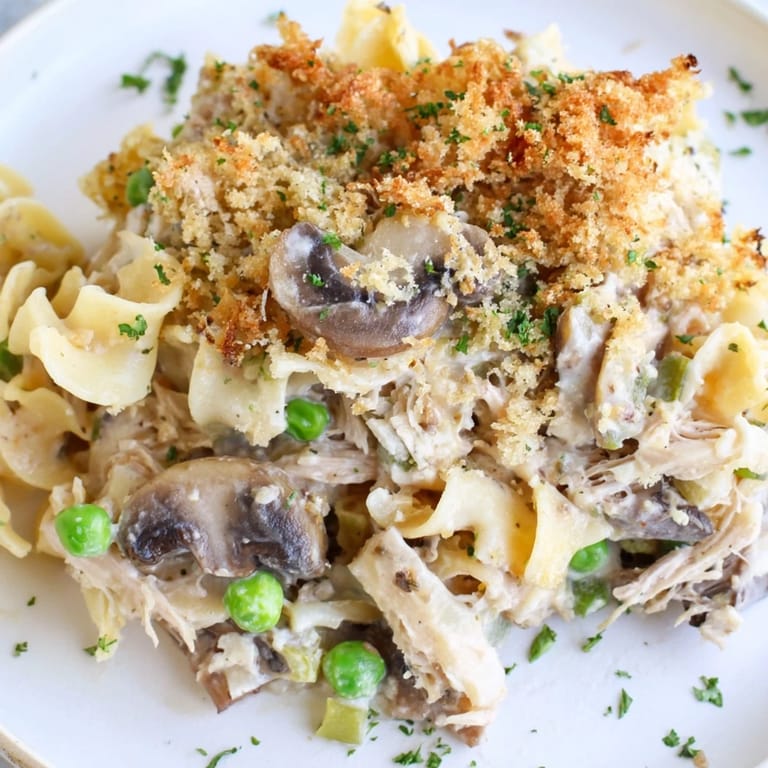
Save My mom's old tuna noodle casserole sat in rotation for years, but there came a moment when I wanted to bring it into the present. I remembered the mushy texture, the one-note flavor, and thought: what if we made this creamy, textured, genuinely delicious? The answer surprised me—it didn't need reinvention, just respect for better ingredients and a little technique. Now when I make this version, the kitchen fills with the smell of caramelized mushrooms and a buttery cream sauce, and I know we've created something worth passing down.
I made this for a Tuesday night dinner with friends who'd been eating takeout all week, and I watched their faces when they took the first bite—they didn't expect homemade tuna casserole to taste like this. One friend went back for seconds and admitted she'd written off this dish years ago. That's when I knew the recipe had crossed over from nostalgic to genuinely good.
Ingredients
- Egg noodles (12 oz): Choose a good quality brand that holds its shape; budget noodles turn to mush in the oven and ruin the whole dish.
- Solid white tuna (two 5 oz cans): The solid pack matters more than you'd think—it gives you actual chunks instead of shreds, which makes the dish feel less mushy.
- Frozen peas (1 cup): Keep them in the freezer until the last minute; they add sweetness and color without disappearing into the sauce.
- Cremini mushrooms (1 cup): These brown mushrooms develop a deeper, earthier flavor than white mushrooms when sautéed, and they don't disappear in the bake.
- Yellow onion and celery (1 small onion, 1 cup): This is your flavor base; don't skip the time to soften them properly or the casserole tastes thin.
- Garlic (2 cloves): Minced fresh garlic adds a sharp note that keeps the cream sauce from feeling one-dimensional.
- Unsalted butter (5 tbsp total): Use real butter; it carries flavors better than oil and makes the roux silky.
- All-purpose flour (3 tbsp): This is your thickening agent; whisk it in slowly to avoid lumps.
- Broth and milk (2 cups broth, 1 cup milk): Low-sodium broth lets you control the salt, and whole milk creates a richer sauce than cream alone.
- Sour cream (1/2 cup): Add this off the heat to prevent curdling; it adds tang that balances the richness.
- Dijon mustard (1/2 tsp): This small amount doesn't make the dish taste mustard-y; it amplifies the savory notes beneath.
- Panko and parmesan topping: The panko stays crispier than regular breadcrumbs, and the parmesan brings a salty, nutty finish.
Tired of Takeout? 🥡
Get 10 meals you can make faster than delivery arrives. Seriously.
One email. No spam. Unsubscribe anytime.
Instructions
- Prepare and preheat:
- Get your oven to 400°F and grease your 9x13 baking dish while it heats up. This step takes thirty seconds but makes sure nothing sticks.
- Cook the noodles:
- Drop them into salted boiling water and pull them out just before they feel fully tender—they'll continue cooking in the oven. Undercooked is better than soft.
- Build your vegetable base:
- Melt butter in your skillet and let the onion and celery soften for a full three minutes; this releases their sweetness. Then add mushrooms and let them cook undisturbed for a moment so they brown instead of steam.
- Make the roux and sauce:
- Sprinkle flour over the vegetables and stir constantly for a minute or two to cook out the raw flour taste. Then slowly pour in broth while whisking—this prevents lumps from forming. Add milk and let it simmer until the sauce coats the back of a spoon.
- Add the cream and seasoning:
- Remove from heat before stirring in sour cream; heat can break it and make it grainy. The Dijon mustard goes in here too—just a half teaspoon, but it makes the whole thing taste more savory.
- Fold everything together:
- Add tuna, peas, and noodles gently; you want them distributed evenly but not broken apart. The noodles will absorb some sauce as it sits, which is fine.
- Assemble the topping:
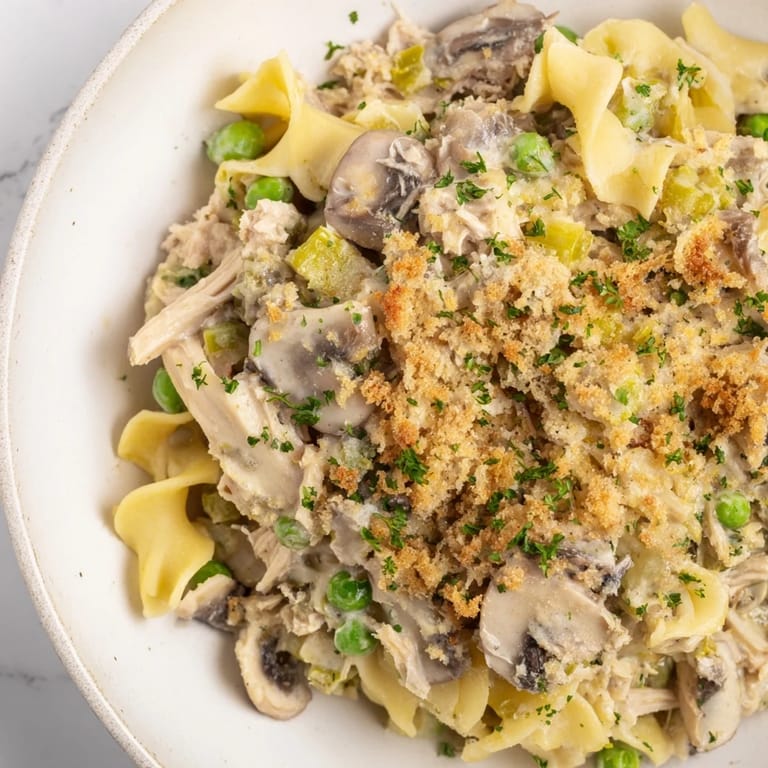
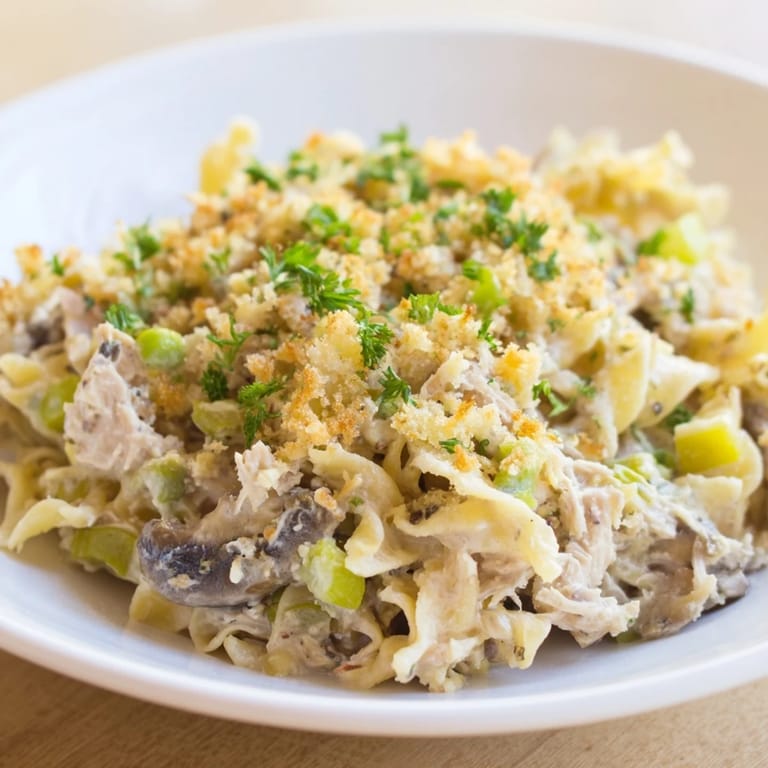
- Mix panko, parmesan, and melted butter in a small bowl until it looks like wet sand. Spread it over the casserole and it'll bake into a crispy, golden crust.
- Bake and rest:
- Twenty to twenty-five minutes at 400°F; you're looking for golden panko and bubbling sauce around the edges. Let it stand for five minutes so the sauce sets slightly and makes serving cleaner.
 Save
Save I learned something unexpected while testing this recipe: my partner, who grew up thinking he hated tuna casserole, asked for the recipe. Not to make it himself, but to cook it together. That's when I realized this dish had moved beyond food and into the territory of shared moments—the kind where standing over a hot stove with someone else feels like the whole point.
Why This Works as Comfort Food
Tuna casserole occupies a strange space in American cooking: nostalgic enough to feel safe, but easy enough to overlook. What makes this version different is that we're not pretending it's something fancy. We're just taking time with the vegetables, using real cream instead of cream-of-something soup, and letting the tuna taste like actual fish instead of an afterthought. The crispy top gives you textural contrast, the mushrooms add umami depth, and the whole thing comes together in the time it takes to watch a show. That's when comfort food works best—when it's made with care but doesn't demand your entire evening.
Building Flavor Layer by Layer
The magic in this casserole happens while the vegetables are cooking. When you let the onion and celery soften first, their natural sugars caramelize slightly, creating a sweet base note. Then the mushrooms brown, adding an earthy savory depth. By the time you add the garlic, you're not starting with raw flavors; you're building on layers that have already developed. The sour cream and mustard that go in at the end aren't meant to taste prominent—they're just there to balance the richness and remind your palate that yes, this came from the ocean. It's a technique borrowed from French cooking, applied to American comfort food, and it changes everything.
Serving and Pairing Ideas
This casserole is substantial enough to stand on its own, but it loves company. A simple green salad with lemon vinaigrette cuts through the richness; a crisp white wine like Sauvignon Blanc echoes the acidity and brightens the fish. If you're feeling bold, add a handful of sharp cheddar or gruyère to the sauce before baking—it deepens without overwhelming. The leftovers actually improve the next day as the flavors marry, making this a perfect dish for meal prep or feeding a crowd.
- Serve with crusty bread to soak up every drop of sauce.
- A simple arugula salad with lemon dressing keeps the plate from feeling heavy.
- This freezes beautifully before baking, so assemble it ahead and bake when you need it.
 Save
Save This is the kind of recipe that reminds you why home cooking matters—not because it's complicated or impressive, but because it transforms simple ingredients into something that nourishes and brings people together. Make it for someone you care about.
Recipe FAQs
- → What type of pasta works best here?
Egg noodles hold the sauce well and offer the ideal texture for this dish.
- → Can I use fresh tuna instead of canned?
Fresh tuna can be used but may require different cooking times and preparation to maintain tenderness.
- → How do I achieve a crispy topping?
Mix breadcrumbs with grated parmesan and melted butter, then bake until golden brown for a crunchy finish.
- → Is it possible to add extra cheese?
Yes, incorporating shredded cheddar or gruyère into the sauce adds richness and depth of flavor.
- → What sides pair well with this dish?
Light salads or steamed green vegetables complement the creamy and hearty casserole nicely.
- → Can I substitute sour cream here?
Greek yogurt offers a lighter alternative without compromising creaminess.