 Save
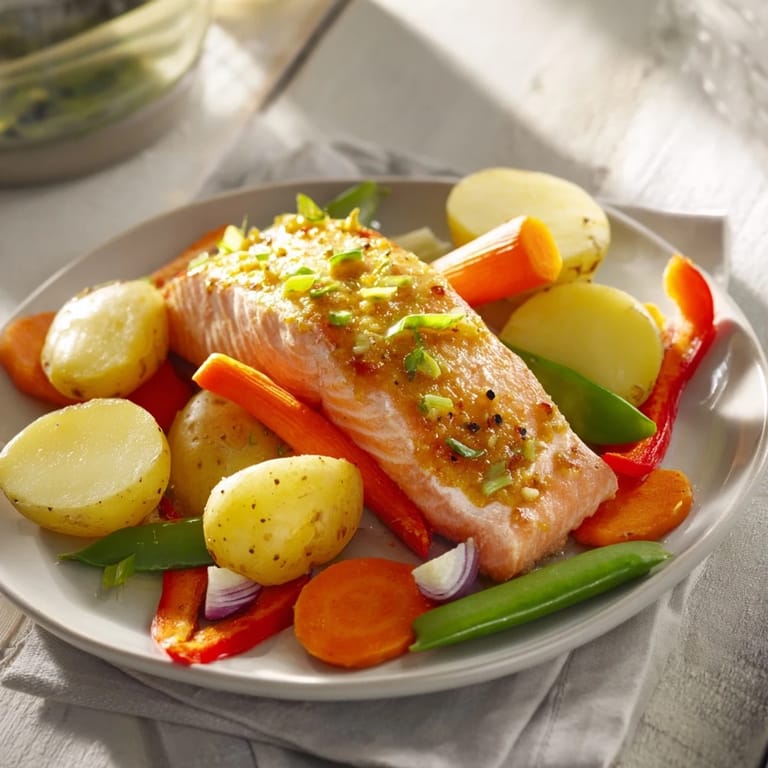
Save I used to think baking fish meant fussy timing and a sink full of pans. Then one rainy Tuesday, I tossed salmon and vegetables onto a single tray, brushed everything with honey mustard, and slid it into the oven. Twenty minutes later, the kitchen smelled like caramelized edges and bright lemon, and I had dinner without the usual chaos. That night taught me that the best meals don't need complicated steps, just good ingredients and a hot oven.
I first made this for friends who claimed they didn't like salmon. I watched them scrape their plates clean, chasing the last bits of caramelized onion and sauce-soaked potato. One of them asked for the recipe before she even set down her fork. That's when I knew this dish had earned its place in my regular rotation.
Ingredients
- Salmon fillets: Choose fillets that are evenly thick so they cook at the same rate, and pat them dry before brushing with sauce to help it cling.
- Baby potatoes: Halving them means more golden cut sides and faster roasting, and they soak up the mustard drippings beautifully.
- Carrots: Slicing them into sticks instead of rounds gives you more surface area for caramelization and a satisfying crunch.
- Red bell pepper: It turns sweet and slightly charred in the oven, adding pops of color and flavor to every forkful.
- Red onion: Cutting it into wedges keeps the layers intact so they soften without falling apart, and they turn jammy at the edges.
- Green beans: Trimming the ends is the only prep they need, and they stay bright and tender without turning mushy.
- Dijon mustard: This is the tangy backbone of the sauce, sharp enough to balance the honey without disappearing.
- Honey: It caramelizes as it bakes, giving the salmon a glossy finish and a hint of sweetness that makes the whole tray shine.
- Wholegrain mustard: Optional, but the little seeds add texture and a gentle pop of flavor that keeps the sauce interesting.
- Lemon juice: A squeeze of brightness that cuts through the richness and makes everything taste more alive.
- Garlic: Minced fine so it melts into the sauce, adding warmth without overpowering the delicate fish.
- Dried thyme: A subtle herbal note that feels earthy and familiar, tying the vegetables and salmon together.
Tired of Takeout? 🥡
Get 10 meals you can make faster than delivery arrives. Seriously.
One email. No spam. Unsubscribe anytime.
Instructions
- Preheat and prep:
- Heat your oven to 200°C and line a large baking tray with parchment paper. This simple step prevents sticking and makes cleanup a breeze.
- Toss the vegetables:
- In a large bowl, coat the potatoes, carrots, bell pepper, onion, and green beans with olive oil, salt, and pepper until everything glistens. Spread them in a single layer on the tray so they roast evenly and develop golden edges.
- Give the vegetables a head start:
- Roast the vegetables alone for 10 minutes to soften them slightly. This ensures they finish cooking at the same time as the salmon without drying out the fish.
- Make the honey mustard sauce:
- Whisk together Dijon mustard, honey, wholegrain mustard, lemon juice, olive oil, garlic, thyme, salt, and pepper in a small bowl. The sauce should taste tangy and sweet with a hint of warmth from the garlic.
- Add the salmon:
- Pull the tray from the oven and nestle the salmon fillets among the vegetables, then brush each fillet generously with the sauce. Save a little sauce for drizzling at the end so every bite stays glossy and flavorful.
- Bake until perfect:
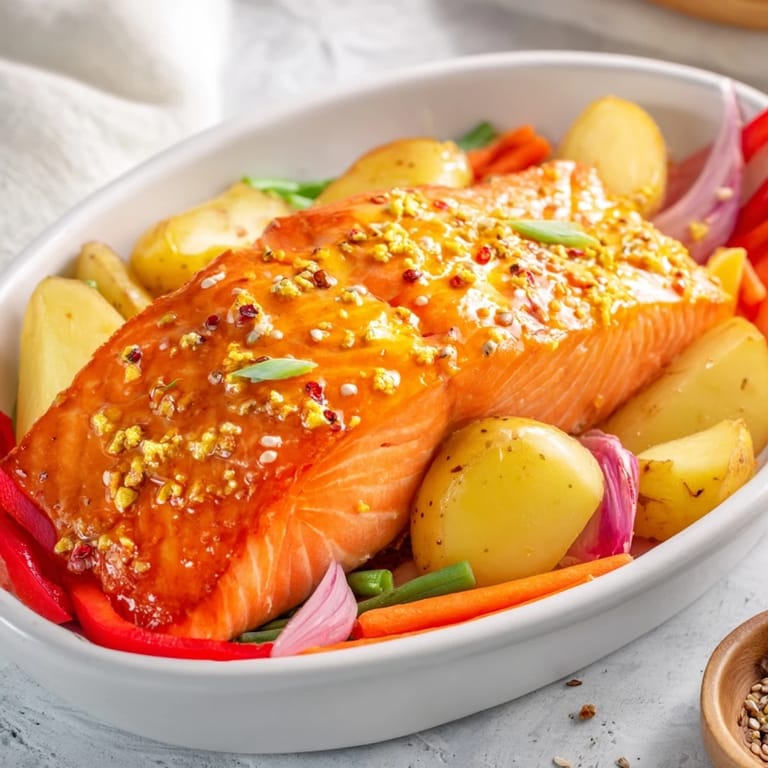
- Return the tray to the oven and bake for 10 to 12 minutes, until the salmon flakes easily with a fork and the vegetables are tender. The sauce will caramelize slightly, turning sticky and golden.
- Finish and serve:
- Drizzle the reserved sauce over the salmon and garnish with fresh herbs if you have them. Serve straight from the tray for a casual, beautiful presentation.
 Save
Save One evening, I made this for my neighbor who had just moved in, and she told me it reminded her of summer dinners by the coast. We sat on my small balcony with plates balanced on our knees, and she said it felt like the kind of meal you remember long after the plates are cleared. I think about that every time I slide this tray into the oven.
Swapping Vegetables
I've made this with zucchini, asparagus, cherry tomatoes, and even thinly sliced fennel, and it works every time. Just keep the vegetable pieces roughly the same size so they cook evenly, and add quicker cooking vegetables like tomatoes or asparagus after the 10 minute head start. The sauce is forgiving enough to tie together whatever you have on hand, and I've never had anyone complain about the substitutions.
Serving Suggestions
This dish is rich enough to stand on its own, but I often serve it with a side of fluffy rice or crusty bread to soak up the extra sauce. A wedge of lemon squeezed over the top at the table adds a final burst of brightness, and a crisp Sauvignon Blanc or sparkling water with lemon makes it feel special without any extra effort. Sometimes I scatter fresh parsley or dill over the tray right before serving, and the herbs make everything look and taste like it came from a restaurant.
Storage and Reheating
Leftovers keep well in an airtight container in the fridge for up to two days, though the salmon is best enjoyed fresh. I reheat individual portions gently in a low oven or eat the salmon cold over salad greens the next day, dressed with a little extra lemon juice and olive oil. The vegetables stay tasty even when chilled, and I've been known to snack on them straight from the container while standing at the counter.
- Store the salmon and vegetables in separate containers if you plan to reheat only one component.
- If reheating in the oven, cover the tray loosely with foil to prevent the salmon from drying out.
- Leftover honey mustard sauce can be whisked with a little extra olive oil and used as a salad dressing.
 Save
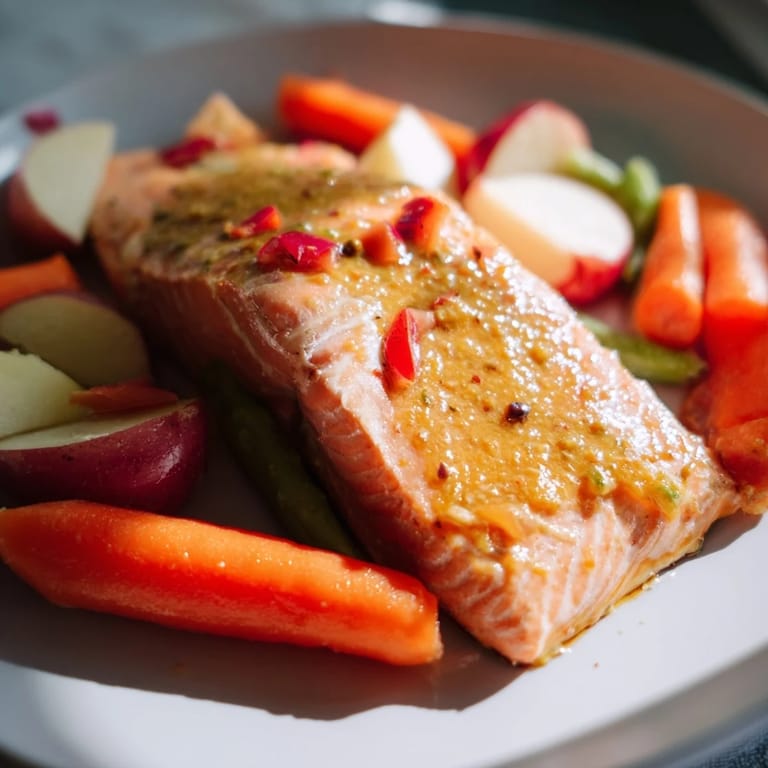
Save This recipe has become my answer to busy evenings and unexpected guests, proof that a single tray and a good sauce can turn simple ingredients into something worth remembering. I hope it brings the same ease and warmth to your table.
Recipe FAQs
- → What vegetables work best for this dish?
Baby potatoes, carrots, bell pepper, red onion, and green beans provide a balance of textures and flavors. Feel free to swap in zucchini, asparagus, or cherry tomatoes for variety.
- → How is the honey mustard sauce made?
It's a blend of Dijon and wholegrain mustards, honey, lemon juice, olive oil, minced garlic, thyme, salt, and pepper whisked together for a tangy, sweet glaze.
- → Can I prepare this meal ahead of time?
Yes, you can assemble the vegetables and sauce in advance. Add the salmon just before baking to ensure optimal freshness and texture.
- → What is the ideal baking temperature and time?
Bake at 200°C (400°F), roasting vegetables first for 10 minutes, then adding salmon brushed with sauce and baking for another 10–12 minutes.
- → How do I know when the salmon is done?
The salmon is cooked through when it flakes easily with a fork and has an opaque appearance throughout.
- → Are there allergen considerations?
This dish contains fish and mustard, which are common allergens. Always check ingredients if allergies are a concern.