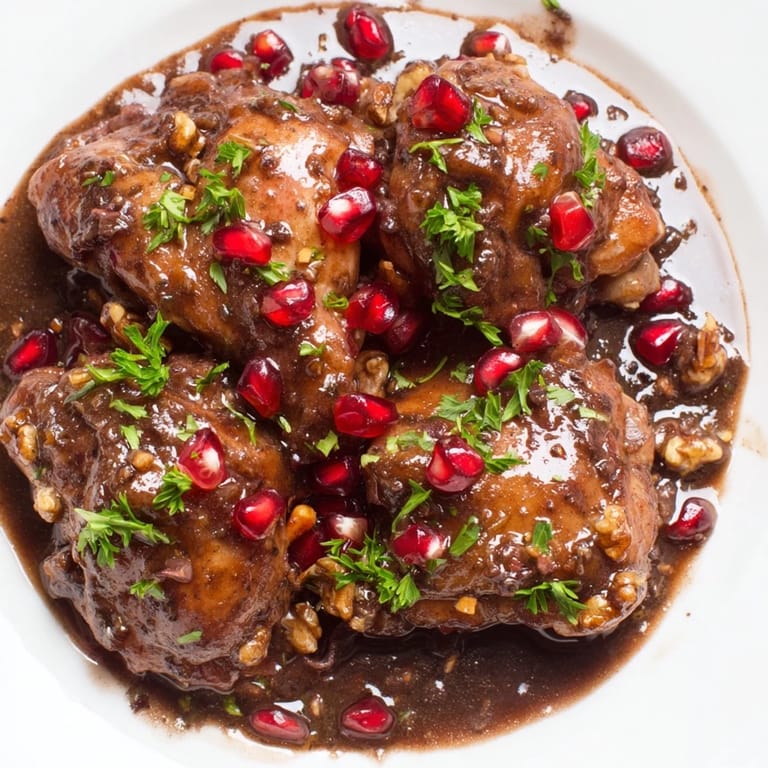
 Save
Save The first time I tasted fesenjan was at a friend's dinner table on a gray November evening, and I remember being struck by how a single spoonful could tell a story—sweet pomegranate, earthy walnuts, and meat so tender it dissolved on my tongue. I kept asking for the recipe, and she finally laughed and handed me a worn index card with notes scribbled in the margins. That card now lives in my kitchen drawer, stained and dog-eared, because I make this stew whenever I want to feel like I'm sitting at her table again.
I made this for my sister's birthday dinner last spring, and I was nervous about it—worried the balance of flavors might be off or the sauce wouldn't thicken right. But as I stood there stirring, watching the walnuts bloom into the broth and the whole kitchen fill with that incredible aroma of cinnamon and pomegranate, I realized this dish has a way of working itself out. It turned out to be the meal everyone still talks about.
Ingredients
- Boneless chicken thighs or duck (700g): Thighs stay juicy where breasts dry out; duck is traditional and worth seeking out if you want something truly special.
- Vegetable oil (2 tbsp): Use a neutral oil that won't compete with the delicate spices.
- Large onion: Chopped fine, it becomes almost invisible but gives the sauce its foundation.
- Ground walnuts (250g): Toast them lightly before grinding if you can—it deepens the flavor and reminds you why this stew exists.
- Pomegranate molasses (500ml): This is the soul of the dish; don't skip it or substitute lemon juice, which won't give you the same complexity.
- Water (500ml): Use filtered if your tap water is heavily chlorinated.
- Sugar (2 tbsp): You'll adjust this as the stew cooks, tasting and tweaking until the sweet-sour balance feels right to you.
- Ground cinnamon (1/2 tsp): Fresh from the spice jar makes all the difference—old cinnamon tastes like dust.
- Ground turmeric (1/4 tsp): A whisper of warmth and golden color.
- Ground cardamom (1/4 tsp, optional): If you have it, add it; if not, don't worry.
- Pomegranate seeds and fresh parsley: For garnish, these add brightness and a pop of tartness when you need it.
Tired of Takeout? 🥡
Get 10 meals you can make faster than delivery arrives. Seriously.
One email. No spam. Unsubscribe anytime.
Instructions
- Prep and season your meat:
- Cut your chicken or duck into large pieces—they'll hold together better as the stew simmers if they're not too small. Season generously with salt and pepper while the pot heats, so the seasoning has time to actually sink in.
- Build your base with onions and oil:
- Heat the oil until it shimmers slightly, then add your onions. The goal is a deep golden brown, not just pale and soft—this takes patience and usually about 10 minutes of occasional stirring, but that caramelization is where the flavor lives.
- Brown the meat:
- Working in batches if needed, let each piece sit in the hot pot long enough to develop a brown crust on each side. You're not trying to cook it through, just give it some color and texture.
- Toast the walnuts in the pot:
- Stir them constantly for just 2–3 minutes—they'll go from smelling pleasant to almost burnt very quickly, and that's actually when they're at their best.
- Pour in the sauce and spices:
- Add the pomegranate molasses, water, sugar, cinnamon, turmeric, and cardamom. Stir everything together so nothing sticks to the bottom, then let it come to a gentle boil before you turn the heat down.
- Simmer covered for the first hour:
- This is when the meat gets tender and the flavors start talking to each other. The lid keeps things moist while the stew finds its rhythm.
- Finish uncovered and reduce:
- Uncover and let it bubble gently for another 30 minutes, stirring more frequently now. You're looking for the oil from the walnuts to rise to the top and the sauce to thicken into something glossy and rich—it should coat the back of a spoon without running off immediately.
- Taste and adjust:
- This is crucial: taste it now. Too sour? Add a touch more sugar. Not pomegranate-forward enough? Add a splash more molasses. The balance is yours to find.
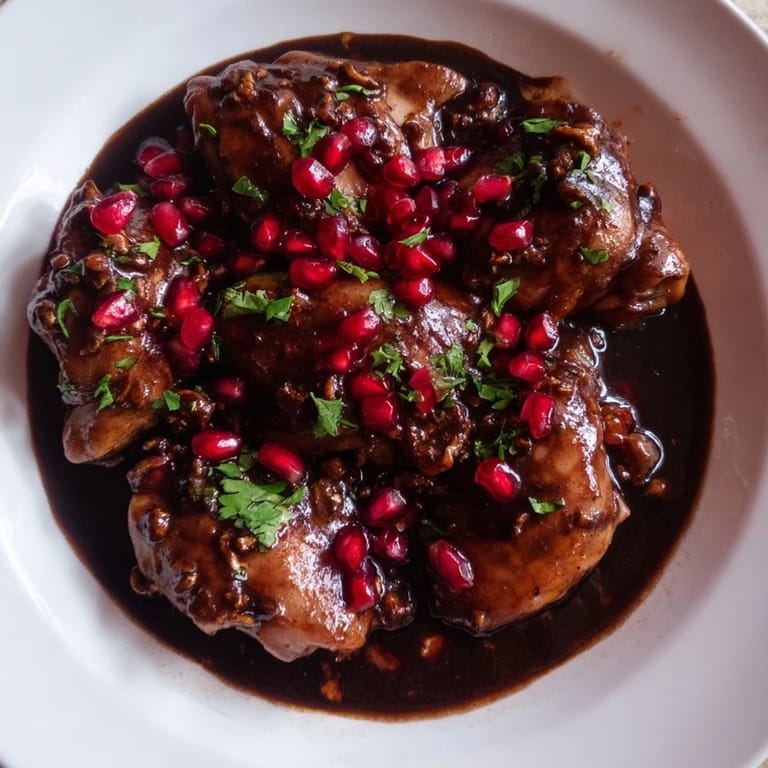 Save
Save There's a moment near the end of cooking when the kitchen fills with this almost overwhelming fragrance, and you stir the pot and see that glossy oil pooling on top—that's when you know it's going to be perfect. It's the moment before serving that feels like quiet victory, when you've done everything right and the stew knows it.
The Sweet-Sour Balance That Defines Fesenjan
What makes fesenjan sing is the tension between sweet and sour, and getting that balance right is both a science and an art. The pomegranate molasses brings tartness and complexity, while the sugar rounds it out and lets the other flavors shine through. Start with the amounts given, taste it halfway through, and adjust from there—some pomegranate molasses is more tart than others, and your own palate will guide you better than any recipe ever could.
Why Duck Is Worth the Hunt (But Chicken Works Fine Too)
Duck is what you'll find in traditional Persian recipes, and it has a richness and depth that's almost unmatched—the fattier meat stands up beautifully to the intense sauce. That said, chicken thighs are more accessible and honestly, they make a stew that's just as delicious in a different way, with a lighter feel that lets the spices shine a bit brighter. If you do find duck, seek it out at least once—it's an experience worth having.
Serving and Keeping It Special
Fesenjan is best served over fluffy steamed basmati rice or with Persian saffron rice if you're feeling fancy, which soaks up the sauce and gives you something to lean on. The stew actually gets better the next day once the flavors have had time to deepen and meld, so don't hesitate to make it ahead. You can also freeze it for up to three months, though let it come to room temperature before reheating gently on the stove.
- A handful of pomegranate seeds scattered on top adds a burst of fresh tartness that cuts through the richness beautifully.
- Fresh parsley or cilantro as garnish brings brightness and a whisper of herbaceous freshness.
- Serve this at a dinner table where you want people to slow down and really taste what they're eating.
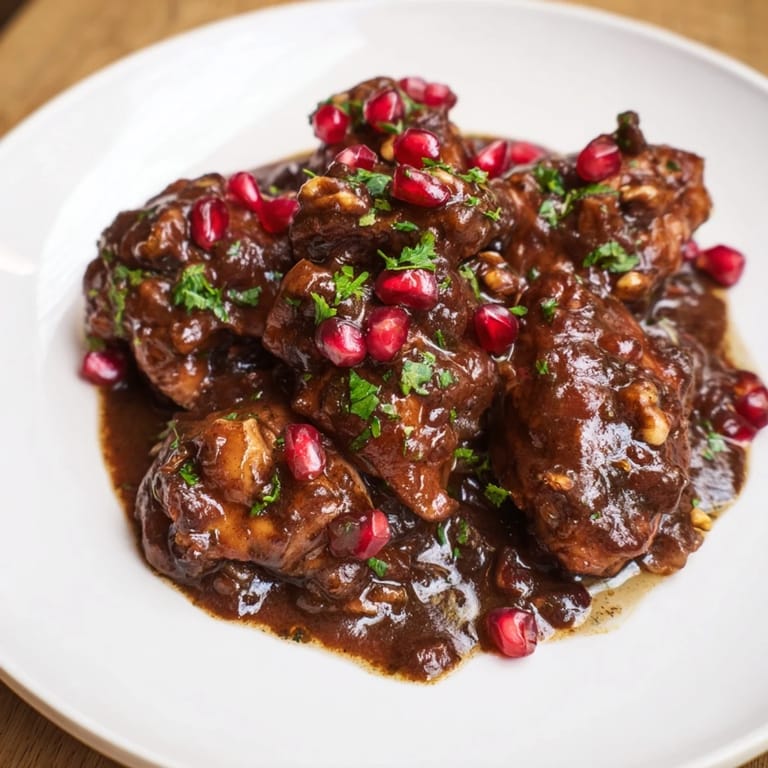 Save
Save This stew is one of those dishes that feels like an occasion every time you make it, something to slow down for and share with people you want to impress. Once you understand how the flavors work together, you'll find yourself tweaking it slightly each time, making it more yours with every batch.
Recipe FAQs
- → What types of meat are best for this dish?
Chicken thighs or duck provide tenderness and absorb the rich sauce well, though chicken is more common for convenience.
- → Can this dish be made vegetarian?
Yes, mushrooms or eggplant can be used as substitutes to replicate the texture and absorb the flavors of the sauce.
- → How do walnuts contribute to the dish?
Finely ground walnuts thicken the sauce and add a nutty richness that balances the tartness of the pomegranate.
- → What spices enhance the flavor?
Cinnamon, turmeric, and optional cardamom add warmth and subtle aromatic layers to complement the savory and sweet components.
- → How is the sauce consistency achieved?
Slow simmering allows the sauce to thicken as walnut oils rise to the top, creating a luscious texture that coats the meat.
- → What should this dish be served with?
It pairs excellently with fluffy steamed basmati rice or Persian saffron rice to soak up the flavorful sauce.