 Save
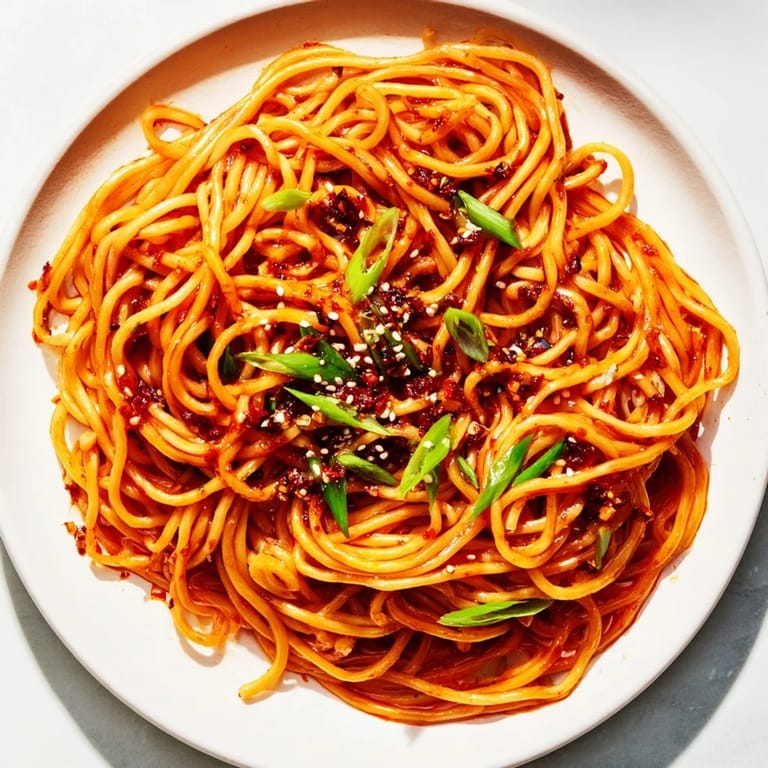
Save There's something about the smell of garlic hitting hot oil that makes you stop whatever you're doing. I discovered this dish on a Tuesday night when I had nothing in my pantry except noodles, a jar of chili flakes, and the kind of hunger that needed satisfying fast. Twenty minutes later, I had something so fiery and fragrant that my roommate wandered into the kitchen asking what smelled like a restaurant had moved in. That's when I knew this had to become my go-to when I wanted bold flavor with zero fuss.
I made this for a friend who claimed they didn't eat spicy food, and by the third bite they were asking for seconds. Watching someone's face light up when the umami from the black vinegar and soy hit them, followed by that warm, creeping heat—that's the moment I realized this wasn't just a quick meal, it was a conversation starter.
Ingredients
- Wheat noodles (200 g): Chewy, substantial noodles are essential here—they hold the oil and sauce without falling apart. Chinese wheat noodles work beautifully, but linguine works in a pinch.
- Chili flakes (2½ tablespoons): Sichuan chili flakes have an earthier heat than Korean varieties, but either works depending on your preference. The fresher they are, the more vivid the color and flavor.
- Garlic (4 cloves, minced): Mince it fine so it distributes evenly through the oil and doesn't overpower in big chunks. Fresh garlic makes all the difference in heat and aroma.
- Sichuan peppercorns (½ teaspoon, optional): These create a subtle numbing tingle that makes the heat feel more complex and less one-dimensional if you decide to use them.
- Light soy sauce (1½ tablespoons) and black vinegar (1 tablespoon): This combination creates the umami backbone—the salty, tangy depth that makes every bite satisfying rather than just hot.
- Scallions (2, whites and greens separated): The white parts go into the hot oil first for subtle sweetness, while green parts finish the dish for freshness and color.
- Neutral oil (3 tablespoons): Canola or grapeseed oil carries the heat without competing flavors—the temperature matters more than the type here.
- Toasted sesame seeds and sesame oil: These add a toasted, nutty dimension that balances the pure heat and makes the dish feel whole.
Tired of Takeout? 🥡
Get 10 meals you can make faster than delivery arrives. Seriously.
One email. No spam. Unsubscribe anytime.
Instructions
- Cook the noodles:
- Boil water, add noodles, and cook until they're tender but still have a slight chew—test at a minute or two before the package says they're done. Don't drain them all the way; save that starchy water because it's going to become part of your sauce.
- Build your chili bed:
- In a heatproof bowl, combine the minced garlic, white scallion parts, chili flakes, peppercorns if using, white pepper, sugar, salt, and sesame seeds. This is your flavor bomb waiting to be awakened.
- Heat the oil until it shimmers:
- In a small pan over medium-high heat, warm your neutral oil until tiny waves appear across the surface and it's almost smoking—you want it hot enough to bloom the chili and garlic instantly but not so hot it burns them.
- Pour and sizzle:
- Carefully pour that hot oil over your chili mixture and listen for the satisfying sizzle. The oil will immediately become fragrant and turn a deep reddish color as the chili releases its oils and heat.
- Make the sauce:
- In your large bowl, whisk together soy sauce, black vinegar, dark soy sauce if using, and sesame oil. Add the reserved noodle water to thin it slightly and create a glossy coating rather than a heavy sauce.
- Bring it together:
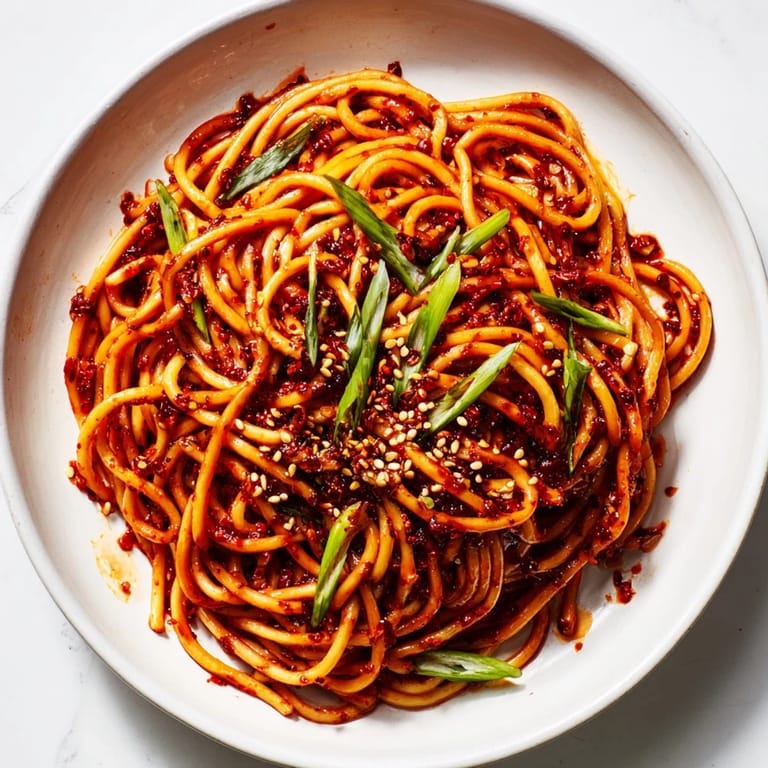
- Add your drained noodles to the sauce bowl, pour the fragrant chili oil over everything, and toss with chopsticks or tongs until every strand glistens and is coated evenly. This takes about a minute of serious mixing.
- Finish and serve:
- Scatter the green scallion parts and extra sesame seeds on top, then serve immediately. The noodles are best when you eat them right away while the oil is still warm and the textures are at their peak.
 Save
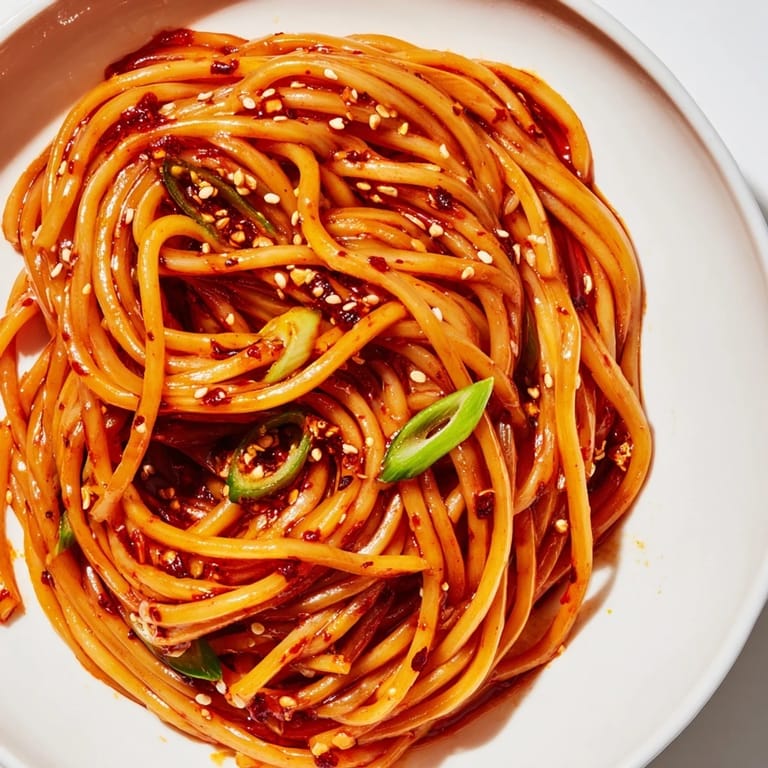
Save Late one night, I made this for myself after a long day and ate it standing at the kitchen counter, watching the steam rise from the bowl. Something about the ritual of slurping noodles and the way the heat built slowly then settled into a warm glow made me feel taken care of, even though I was doing the taking care. That's when I understood this dish wasn't just efficient; it was kind.
Choosing Your Heat Level
The beauty of this dish is that you're not locked into a specific spice level. If you like a gentle warmth, use a tablespoon of chili flakes and skip the Sichuan peppercorns. If you want your mouth to burn for hours, go full measure or even add more. I've found that the quality of your chili flakes matters—fresher ones from a good source have more nuance and less dusty bitterness than old ones sitting in your pantry for years.
Making It a Complete Meal
This dish is satisfying solo, but it transforms into something more substantial with additions. I've tossed in sautéed mushrooms, quick-cooked tofu cubes, shredded rotisserie chicken, and even blanched bok choy. The chili oil's heat and fragrance complement almost any vegetable or protein, so don't feel limited to just noodles if you want something more filling on a given day.
What to Drink and Remember
A crisp, cold beer cuts through the heat beautifully, or jasmine tea if you want something gentler. Whatever you choose, this dish rewards eating slowly and actually tasting each component instead of rushing through it. The garlic, the chili, the umami from the vinegar—they all deserve a moment.
- Taste the chili oil mixture before adding it to the noodles so you know what you're working with.
- If you accidentally make it too spicy, add a splash of sesame oil or a squeeze of lime juice to mellow things out.
- Leftovers reheat beautifully; just add a splash of water and warm gently on the stovetop to revive the sauce.
 Save
Save This recipe taught me that some of the best meals don't require fancy ingredients or hours of time—just the confidence to let simple things sing. Come back to it whenever you need comfort that feels bold.
Recipe FAQs
- → What type of noodles works best for this dish?
Wheat-based noodles like Chinese wheat noodles or linguine are ideal as they hold the chili oil well and maintain a chewy texture.
- → How can the spiciness be adjusted?
Modify the amount of chili flakes to increase or decrease the heat. Omitting Sichuan peppercorns reduces numbing heat while keeping spice levels flexible.
- → Can I add protein or vegetables?
Yes, sautéed vegetables, tofu, or shredded chicken complement the noodles and add nutritional variety.
- → What is the purpose of reserving noodle cooking water?
Adding reserved cooking water helps loosen the sauce, ensuring even coating and a glossy finish.
- → Which oils are recommended for the chili oil infusion?
Neutral oils such as canola, sunflower, or grapeseed oil are best as they do not overpower the chili and garlic flavors.