 Save
Save My friend Marco called at 4 PM on a Saturday asking if I could pull together dinner for eight people by 7. Instead of panicking, I reached for lasagna—the dish that has never let me down. There's something about layering pasta, meat sauce, and cheese that feels like you're building something substantial, something that says you care. That night, watching everyone go back for seconds while the kitchen still smelled like garlic and basil, I understood why this Italian classic has survived generations. It's not fancy, but it's honest food that brings people together.
Years ago, my mom taught me that lasagna is a forgiving dish if you understand the basics. I burned the sauce once, forgot the egg in the ricotta another time, and still ended up with something delicious. That's when I realized lasagna isn't about perfection—it's about the architecture of flavors building on each other. Every layer you add is a promise that the person eating it will experience something warm and satisfying.
Ingredients
- Lasagna noodles (12 sheets): Use uncooked noodles—they'll absorb liquid from the sauce and cook perfectly within the layers, staying tender rather than overcooked.
- Ricotta cheese (15 oz): This is your creamy layer that balances the richness of the meat sauce; make sure it's fresh and drains well.
- Large egg (1): Binds the ricotta and gives the cheese layers structure so they don't slide around when you cut.
- Mozzarella cheese (4 cups shredded): This creates those gorgeous melted pockets throughout; buy whole milk mozzarella if you can find it.
- Parmesan cheese (1 cup grated): Adds a sharp, nutty finish that cuts through the richness beautifully.
- Ground beef (1 lb, lean): The foundation of your meat sauce; lean varieties won't leave pools of grease on top.
- Italian sausage (1 lb, casing removed): Brings a subtle fennel flavor and helps build a more complex sauce than beef alone.
- Marinara sauce (4 cups): Whether you use jarred or homemade, this is your flavor base—taste it first and adjust seasoning accordingly.
- Garlic (4 cloves, minced): Toast it in oil for just a moment to release the flavor without burning; burned garlic tastes bitter.
- Olive oil (2 tablespoons): Use good quality oil for sautéing—it makes a difference in how the garlic and meat taste.
- Fresh basil (¼ cup chopped): Add this at the end of sauce cooking so it keeps its brightness and doesn't turn dark.
- Salt and black pepper: Taste as you go; you'll need more than you think because cheese is naturally salty.
Tired of Takeout? 🥡
Get 10 meals you can make faster than delivery arrives. Seriously.
One email. No spam. Unsubscribe anytime.
Instructions
- Preheat and prepare:
- Set your oven to 375°F and let it warm while you start the sauce—this ensures even cooking from the moment lasagna enters the oven.
- Toast the garlic:
- Heat olive oil in a large skillet over medium heat, add minced garlic, and listen for that gentle sizzle and smell the moment it becomes fragrant, about 1 minute. You want aromatic, not brown.
- Brown the meat:
- Add ground beef and Italian sausage to the skillet, breaking it apart with your spatula as it cooks for 8 to 10 minutes until no pink remains. The meat will release fat, which is flavor—don't drain it all, just the excess that pools.
- Build the sauce:
- Pour in marinara sauce, add salt, pepper, and fresh basil, then simmer for 10 minutes so everything melds together and the raw edges of the herbs soften.
- Mix the ricotta:
- In a separate bowl, combine ricotta and egg, stirring until you have a smooth, creamy texture that spreads easily but holds together.
- Layer the base:
- Spread a thin layer of meat sauce on the bottom of your 9x13 baking dish—this prevents sticking and creates a flavorful foundation. Cover with 4 lasagna sheets, slightly overlapping so they cook evenly.
- First filling layer:
- Spread half the ricotta mixture over the noodles, sprinkle a third of the mozzarella on top, then add another layer of meat sauce. You're building a pattern now—it gets easier.
- Mirror the first layer:
- Repeat with 4 more noodles, the remaining ricotta mixture, another third of mozzarella, and more meat sauce. The symmetry matters because it ensures even cooking.
- Finish strong:
- Top with the final 4 noodles, spread the remaining meat sauce over them, then finish with all remaining mozzarella and the Parmesan cheese. This top layer will turn golden and bubbly.
- First bake covered:
- Tightly cover with aluminum foil and bake for 25 minutes—the foil traps steam so the noodles cook through without drying out.
- Final uncovered bake:
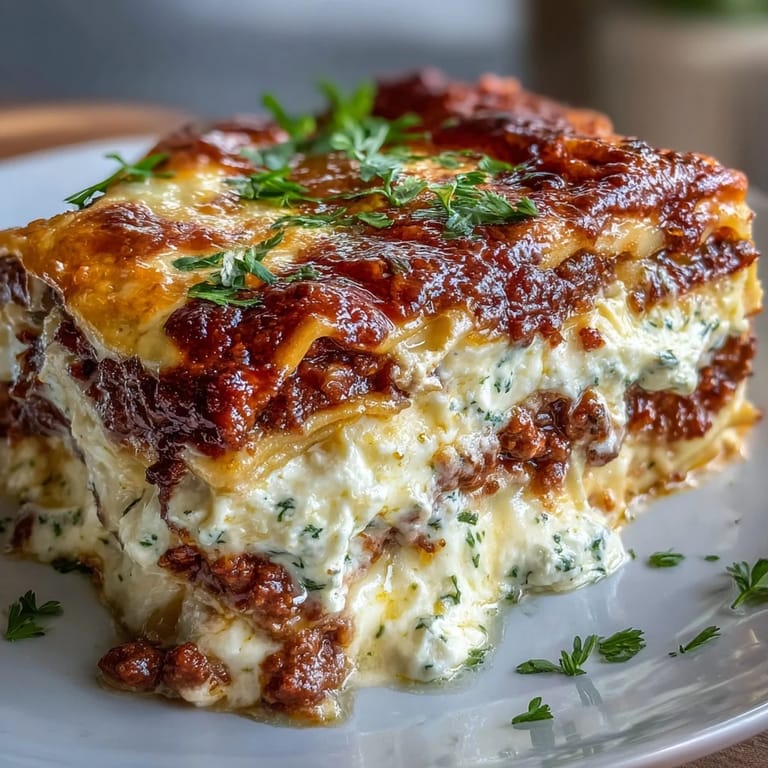
- Remove the foil carefully (steam is hot), then bake for 15 more minutes until the cheese on top is golden brown and bubbling at the edges. Watch for this moment—it's when you know it's done.
- Rest before serving:
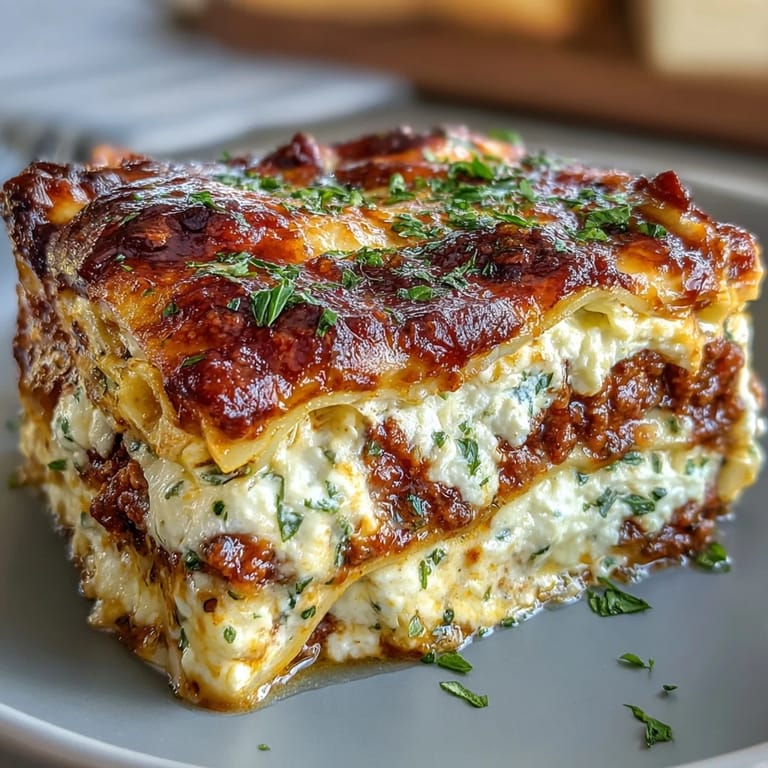
- Let the lasagna sit for at least 15 minutes after coming out of the oven; this allows the layers to set so your slices hold together instead of sliding apart on the plate.
 Save
Save There was a Wednesday night when I brought this lasagna to my neighbor who had just come home from the hospital. Seeing her face when she opened the door and smelled it cooking—that moment taught me that food is never just about taste. It's about showing up for someone in a way that feels personal and nourishing.
Why This Works Every Time
The genius of this lasagna is in the logic of its construction. You're not fighting against the pasta by boiling it separately; instead, it cooks gently in the moisture of the sauce, which means no weird crunchy spots and no fragile overcooked edges that break apart. The meat sauce acts as both flavor and moisture, while the ricotta layer provides creaminess that balances the intensity. By the time everything finishes baking and resting, you have a dish where every element knows exactly where it belongs.
Building Flavor in the Meat Sauce
The magic happens when you combine beef and sausage instead of using one or the other. The beef gives structure and substance, while the sausage brings subtle warmth and complexity that makes people ask what the secret ingredient is. Toast your garlic properly—just until fragrant—because this is where the foundation of flavor lives. The basil, added at the very end, keeps its bright herbal quality instead of turning dark and muted, which changes how the whole sauce tastes.
Cheese Matters More Than You Think
I once tried to save money by using pre-shredded mozzarella from a bag, and the lasagna came out grainy and separated. Fresh mozzarella that you shred yourself melts into smooth, creamy pockets throughout the dish. The Parmesan on top creates a crust that protects the cheese underneath from over-browning while developing a gorgeous golden color. The ricotta layer is your secret weapon—it's what prevents the whole thing from feeling heavy or one-dimensional, creating moments of cool creaminess against warm sauce and cheese.
- Always taste your marinara sauce straight from the jar before layering—if it needs salt or sweetness, adjust it now rather than trying to fix it later.
- If you're concerned about too much richness, use part-skim ricotta and mozzarella without sacrificing any of the flavor impact.
- Leftover lasagna often tastes even better the next day when flavors have time to fully meld together.
 Save
Save This lasagna has been my answer to countless questions: what do you bring to a potluck, what do you cook when someone needs comfort, what do you make when you want to feed people without spending your whole evening in the kitchen. It's honest food that tastes like care.
Recipe FAQs
- → Why should I let lasagna rest before serving?
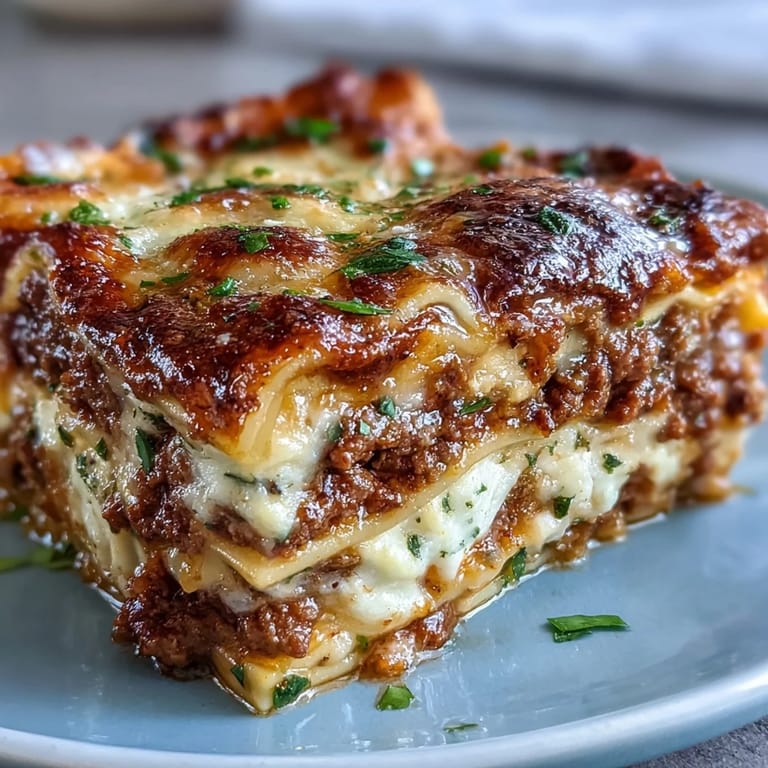
Resting for 15 minutes allows the layers to set and makes slicing much cleaner. The cheese firms up slightly, preventing everything from sliding apart when you cut it.
- → Can I use no-boil noodles instead of regular?
Absolutely. No-boil noodles work perfectly here since they cook in the sauce during baking. You might need slightly less liquid in your sauce if they're very thin.
- → How do I know when the lasagna is done?
The cheese on top should be golden and bubbling, and you should see sauce actively simmering around the edges. A knife inserted in the center should come out hot.
- → Can I make this ahead of time?
Yes. Assemble everything, cover tightly, and refrigerate up to 24 hours before baking. You may need to add 5-10 minutes to the covered baking time since it will start cold.
- → What can I substitute for Italian sausage?
Use more ground beef, or try ground pork, turkey, or plant-based crumbles. Add extra fennel seeds, red pepper flakes, and Italian herbs to mimic sausage flavor.
- → How should I store leftovers?
Cover tightly and refrigerate up to 4 days, or freeze individual portions for up to 2 months. Reheat covered at 350°F until hot throughout.