 Save
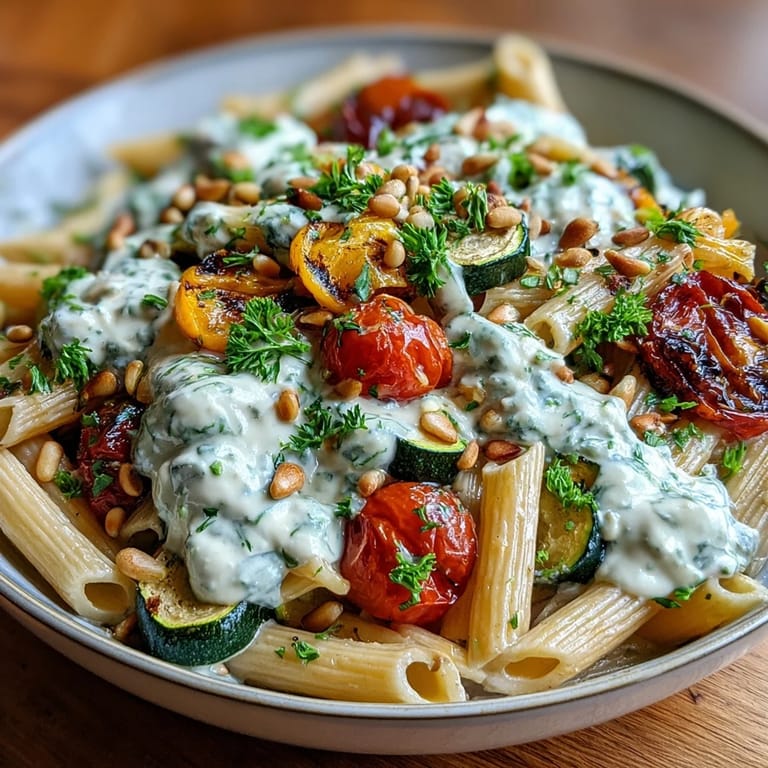
Save One Tuesday evening, I stood in my kitchen staring at a half-empty pantry and the realization that my usual pasta routine felt tired. I had cannellini beans, Greek yogurt, and a bunch of vegetables that needed rescuing from the crisper drawer. Something clicked—what if I stopped treating these ingredients like separate components and let them become one thing, something creamy and substantial without cream? That bowl changed how I think about whole wheat pasta entirely.
I made this for my friend Maya on a Saturday when she mentioned feeling stuck in a nutrition rut, and watching her take that first bite—the way her expression softened—reminded me that food doesn't need to be complicated to be meaningful. She asked for the recipe before she'd even finished the bowl, and now it's her go-to when she needs to feel grounded.
Ingredients
- Whole wheat penne or fusilli (300 g): The nutty flavor of whole wheat matters here—it stands up to the vegetables and sauce without disappearing into the background like white pasta might.
- Zucchini, red bell pepper, yellow bell pepper, red onion, cherry tomatoes: Choose vegetables that are firm and colorful; they'll roast better and taste brighter, plus the variety means every spoonful feels different.
- Olive oil (2 tbsp), dried Italian herbs, salt, pepper: Don't skimp on the oil when roasting—it's what creates those caramelized edges that make vegetables taste almost sweet.
- Cannellini beans (1 can, 400 g): Rinse them thoroughly under cold water; this removes the starchy liquid and gives you a creamier sauce without any grit.
- Low-fat Greek yogurt (120 ml): The tang cuts through richness, and the protein doubles down on what the beans already offer you.
- Lemon juice (2 tbsp), garlic clove, fresh parsley, Parmesan cheese: Lemon is your secret weapon here—it brightens everything and prevents the sauce from tasting flat or heavy.
- Toasted pine nuts, extra parsley, additional Parmesan: Toast your own pine nuts if you can; they taste infinitely better than pre-toasted, and the aroma will fill your kitchen.
Tired of Takeout? 🥡
Get 10 meals you can make faster than delivery arrives. Seriously.
One email. No spam. Unsubscribe anytime.
Instructions
- Heat your oven and prepare the vegetables:
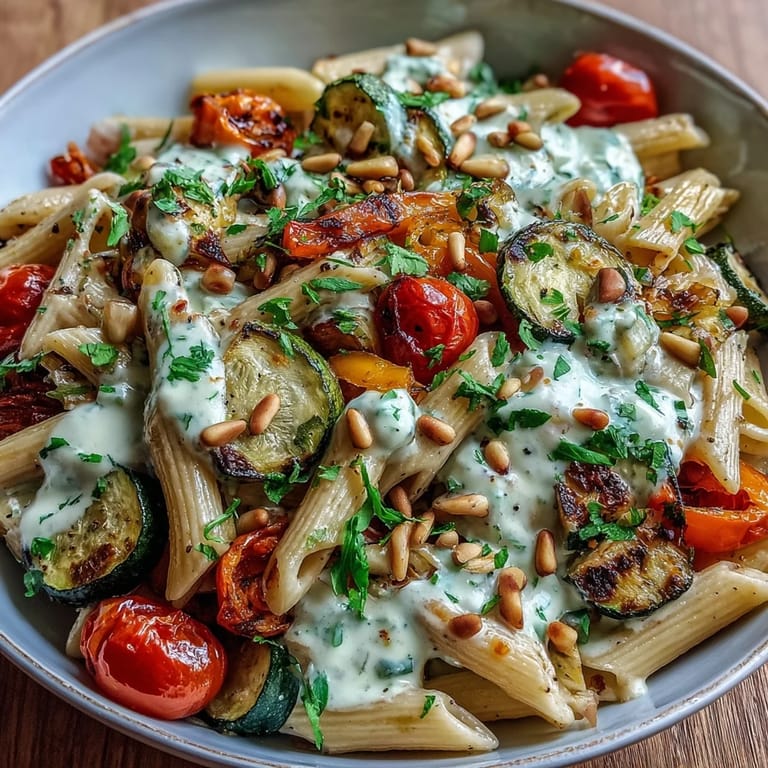
- Set the oven to 220°C and toss your diced zucchini, peppers, onion, and tomatoes with olive oil, herbs, salt, and pepper until everything glistens. Spread them across a baking sheet in a single layer—crowding the pan means they'll steam instead of roast, so give them breathing room.
- Roast until golden:
- Twenty to twenty-five minutes, stirring halfway through, and you'll notice the edges turning bronze and the kitchen smelling unbelievably good. The tomatoes might split and shrivel slightly, which is exactly what you want.
- Cook the pasta:
- While vegetables roast, bring a large pot of salted water to a rolling boil and cook the pasta according to package directions. Before draining, save about sixty milliliters of that starchy water—it's liquid gold for loosening the sauce.
- Build the protein sauce:
- In a food processor, combine the drained beans, yogurt, lemon juice, minced garlic, parsley, and Parmesan, pulsing until smooth and creamy. If it feels too thick, add splashes of reserved pasta water until it flows like a loose sauce that will coat every strand.
- Bring everything together:
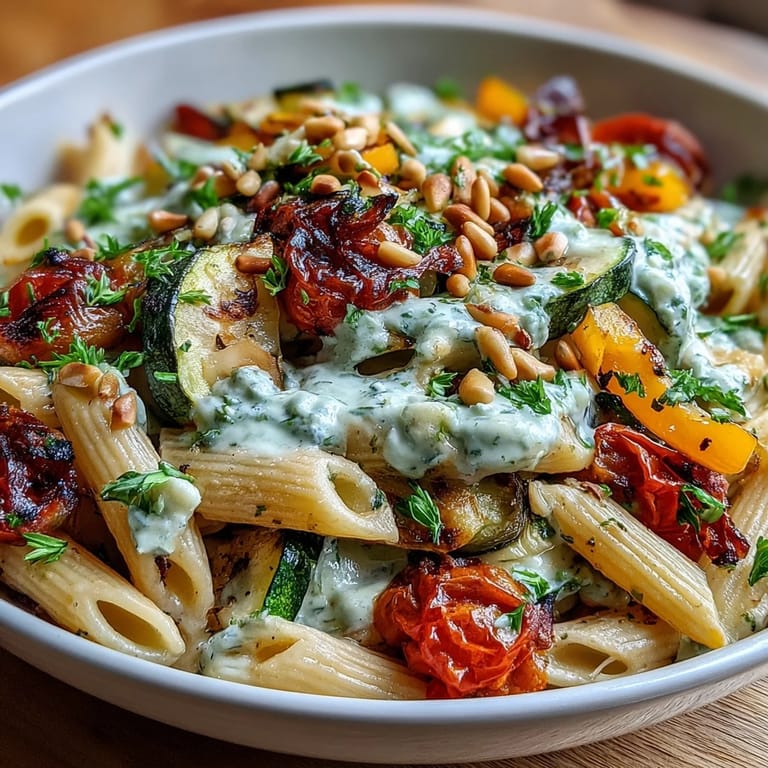
- Return the drained pasta to the pot, add the roasted vegetables and protein sauce, then toss gently so nothing breaks. The warm pasta will relax the sauce and help it coat everything evenly.
- Serve with ceremony:
- Divide into bowls and top each one with toasted pine nuts, a scatter of fresh parsley, and Parmesan if you're using it. The toppings add texture and a final bright note that makes the whole bowl sing.
 Save
Save My partner tasted this one evening and said, 'This tastes like someone actually cared while cooking it,' which stuck with me because that's the whole point. When you roast vegetables slowly instead of rushing them, when you blend beans with intention, when you taste as you go and adjust the lemon—that care registers, and it becomes food that feels like a small act of kindness toward yourself.
Why Whole Wheat Pasta Works Here
Whole wheat pasta has a reputation for being dense or heavy, but that's usually because it's paired with heavy sauces or outdated cooking methods. Here, the nuttiness actually complements the earthiness of roasted vegetables, and the bean-based sauce is light enough that you don't feel weighed down. The pasta also holds the sauce better than white varieties, so every bite tastes intentional and complete.
Swaps and Flexibility
This recipe is genuinely forgiving because the philosophy is sound—roasted vegetables, creamy bean sauce, whole grain base. I've made it with chickpeas when I didn't have cannellini, with zucchini swapped for mushrooms, even with plant-based yogurt for friends who don't eat dairy. The bones of the dish stay strong no matter what, which is why it's become my go-to when I'm cooking for people with different preferences.
Making It a Complete Meal
On its own, this bowl is satisfying and balanced, but I've learned a few tricks for transforming it into something even more special. If you want to add grilled chicken or crumbled tofu, it takes the protein count up without making anything feel excessive. A simple green salad on the side adds brightness and texture, or a slice of crusty bread for soaking up any sauce left in the bowl.
- Grill thin chicken breast slices beforehand and place them on top of the warm bowl for a heartier version.
- Massage fresh spinach or arugula into the warm bowl right before serving—the heat wilts it slightly and adds peppery contrast.
- A squeeze of fresh lemon at the table is never wrong and often the difference between good and memorable.
 Save
Save This bowl has quietly become one of those meals I make when I need to remember that eating well doesn't require fancy ingredients or complicated techniques. It's proof that simple attention to quality—good olive oil, ripe vegetables, beans treated with respect—creates something that tastes nourishing and real.
Recipe FAQs
- → Can I make the protein sauce ahead of time?
Yes, the creamy white bean sauce can be prepared up to 24 hours in advance and stored in an airtight container in the refrigerator. You may need to thin it slightly with warm pasta water or a splash of lemon juice before serving.
- → What other vegetables work well in this dish?
Feel free to substitute or add vegetables like eggplant, mushrooms, broccoli florets, or asparagus. Root vegetables such as sweet potato or butternut squash also roast beautifully alongside the peppers and zucchini.
- → Is this suitable for meal prep?
This bowl reheats exceptionally well for lunch throughout the week. Store components separately—the sauce, roasted vegetables, and pasta—in containers, then combine when ready to eat. The pasta may absorb some sauce overnight, so add a splash of water when reheating.
- → Can I use different pasta shapes?
Absolutely. While penne and fusilli catch the sauce beautifully, try farfalle, rotini, or even whole wheat spaghetti. Short pasta shapes with ridges or tubes work best to hold the creamy bean sauce and chunks of roasted vegetables.
- → How do I make this vegan?
Simply replace the Greek yogurt with unsweetened plant-based yogurt such as almond, coconut, or soy yogurt. Omit the Parmesan cheese or use a vegan alternative sprinkled over the top before serving. The flavor and creamy texture remain delicious.
- → Can I add more protein?
The white bean sauce already provides 18 grams of protein per serving, but you can boost it further by adding grilled chicken strips, baked tofu cubes, or even sautéed shrimp. For plant-based options, stir in hemp seeds or nutritional yeast.