 Save
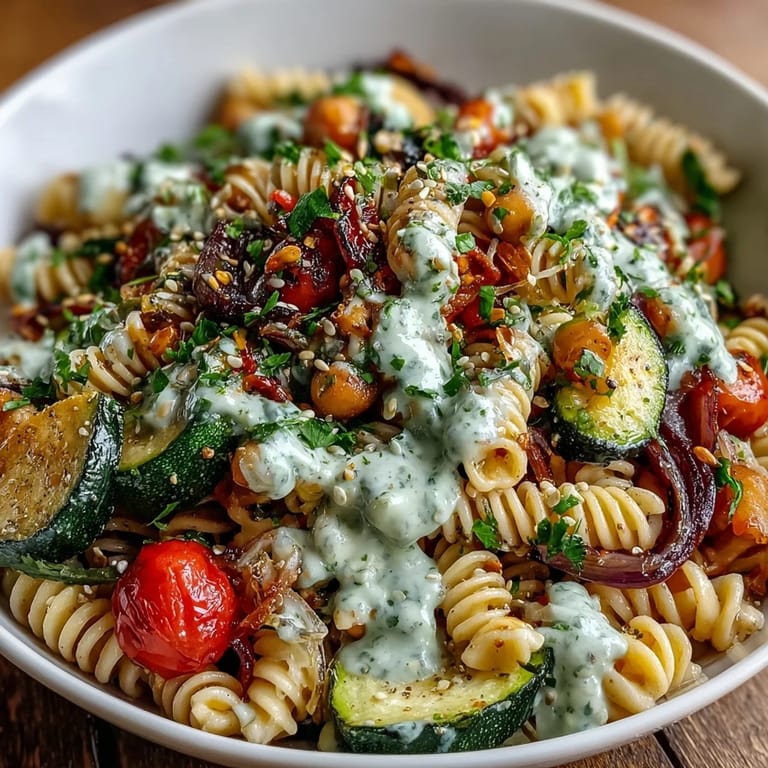
Save One afternoon, my roommate came home from the gym talking about needing something substantial but light, and I realized I'd been making the same sad salads for weeks. That's when I grabbed a box of chickpea pasta from the pantry—something I'd bought on a whim—and decided to treat it like a canvas instead of just another dinner. The result was this bowl, and now it's become the meal I make when I want to feel genuinely nourished without spending hours in the kitchen.
I served this to my sister who'd just gone vegan, and I watched her face light up when she realized pasta could actually taste this good without any cream or butter. She asked for the recipe immediately, and honestly, that moment told me everything I needed to know about whether this dish worked.
Ingredients
- Chickpea pasta: Use 340 g (12 oz)—it's hearty enough to stand up to the sauce and gives you a protein boost that regular pasta can't match.
- Zucchini: One medium, diced into roughly half-inch pieces so they roast evenly and get those golden edges.
- Red bell pepper: One chopped—the sweetness balances the earthiness of everything else and adds a pop of color.
- Red onion: One small, sliced thin enough that it softens completely but holds its shape, bringing a subtle bite to each bite.
- Cherry tomatoes: One cup halved—they burst slightly while roasting and concentrate their flavor into the bowl.
- Olive oil: Two tablespoons for roasting, plus a splash in the tahini sauce if it needs loosening.
- Dried oregano: One teaspoon to tie the Mediterranean flavors together without overpowering the vegetables.
- Smoked paprika: Half a teaspoon—this is the ingredient that makes people ask what you did differently.
- Tahini: 60 g (1/4 cup) should be smooth and creamy; if it's separated or too thick, stir it well before measuring.
- Lemon juice: Two tablespoons, fresh squeezed if you have time—it brightens everything and prevents the sauce from tasting flat.
- Maple syrup or agave: One tablespoon to soften the tartness of the lemon and add a subtle sweetness that makes the sauce taste more luxurious.
- Garlic: One clove minced fine so it distributes evenly through the sauce instead of leaving chunks.
- Fresh parsley: Two tablespoons chopped right before serving so it stays vibrant and doesn't wilt into the warm bowl.
- Toasted sesame seeds: One tablespoon optional, but they add a nutty crunch that transforms the texture.
Tired of Takeout? 🥡
Get 10 meals you can make faster than delivery arrives. Seriously.
One email. No spam. Unsubscribe anytime.
Instructions
- Set your oven and prep your workspace:
- Heat your oven to 220°C (425°F) and line a baking sheet with parchment paper so nothing sticks and cleanup is easier later.
- Build your vegetable mixture:
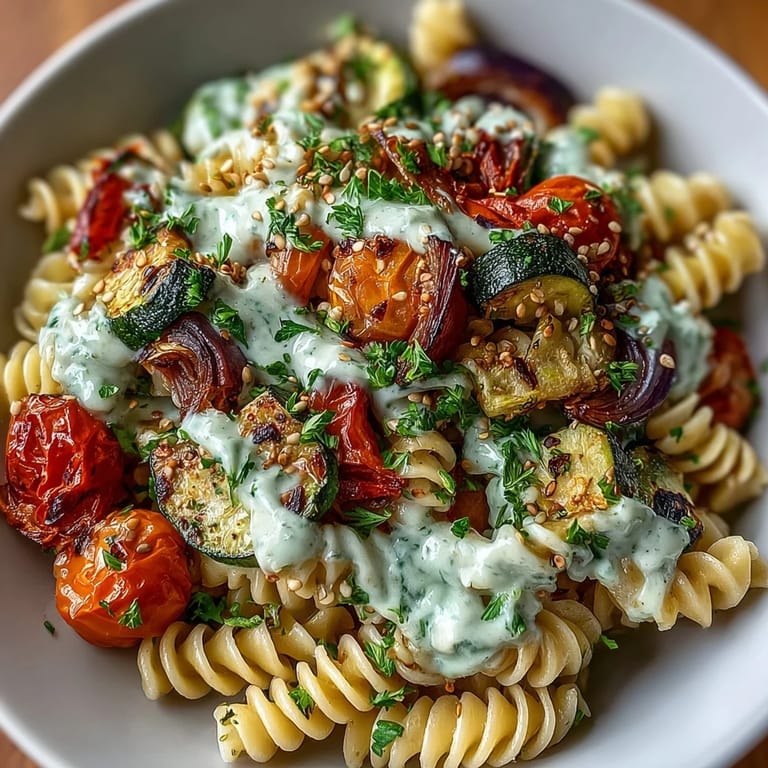
- In a large bowl, combine your diced zucchini, chopped bell pepper, sliced red onion, and halved cherry tomatoes. Drizzle with olive oil and sprinkle the oregano, smoked paprika, salt, and pepper over everything, then toss until the vegetables are evenly coated and glistening.
- Roast until golden:
- Spread the vegetables in a single layer on your prepared baking sheet and slide it into the oven. After about 12 minutes, give everything a gentle stir so it roasts evenly, then let it continue for another 8–13 minutes until the edges are slightly caramelized and the vegetables are tender enough to pierce with a fork.
- Cook the pasta:
- While the vegetables are roasting, bring a large pot of salted water to a rolling boil and add your chickpea pasta. Follow the package instructions closely—this pasta can go from perfectly cooked to mushy quickly—then drain and set aside in a warm bowl.
- Whisk together your tahini sauce:
- In a small bowl, combine the tahini, lemon juice, maple syrup, warm water, minced garlic, and a pinch of salt. Whisk vigorously until the mixture transforms from thick and clumpy into something smooth and pourable; if it resists, add water one teaspoon at a time.
- Bring it all together:
- Pour the cooked pasta and roasted vegetables into your large mixing bowl, then drizzle the tahini sauce over everything and toss gently but thoroughly so every strand of pasta gets coated.
- Serve and garnish:
- Divide the bowl between serving dishes and finish each one with a sprinkle of fresh parsley and toasted sesame seeds if you're using them, then serve while still warm or let it cool to room temperature depending on your mood.
 Save
Save The first time I made this, I was eating it solo at my kitchen counter at 9 PM on a Tuesday, and I realized I was genuinely excited about dinner instead of just eating to stop being hungry. That shift in how food made me feel changed what I started cooking.
The Secret of the Tahini Sauce
The tahini sauce is honestly where this whole bowl gets its personality. I learned the hard way that cold tahini straight from the jar is stubborn and thick, but warming your water first and whisking with patience transforms it into something almost silky. The lemon juice cuts through the richness while the maple syrup hides in the background, making everything taste more expensive than it actually is.
Why Chickpea Pasta Makes This Work
Chickpea pasta isn't just a trendy substitute—it actually changes the entire bowl by adding substantial protein and fiber that keep you full without any heaviness. I used to think pasta was either indulgent or boring, but this one sits somewhere in the middle, making you feel like you're doing something good for your body while still enjoying your dinner. It also has a slightly nutty flavor that plays beautifully with the tahini and Mediterranean spices.
Variations and Flexibility
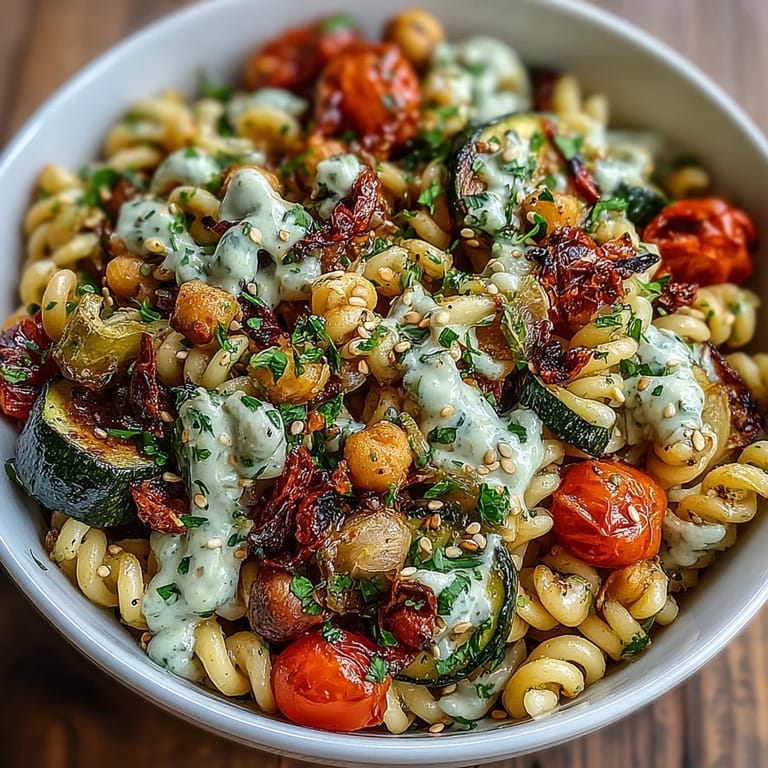
This bowl is flexible enough to work with whatever vegetables are in season or hanging out in your fridge waiting to be used. I've made it with roasted broccoli in winter, grilled eggplant in summer, and roasted carrots when I needed something sweet. The structure stays the same but each version feels completely different.
- Toss in cooked chickpeas or grilled tofu cubes if you want even more protein density.
- Swap the sesame seeds for toasted pine nuts or a drizzle of tahini if you run out.
- Serve warm or at room temperature depending on whether it's a comfort dinner or a light lunch.
 Save
Save This bowl has become my go-to when I need to feed people who have different dietary needs but still want to sit down together. Making it feels like self-care disguised as dinner.
Recipe FAQs
- → What makes chickpea pasta different from regular pasta?
Chickpea pasta is made from chickpea flour instead of wheat, providing nearly double the protein and fiber compared to traditional pasta while maintaining a similar texture and taste.
- → Can I prepare the vegetables ahead of time?
Yes, you can roast the vegetables up to 2 days in advance. Store them in an airtight container in the refrigerator and reheat gently before tossing with the pasta and sauce.
- → How should I store leftovers?
Keep the components separate in airtight containers in the refrigerator for up to 3 days. The pasta may absorb some sauce, so add a splash of water or extra tahini dressing when reheating.
- → Can I make this gluten-free?
Chickpea pasta is naturally gluten-free, but always verify the package label to ensure no cross-contamination during processing. All other ingredients in this bowl are naturally gluten-free.
- → What can I substitute for tahini?
You can use almond butter, cashew butter, or sunflower seed butter as alternatives. Each will impart a slightly different flavor profile while maintaining the creamy consistency.
- → How can I add more protein to this bowl?
Stir in cooked chickpeas, white beans, or lentils. Grilled tofu, tempeh cubes, or roasted chickpeas also make excellent protein-boosting additions.