 Save
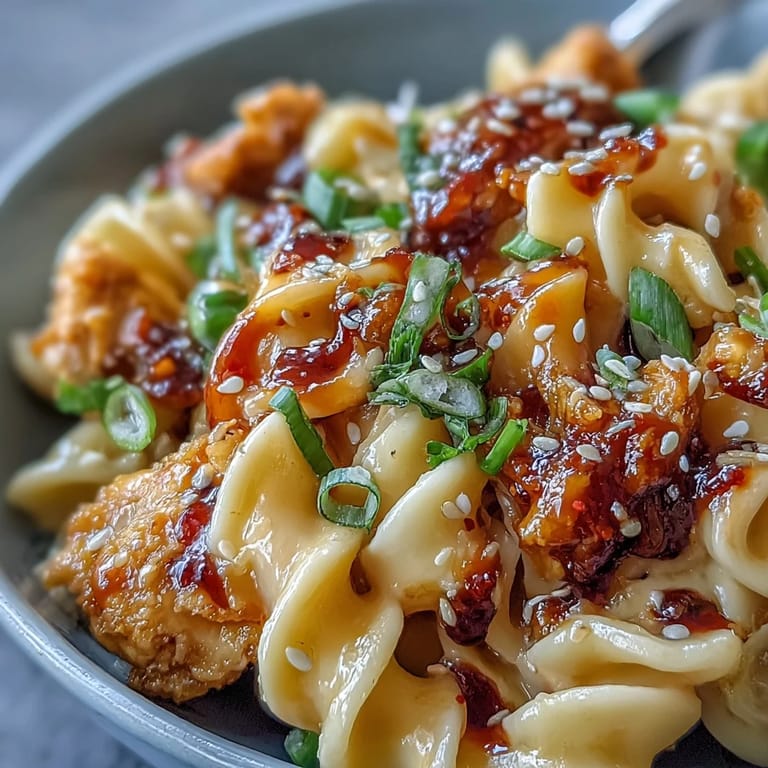
Save My friend Sarah texted me at 7 PM asking what to make for dinner, and I found myself describing this Korean-Style Turkey Mac & Cheese without hesitation—the dish that somehow bridges my love for late-night comfort food with the bold, spicy flavors I've been obsessed with lately. I'd thrown it together on a random Tuesday when I had gochujang in the pantry and ground turkey in the fridge, expecting a pleasant enough meal but nothing remarkable. The moment that first bite hit, with the creamy cheddar giving way to those sweet, spicy turkey crumbles and the sharp bite of scallions, I realized I'd accidentally created something I'd be making again and again. It's the kind of dish that makes you pause mid-chew and think, did I really just make this?
I made this for my coworkers at a potluck, and watching their faces when they realized mac and cheese could taste like this—with actual heat and complexity—was genuinely rewarding. One person asked if I'd ordered it from somewhere, which probably sounds silly, but it stuck with me because homemade food doesn't always get that kind of immediate respect.
Ingredients
- Elbow macaroni (12 oz): The classic pasta shape holds onto every bit of sauce, though small shells work beautifully too if that's what you have.
- Whole milk (2 cups): Don't use skim—the fat is what makes this sauce silky and worth eating.
- Unsalted butter (2 tbsp): Start with unsalted so you control the salt level, especially since soy sauce will add its own saltiness.
- All-purpose flour (2 tbsp): This creates the roux that thickens everything into creamy perfection.
- Sharp cheddar cheese (1.5 cups shredded): The sharpness cuts through the richness and stands up to the spicy turkey.
- Mozzarella cheese (0.5 cup shredded): Added for stretch and a subtle sweetness that balances the gochujang.
- Kosher salt and black pepper: Season lightly at first—the turkey mixture will add plenty of flavor.
- Ground turkey (1 lb): Leaner than beef but still flavorful, especially when coated in that Korean-inspired sauce.
- Gochujang (2 tbsp): This fermented chili paste is the secret weapon; it adds depth, sweetness, and heat all at once.
- Low-sodium soy sauce (1 tbsp): Brings umami and saltiness that ties the whole dish together.
- Honey (1 tbsp): A touch of sweetness tempers the spice and mirrors traditional Korean flavors.
- Toasted sesame oil (2 tsp): Use real sesame oil, not the light kind—its nutty aroma is crucial.
- Garlic and ginger (2 cloves and 1 tsp): Aromatics that make the turkey filling smell absolutely incredible as it cooks.
- Red pepper flakes (0.5 tsp, optional): Only add if you want serious heat; gochujang has enough kick on its own.
- Scallions (4, thinly sliced): The fresh, sharp bite at the end saves the dish from feeling too heavy.
- Toasted sesame seeds (1 tsp, optional): They add crunch and a subtle nuttiness that makes each spoonful interesting.
Tired of Takeout? 🥡
Get 10 meals you can make faster than delivery arrives. Seriously.
One email. No spam. Unsubscribe anytime.
Instructions
- Get the pasta started:
- Bring a large pot of salted water to a rolling boil—the water should taste like the sea. Add elbow macaroni and cook according to package directions, then drain in a colander and set aside; you're looking for tender but not mushy.
- Build the cheese sauce base:
- Melt butter in a large skillet over medium heat, then whisk in flour to create a paste and let it cook for about a minute until it smells toasty. Slowly pour in milk while whisking constantly to avoid lumps, and keep going until the mixture thickens slightly and coats the back of a spoon, roughly 3 to 4 minutes.
- Melt in the cheese:
- Lower the heat to prevent the milk from scorching, then add cheddar and mozzarella, stirring gently until they're completely melted and the sauce is smooth and glossy. Season with salt and pepper to taste, then keep the heat low so it stays warm while you handle the turkey.
- Infuse the turkey with Korean flavors:
- In a separate skillet, warm sesame oil over medium-high heat and add minced garlic and ginger, stirring for about a minute until the kitchen smells incredible. Crumble in the ground turkey, breaking it apart with a wooden spoon as it cooks until there's no pink left, around 5 to 6 minutes.
- Create the spicy-sweet coating:
- Stir gochujang, soy sauce, and honey into the cooked turkey, mixing well so every piece gets coated in that glossy, brick-red sauce. Let it bubble gently for another 2 to 3 minutes, then taste and add red pepper flakes only if you want more heat.
- Bring it all together:
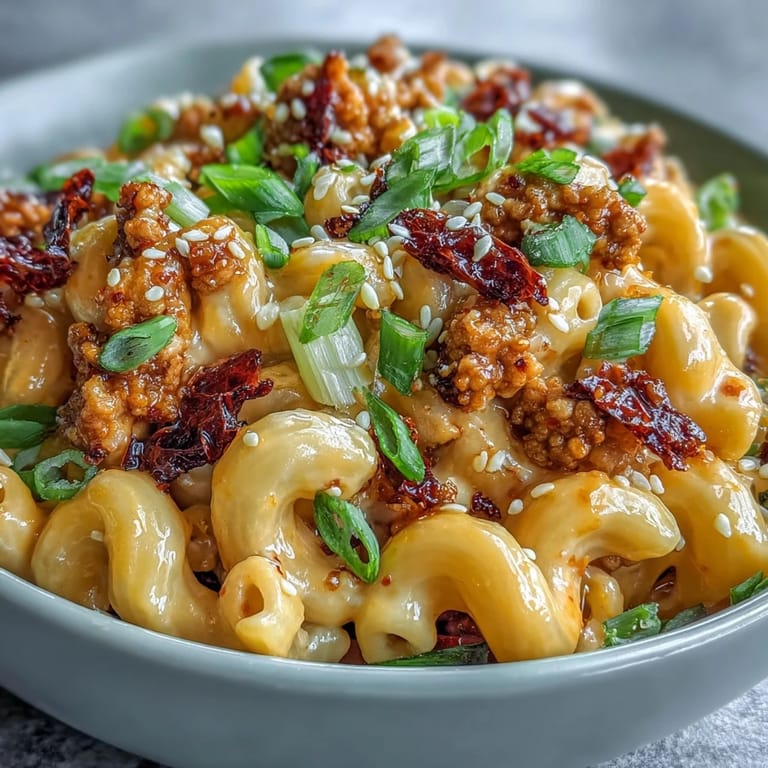
- Pour the cooked macaroni into the cheese sauce and stir gently but thoroughly until every noodle is wrapped in that creamy coating. Fold in about half of the turkey mixture, reserving the rest for topping so you get pockets of concentrated spicy-savory flavor.
- Plate and finish:
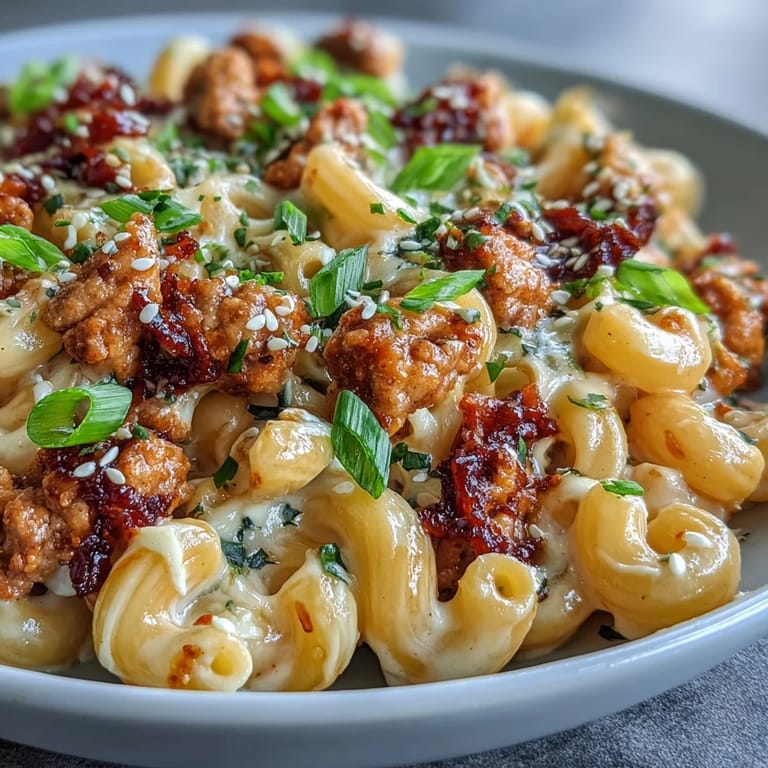
- Divide the mac and cheese among bowls, then top each with remaining turkey crumbles, a scattered handful of sliced scallions, and a sprinkle of sesame seeds if you have them. Serve right away while everything is still hot and the textures are distinct.
 Save
Save There's a moment when you're standing in your kitchen at 6:45 PM, hungry and tired, and suddenly you're eating something that tastes like it came from a restaurant you love, except you made it. That's what this dish does.
The Magic of Gochujang in Comfort Food
The first time I used gochujang in something other than kimchi, I was surprised by how naturally it plays with dairy and cheese. The fermented heat and subtle sweetness don't clash with cream the way fresh hot peppers might—instead, they create this almost umami-rich depth that makes you feel like the dish has been simmering for hours. I've since learned that gochujang is basically the shortcut to flavor complexity, and once you see how it transforms ground meat and creamy sauces, you'll find yourself reaching for it in places you never expected.
Why Half the Turkey Goes on Top
Mixing all the turkey directly into the mac and cheese sounds logical, but it actually waters down the impact of those spicy, sweet, garlicky flavors. By folding in only half and topping with the rest, you get little moments of concentrated deliciousness with each bite, plus the turkey crumbles stay slightly textured rather than dissolving into the sauce. It's a small technique that makes a real difference in how memorable each spoonful feels, especially once the scallions and sesame add their own fresh notes.
Make It Your Own
This dish is built to bend toward your tastes and what's already in your kitchen. If you have gochujang that leans spicy, dial back the red pepper flakes or skip them entirely. If you want to stretch it further or make it lighter, add steamed broccoli florets or sautéed bell peppers right when you fold in the turkey—they'll warm through instantly and add color and nutrition without throwing off the balance.
- Swap ground chicken for turkey if that's what you have, though you might need an extra minute or two since it can be slightly wetter.
- A splash of rice vinegar stirred into the turkey at the very end adds brightness and cuts through the richness in an unexpected way.
- Leftover mac and cheese reheats beautifully in a 350°F oven covered with foil, though the texture won't be quite as creamy as the first night.
 Save
Save This Korean-Style Turkey Mac & Cheese proves that fusion cooking doesn't have to be complicated or pretentious—it just has to be honest and delicious. Make it tonight, and you'll understand why I keep coming back to it.
Recipe FAQs
- → What does gochujang taste like?
Gochujang is a Korean chili paste with a complex flavor profile—it's savory, slightly sweet, and moderately spicy. The heat level varies by brand, so you can adjust the amount to suit your preference.
- → Can I make this dish ahead of time?
The components can be prepared separately in advance—the cheese sauce and turkey mixture keep well in the refrigerator for 2-3 days. Reheat gently before combining and serving for the best texture.
- → What can I substitute for gochujang?
If unavailable, mix sriracha with a touch of miso paste or use Korean red pepper flakes (gochugaru) with soy sauce and a pinch of sugar. The flavor won't be identical but will provide similar heat and umami.
- → Is this dish very spicy?
The spice level is moderate—gochujang provides warmth without overwhelming heat. You can control the heat by reducing the amount of chili paste or omitting the optional red pepper flakes.
- → Can I use different pasta shapes?
Elbow macaroni works best for holding the cheese sauce, but cavatappi, shells, or penne are good alternatives. Choose shapes with nooks and crannies that trap the creamy sauce.
- → How do I store leftovers?
Store in an airtight container in the refrigerator for up to 3 days. Reheat with a splash of milk to restore creaminess. The pasta will absorb more sauce over time.