 Save
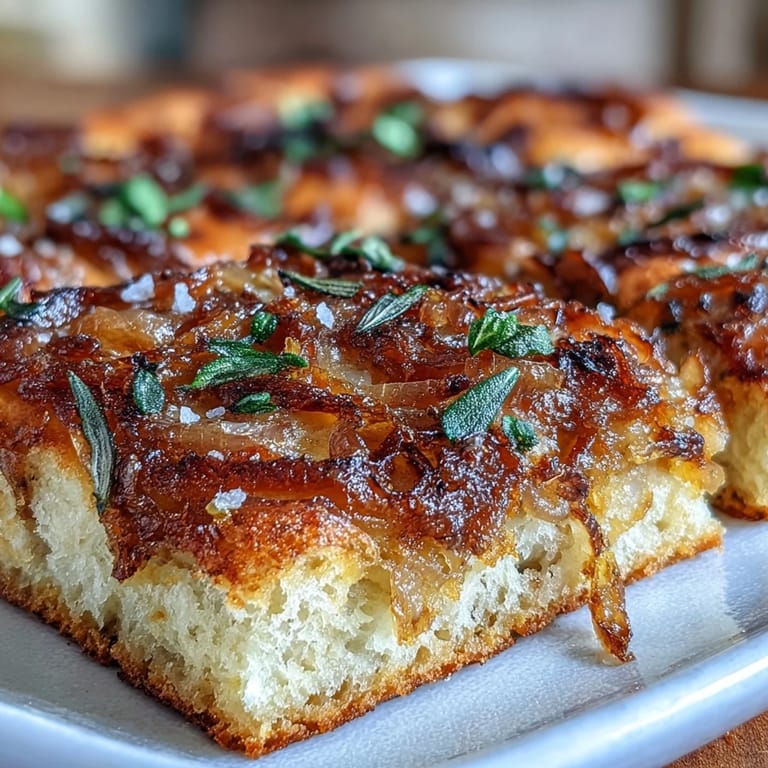
Save My neighbor once described focaccia as the bread that changed her mind about baking, and I finally understood why when I pulled this golden, dimpled loaf from the oven on a quiet Saturday morning. The smell of caramelized onions had been filling my kitchen for hours, mingling with that unmistakable sourdough tang, and suddenly the overnight rise didn't feel like patience—it felt like anticipation. This focaccia sits somewhere between the rustic and the refined, chewy enough to satisfy, airy enough to feel special, and topped with onions that taste like they've been sweetened by time itself.
I made this for the first time when my brother came to visit with his family, and watching my niece tear into a warm piece, oil dripping down her chin, made me realize that homemade focaccia is the kind of bread that turns an ordinary afternoon into something people remember. The house smelled incredible, yes, but it was really about seeing someone bite into something you'd created with your own hands the night before—that moment where bread stops being technique and becomes generosity.
Ingredients
- Active sourdough starter (100 g): Use one that's been fed recently and passes the float test—a bubbly, active starter is the foundation of everything that follows.
- Bread flour (400 g): The higher protein content builds structure and creates that desirable chewy crumb; all-purpose will work but the texture shifts.
- Lukewarm water (300 ml): Temperature matters more than you'd think; too hot kills the culture, too cold and fermentation stalls.
- Fine sea salt (10 g in dough): Added after the autolyse because salt can inhibit gluten development if mixed in too early.
- Extra-virgin olive oil (20 ml plus more for topping): This isn't just fat; it's flavor and richness, so don't skimp on quality.
- Yellow onions (2 medium, thinly sliced): The thin slicing allows them to break down evenly, and patience during cooking is what transforms them into something approaching caramel.
- Flaky sea salt (1 tsp for topping): Applied at the end, it catches the light and adds texture; fine salt dissolves too quickly.
- Fresh rosemary (1 tsp, optional): If using, chop it just before adding so the oils stay bright and don't oxidize.
Tired of Takeout? 🥡
Get 10 meals you can make faster than delivery arrives. Seriously.
One email. No spam. Unsubscribe anytime.
Instructions
- Bring the starter and flour together:
- Mix your active starter, bread flour, and lukewarm water in a large bowl until everything is incorporated and shaggy, like a rough mass that hasn't quite found its shape. Cover and let it rest untouched for 30 minutes—this autolyse develops gluten naturally and makes the next steps easier.
- Incorporate salt and oil:
- Wet your hands, add the salt and olive oil to the dough, and gently squeeze and fold everything together until the salt dissolves and the oil is evenly distributed. It should feel smooth and slightly tacky, not slippery.
- Build strength through stretch and folds:
- Over the next 2 hours, every 30 minutes, use wet hands to stretch one section of dough up and fold it over itself, rotating the bowl between folds—do this 3 to 4 times total. You'll feel the dough becoming more organized and elastic with each set, like it's learning to hold itself up.
- First rise at room temperature:
- Cover the bowl and let it sit undisturbed for 6 to 8 hours at room temperature until it's roughly doubled and jiggles slightly when you move the bowl. The time varies wildly depending on how warm your kitchen is, so trust your eyes more than the clock.
- Transfer to the pan:
- Oil a 9x13-inch baking pan generously, then gently tip the dough onto the oiled surface, being careful not to press out all the air you've worked so hard to develop. Don't worry if it doesn't immediately fill the corners.
- Stretch, cover, and refrigerate:
- Using oiled fingertips, gently stretch and press the dough to reach the edges of the pan, then cover it loosely and refrigerate overnight (8 to 12 hours). The cold slows fermentation and deepens flavor while the dough relaxes into the pan's shape.
- Caramelize the onions while dough rests:
- Heat 1 tbsp olive oil in a skillet over medium-low heat, add your thinly sliced onions, and stir occasionally for 20 to 25 minutes, letting them soften and turn deep golden—this patience is non-negotiable, and rushing ruins the whole point. Once they're ready, they should smell almost sweet and feel jammy, not crispy.
- Bring dough to room temperature:
- Remove the dough from the refrigerator and let it sit covered on the counter for about 1 hour until it's no longer cold to the touch. This prevents the cold center from affecting bake time.
- Dimple, top, and season:
- Preheat your oven to 220°C (425°F), then use your fingertips to make shallow dimples all across the dough surface, creating little pools for oil to gather. Drizzle generously with olive oil, scatter the cooled caramelized onions evenly across the top, then finish with flaky sea salt, fresh rosemary if using, and a grind of black pepper.
- Bake until golden:
- Bake for 25 to 30 minutes until the edges are crisp and brown and the top is deep golden, checking around the 25-minute mark so you don't overshooting. The focaccia should sound slightly hollow when tapped on the bottom.
- Cool and serve:
- Let it rest for a few minutes out of the oven, then slice into squares and serve while it's still warm enough that the oil glistens.
 Save
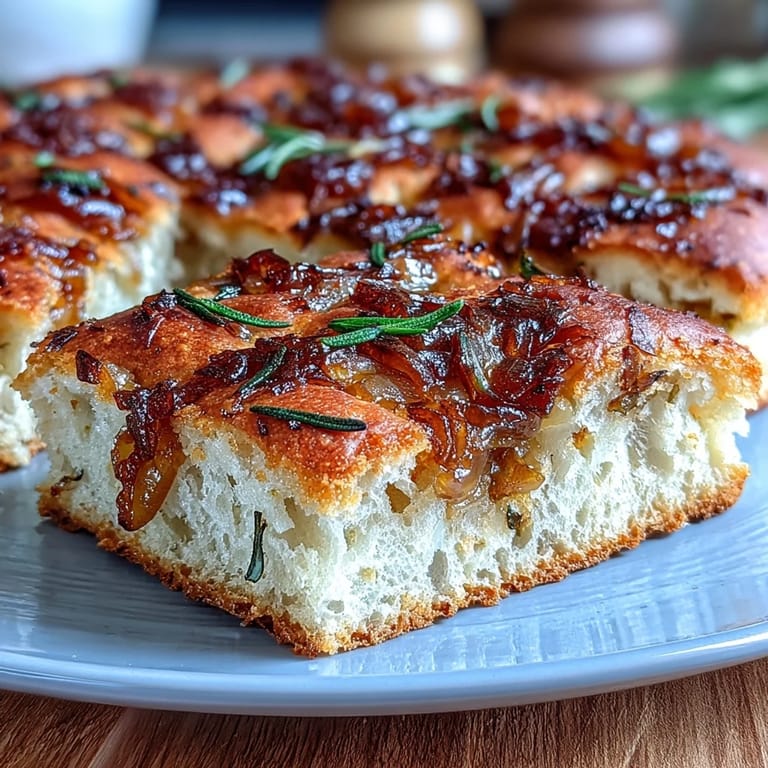
Save There's a moment, usually around hour 8 when the dough is quietly fermenting in the cold fridge, where you start to believe in the invisible work happening inside the plastic wrap. When you finally pull it out the next morning and it's risen into something almost puffy, that's when baking stops feeling like following instructions and starts feeling like magic you've learned to perform.
The Sourdough Difference
Sourdough starter isn't just another leavening method—it's a living culture that adds complexity and digestibility to every loaf it touches. Using it for focaccia means slower fermentation, which means the gluten develops more naturally and the flavors become layered and interesting rather than flat and yeasty. If you don't have an active starter yet, now is honestly a good time to begin one, but you can also use instant yeast as a backup: replace the 100g starter with 5g instant yeast mixed with the water.
Mastering the Caramelization
Those onions deserve their own moment of attention because they're the reason this focaccia tastes like someone who knows their way around a kitchen made it. Caramelizing is a slow process—there are no shortcuts, no high heat that will hurry it along without burning. The onions release their natural sugars gradually, and over 20 to 25 minutes they collapse into something sweet and almost spreadable, a completely different ingredient than the raw slices you started with.
Making It Your Own
This recipe is a blank canvas for whatever flavor direction calls to you, whether that's channeling Mediterranean traditions or inventing something entirely new. The base dough is sturdy enough to handle additions, and the topping is where you can play without much consequence. Some days I add pitted olives or sun-dried tomatoes alongside the onions, sometimes I scatter a handful of fresh thyme, and occasionally I've added a sprinkle of fleur de sel mixed with just a whisper of smoked paprika for something with more edge.
- The dough forgives minor timing variations, so if you can't stretch and fold exactly on schedule, a few minutes either way won't hurt.
- Leftover focaccia reheats beautifully in a toaster oven and tastes almost as good as it did fresh, though there's rarely any left to worry about.
- Make sure your baking pan is well-oiled so the focaccia doesn't stick; a little extra oil here saves frustration.
 Save
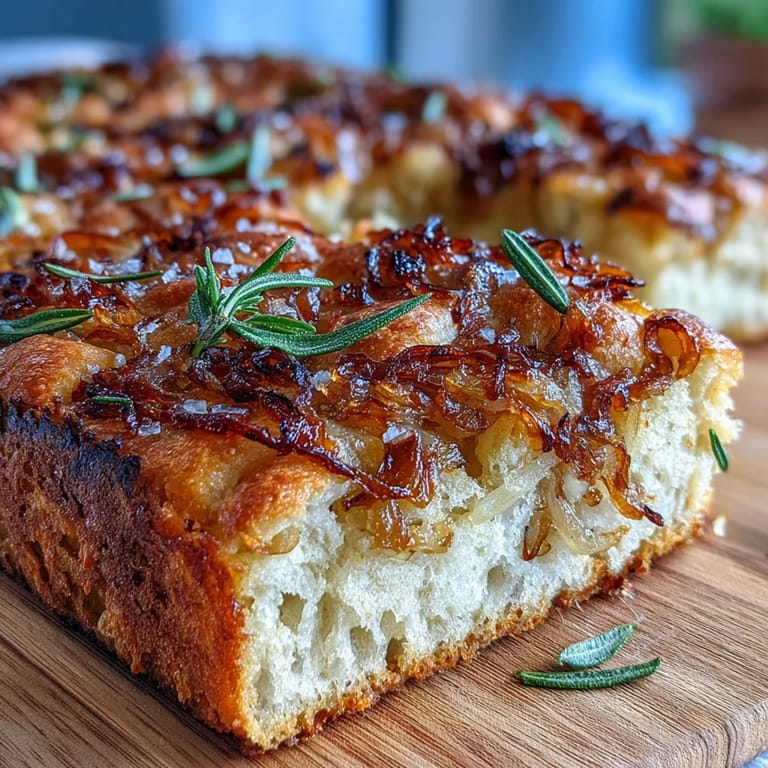
Save There's something quietly satisfying about baking focaccia, the kind of bread that looks fancy but asks very little in return except time and attention. Make this once and it becomes the bread you'll return to whenever you want to feel like a baker.
Recipe FAQs
- → How long should the dough rest overnight?
Refrigerate the shaped dough for 8 to 12 hours to develop flavor and texture before baking.
- → What is the best way to caramelize the onions?
Cook sliced onions gently in olive oil over medium-low heat for 20-25 minutes until golden and soft.
- → Can I add other toppings to the focaccia?
Yes, sliced olives or sun-dried tomatoes can be added with the onions for extra flavor.
- → What type of flour is used in the dough?
Bread flour is used to provide structure and chewiness to the focaccia.
- → How do I make the dough more elastic?
Perform 3 to 4 sets of stretch and folds every 30 minutes during the initial 2-hour ferment to build gluten strength.