 Save
Save My neighbor handed me a bowl of gazpacho on the hottest afternoon of July, condensation dripping down the glass, and I realized I'd been missing out on one of summer's greatest pleasures. The soup was so cold it almost hurt to drink, but that first spoonful—bright tomato, crisp cucumber, nothing fussy—made me understand why Spanish kitchens have relied on this for centuries. I went home and made my own version that same evening, leaving it to chill while I sat on the porch watching the light change. By the time dinner rolled around, I had something that tasted like liquid sunshine.
I served this to friends on a sweltering evening when nobody wanted to sit around a hot table, and we ended up standing in the kitchen drinking it straight from bowls like it was soup soup, not appetizer. Someone asked if I'd added sugar, surprised by how the natural sweetness of ripe tomatoes came through without any tricks. That's when I realized this soup doesn't need to be fancy—it just needs vegetables at their peak and the patience to let them shine.
Ingredients
- Ripe tomatoes (4 large): Choose ones that smell sweet and feel heavy for their size, because this soup lives or dies by tomato quality—pick them when they're at their most fragrant.
- Cucumber (1 large): Peeling removes bitterness and gives you that silky texture, though leaving some skin adds a garden-fresh fleck.
- Red bell pepper (1): Adds gentle sweetness and body without overpowering the tomato, so don't skip it or substitute with green.
- Red onion (1 small): This is your flavor backbone, so don't be tempted to leave it out just because you're worried about sharpness.
- Garlic (1 clove): One clove is enough—gazpacho isn't a vampire repellent, just a hint of warmth.
- Extra-virgin olive oil (2 tablespoons): Good oil makes a difference here since there's nowhere for it to hide, so use something you'd actually pour over bread.
- Red wine vinegar (2 tablespoons): This sharpens everything and keeps the soup from tasting flat, even after it sits in the fridge.
- Sea salt and black pepper: Start conservative and taste as you go, because you'll need less than you think once everything's had time to meld.
- Cold water (1 ½ cups): This thins the soup to the right consistency, though you might add more or less depending on your blender.
Tired of Takeout? 🥡
Get 10 meals you can make faster than delivery arrives. Seriously.
One email. No spam. Unsubscribe anytime.
Instructions
- Gather and prep your vegetables:
- Wash everything, core your tomatoes, peel your cucumber, remove the seeds from the pepper. There's something meditative about this step—the smell of tomato plants on your hands, the knife making clean cuts through summer vegetables.
- Blend until silky:
- Add tomatoes, cucumber, pepper, onion, and garlic to the blender and go until there are no chunks left, which takes maybe a minute or two depending on your machine. The moment it goes from rough and textured to smooth is when you know it's working.
- Add the liquid and seasonings:
- Pour in the olive oil, vinegar, salt, pepper, and water, then blend again until the whole thing is one unified color and consistency. You're not looking for foam, just something that moves together.
- Taste and adjust:
- This step matters—you might need more salt if your tomatoes weren't very flavorful, or another splash of vinegar if it tastes too sweet. There's no wrong answer here, just your preference.
- Chill thoroughly:
- Pour everything into a bowl or pitcher, cover it, and let it sit in the coldest part of your refrigerator for at least two hours—longer is fine and sometimes better, as flavors meld and sharpen overnight. When you're ready to serve, give it a stir because separation is natural.
 Save
Save I made this one August when my friend was going through a rough time, and we sat in her backyard with bowls of gazpacho while cicadas sang themselves hoarse in the trees. She said nothing about her worry that day, just asked for the recipe and a second bowl, and sometimes that's how food works its quiet magic.
Texture and Temperature Matter
Gazpacho is all about contrast—the shock of cold against summer heat, the play of silky liquid against crisp garnish pieces. If you want it smoother, strain it through a fine sieve after blending, which takes the rustic edge off and makes it feel more elegant. Some people like it thicker and more substantial, in which case you'd add less water and use it almost as a dip or a sauce alongside bread.
Building Flavor Depth
The basic version is perfect, but once you've made it a few times, you might want to explore what else works. A pinch of smoked paprika adds earthiness without being obvious, a dash of Tabasco brings heat, and a tiny bit of cumin can make it feel like a different soup altogether. Some cooks swear by a splash of sherry vinegar instead of red wine, or add a pinch of sugar if their tomatoes disappointed them.
Serving and Storage
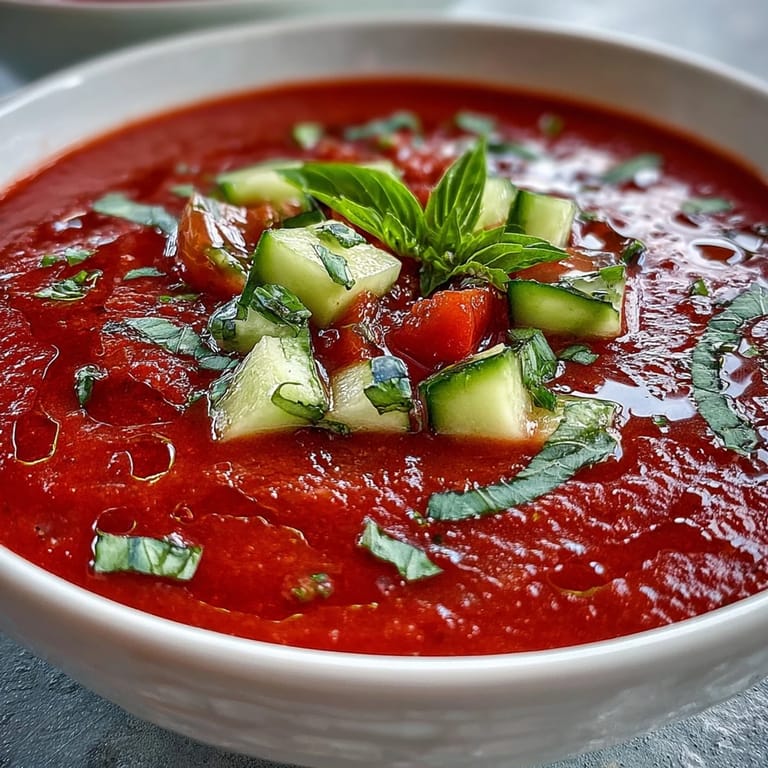
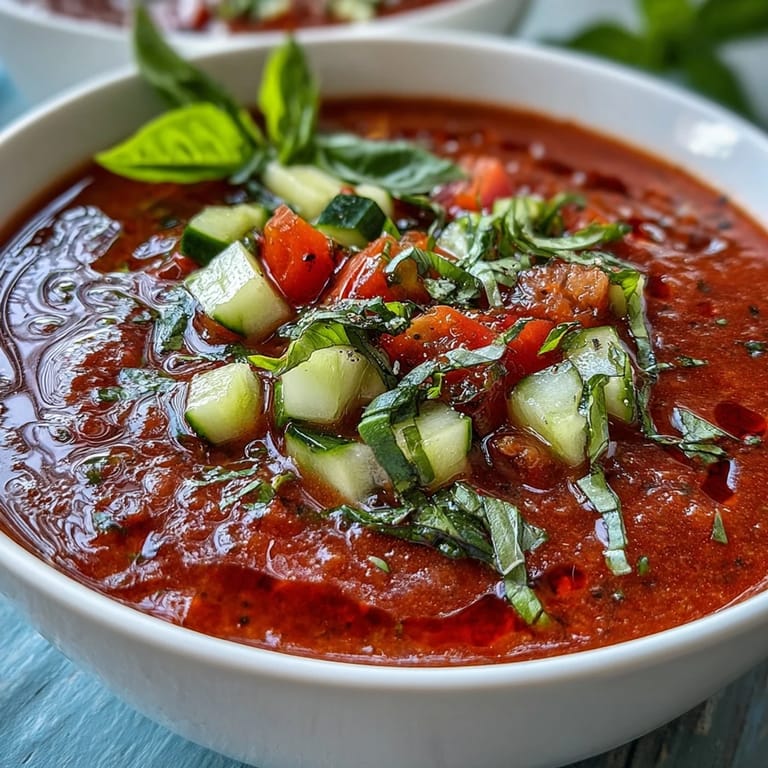
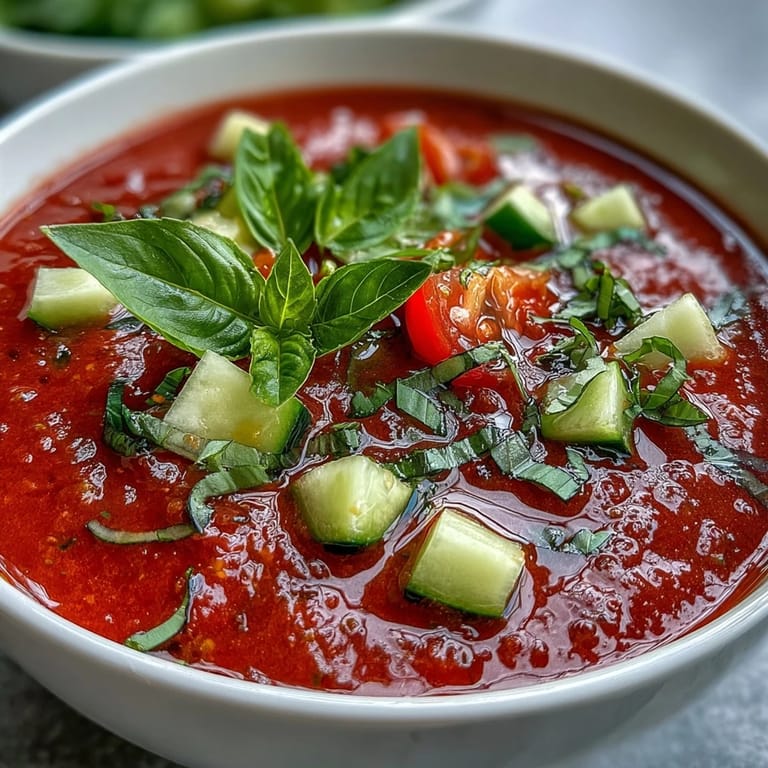
Gazpacho is at its best served very cold in chilled bowls, with all the bright garnishes tumbled on top so people can see what they're about to eat. It keeps well for three or four days in the refrigerator, though the flavor starts to flatten a bit by day five, so don't make it too far in advance.
- Serve it as a first course before grilled fish, or as a light lunch with crusty bread for soaking up every last drop.
- The garnishes are not optional decoration—they're the whole point, giving you texture and freshness that the smooth base needs.
- Chill your serving bowls if you can, because even a cool bowl helps keep the soup from warming up too quickly as you eat.
 Save
Save This soup has become my answer to sweltering evenings and the question of what to make when you want something nourishing but not hot. It's Spanish wisdom in a bowl, requiring nothing but patience and ripe vegetables.
Recipe FAQs
- → How long should the gazpacho chill?
Chilling for at least 2 hours is recommended to allow the flavors to meld and to serve it refreshingly cold.
- → Can I adjust the seasoning?
Yes, taste and adjust salt, pepper, and vinegar to suit your preference before chilling.
- → What tools are needed for preparation?
A blender or food processor, a large bowl or pitcher, and basic cutting tools suffice for easy preparation.
- → Are garnishes necessary?
Garnishes like diced cucumber, tomato, fresh herbs, and a drizzle of olive oil enhance texture and flavor but are optional.
- → Can I customize the ingredients?
Yes, adding spices like smoked paprika or a touch of Tabasco can add extra zing, and straining can create a smoother texture.