 Save
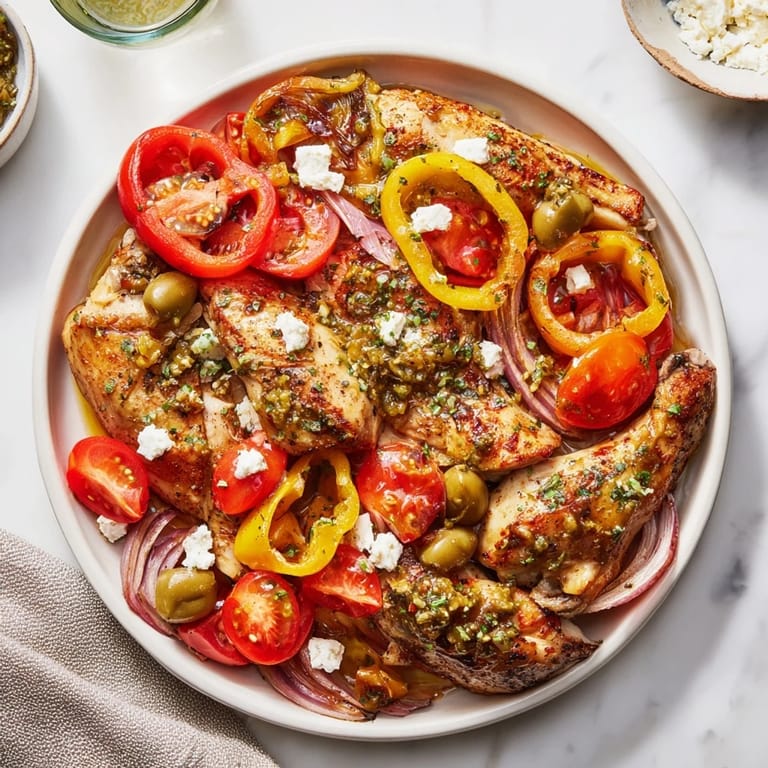
Save I threw this together on a Tuesday night when the kitchen felt too hot for anything complicated. The smell of oregano hitting warm olive oil reminded me why I keep coming back to Greek flavors. Chicken thighs, a few peppers, some olives scattered across a pan. Nothing fancy, just honest food that tastes like sunshine even when it's raining outside.
The first time I made this, my neighbor knocked on the door halfway through roasting. She said the smell drifted across the yard and she had to know what I was cooking. I handed her a plate through the screen door, feta still melting into the hot vegetables. She texted me the next day asking for the recipe, and I realized I'd been making it by feel the whole time.
Ingredients
- Boneless, skinless chicken thighs: These stay moist and tender even if you accidentally overcook them a bit, unlike breasts which can turn dry and sad.
- Olive oil: Use the good stuff here because it carries all the other flavors and creates those crispy, golden edges on the vegetables.
- Fresh lemon juice: Brightens everything and cuts through the richness of the chicken, I always squeeze extra wedges over the top before serving.
- Dried oregano: The backbone of Greek cooking, it smells like summer and makes the whole dish feel sun-soaked.
- Garlic powder: I know fresh garlic is trendy, but powder distributes evenly in the marinade and won't burn on the hot pan.
- Smoked paprika: Adds a subtle warmth and depth without any real heat, just a whisper of smokiness.
- Bell peppers: I use red, yellow, and orange because they're sweeter than green and they roast into candy-like ribbons.
- Red onion: Turns soft and sweet in the oven, almost jammy, and the purple color bleeds into everything beautifully.
- Cherry tomatoes: They burst and release their juices, creating a light sauce that pools under the chicken.
- Kalamata olives: Salty, briny, and essential for that authentic Greek punch, don't skip them even if you think you don't like olives.
- Feta cheese: Crumbled over the hot pan, it softens just enough to be creamy but still holds its shape and adds tangy richness.
- Fresh parsley: A handful of green at the end makes everything look alive and adds a fresh, grassy note.
Tired of Takeout? 🥡
Get 10 meals you can make faster than delivery arrives. Seriously.
One email. No spam. Unsubscribe anytime.
Instructions
- Preheat and Prep the Pan:
- Turn your oven to 220°C and line a large sheet pan with parchment paper. This step is optional, but it makes cleanup so much easier and nothing sticks.
- Mix the Marinade:
- In a large bowl, whisk together olive oil, lemon juice, oregano, garlic powder, smoked paprika, salt, and pepper until it smells incredible. The paprika will tint everything a warm rust color.
- Coat the Chicken:
- Toss the chicken thighs into the marinade and turn them until every piece is slicked and glossy. If you have ten extra minutes, let them sit and soak up the flavors.
- Arrange the Vegetables:
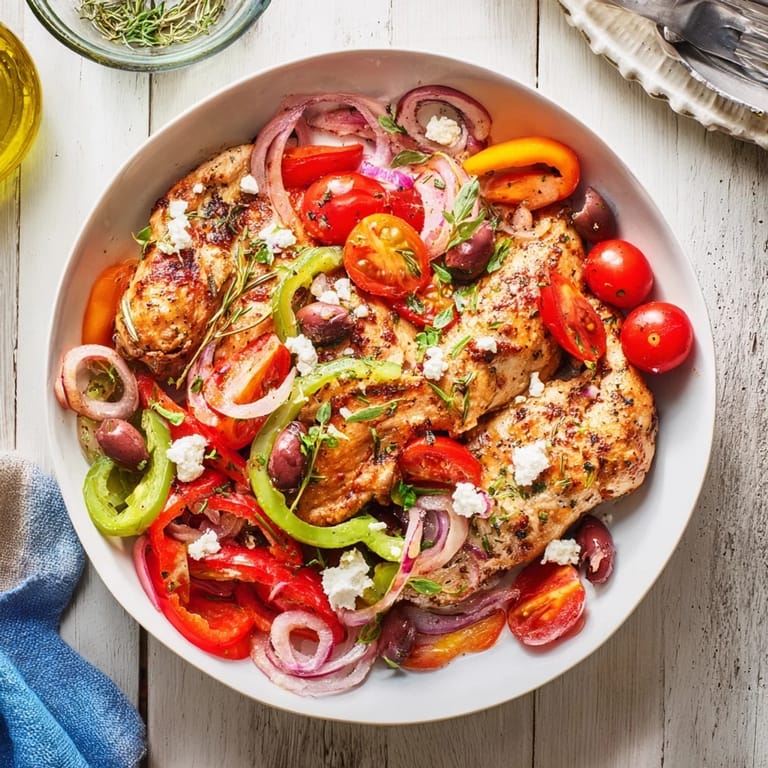
- Scatter the sliced bell peppers, red onion, cherry tomatoes, and olives across the sheet pan in a single layer. Drizzle a little olive oil over them and toss with your hands so everything glistens.
- Nestle the Chicken:
- Place the marinated chicken thighs right among the vegetables, leaving a little space around each piece so the heat circulates. The vegetables will catch all the drippings and turn golden.
- Roast Until Golden:
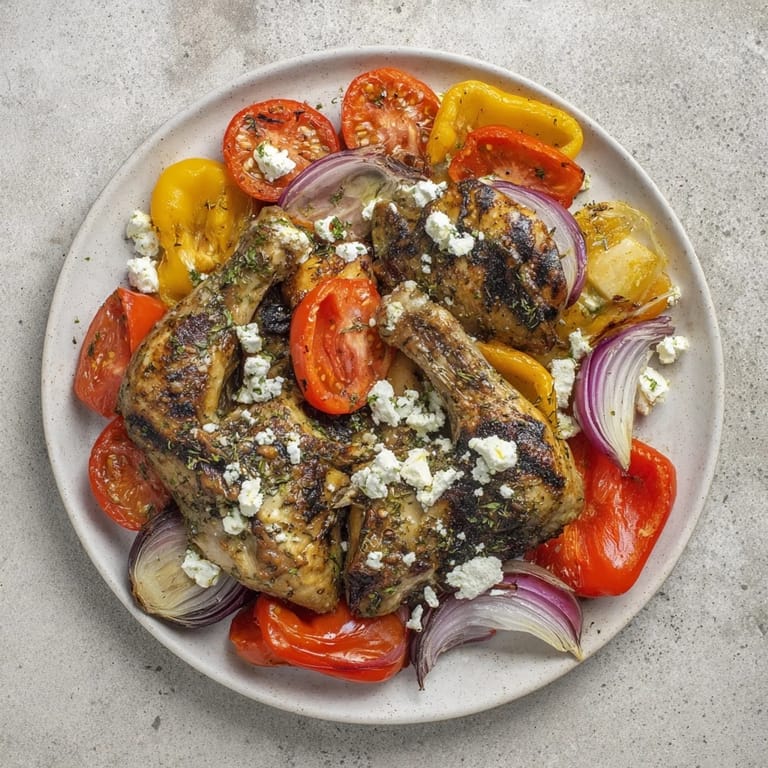
- Slide the pan into the oven and roast for 25 to 30 minutes. The chicken should reach 75°C inside, and the vegetables will have crispy, caramelized edges that you'll want to eat straight off the pan.
- Finish and Serve:
- Pull the pan from the oven and immediately sprinkle crumbled feta and chopped parsley over everything while it's still hot. Serve with lemon wedges for squeezing.
 Save
Save I served this at a small dinner party once, and someone said it tasted like a vacation. That stuck with me. It's not just dinner, it's the feeling of sitting outside with a glass of wine, the warmth of the sun still on your skin, and nothing to do but enjoy the moment.
Making It Your Own
You can swap the chicken thighs for breasts if that's what you have, just check them a few minutes earlier because they cook faster. I've also added zucchini, eggplant, and even small potatoes when I wanted something heartier. The vegetables are flexible, use whatever looks good at the market or is hiding in your crisper drawer.
Serving Suggestions
This is perfect on its own, but I often serve it with warm pita bread for scooping up all the juices and feta. Sometimes I spoon it over rice or couscous if I want to stretch it for more people. A crisp Greek white wine or even a cold beer makes it feel like a real meal, not just weeknight survival.
Storage and Leftovers
Leftovers keep well in the fridge for up to three days, and they're almost better the next day when the flavors have melded together. I reheat them gently in the oven or eat them cold, stuffed into pita with some extra feta and a drizzle of tahini.
- Store in an airtight container to keep everything fresh and prevent the feta from drying out.
- Reheat at 180°C for about 10 minutes, or until warmed through without drying out the chicken.
- If you're meal prepping, keep the feta and parsley separate and add them fresh when you serve.
 Save
Save This dish has earned its place in my regular rotation because it delivers big flavor with almost no effort. I hope it becomes one of those recipes you make without thinking, the kind that feels like home no matter where you are.
Recipe FAQs
- → What is the best cut of chicken to use?
Boneless, skinless chicken thighs work well for their tenderness and flavor, but chicken breasts can be used with slightly adjusted cooking times.
- → Can I add other vegetables to the pan?
Yes, zucchini, eggplant, or potatoes can be added for extra variety and texture, adjusting cooking times as needed.
- → How do I know when the chicken is cooked?
Chicken is done when it reaches an internal temperature of 75°C (165°F) and the juices run clear.
- → What type of olives is recommended?
Kalamata olives are ideal for their rich, briny flavor that complements the Mediterranean seasonings well.
- → Can this dish be prepared ahead of time?
The chicken can be marinated up to a few hours before cooking to enhance flavors, but roasting is best done fresh.