 Save
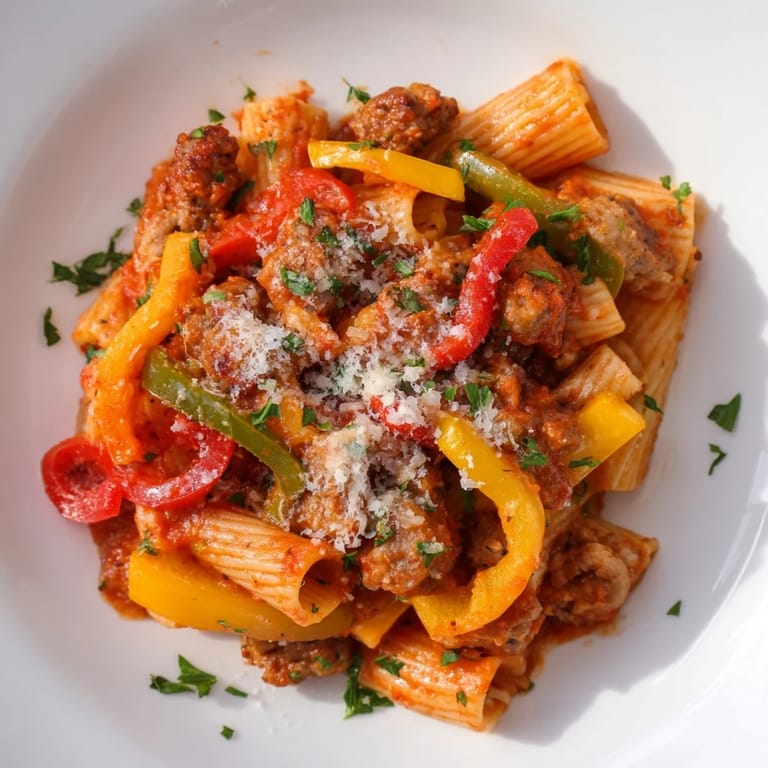
Save My neighbor Maria handed me a steaming bowl of this sausage and peppers pasta one late summer evening, and I remember standing in her kitchen watching the way the peppers had turned almost translucent and golden in the pan. She'd made it a hundred times, but the care she took—stirring slowly, tasting the sauce, adjusting the seasoning—made it feel like the first time. That one bowl changed how I thought about weeknight cooking; it wasn't fancy, but it felt like love in a skillet.
I made this for my daughter's friend group one weeknight, and something magical happened—everyone went quiet when they tasted it, then immediately asked for seconds. It's the kind of food that feels indulgent but isn't pretentious, filling enough that people actually stop talking mid-conversation to appreciate what's on their plate.
Ingredients
- Italian sausage: The backbone of this dish—buy good quality with real meat, and don't skip removing the casings. Mild or spicy depends on your heat tolerance, but the fat content is what creates that deep, savory foundation.
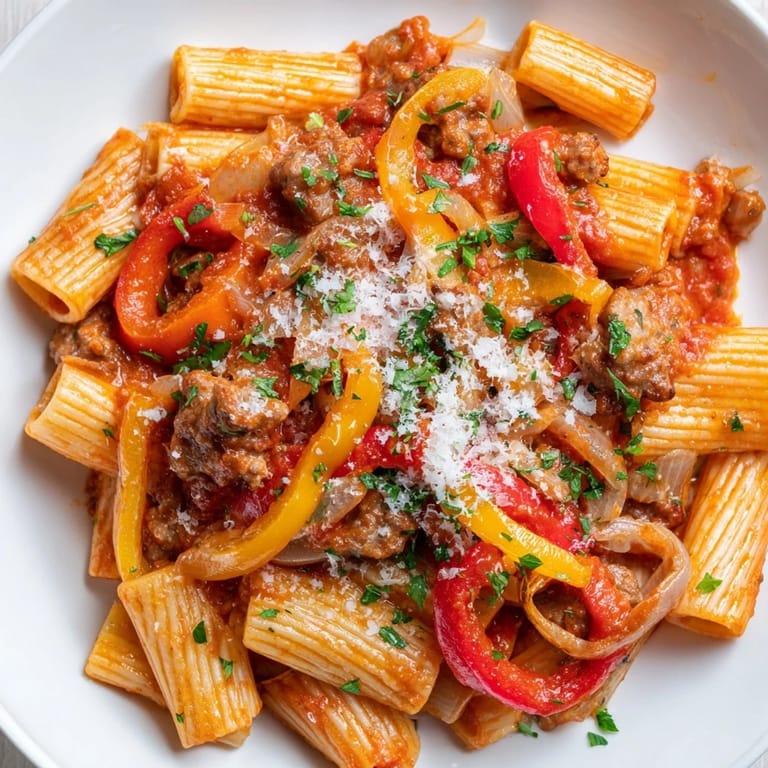
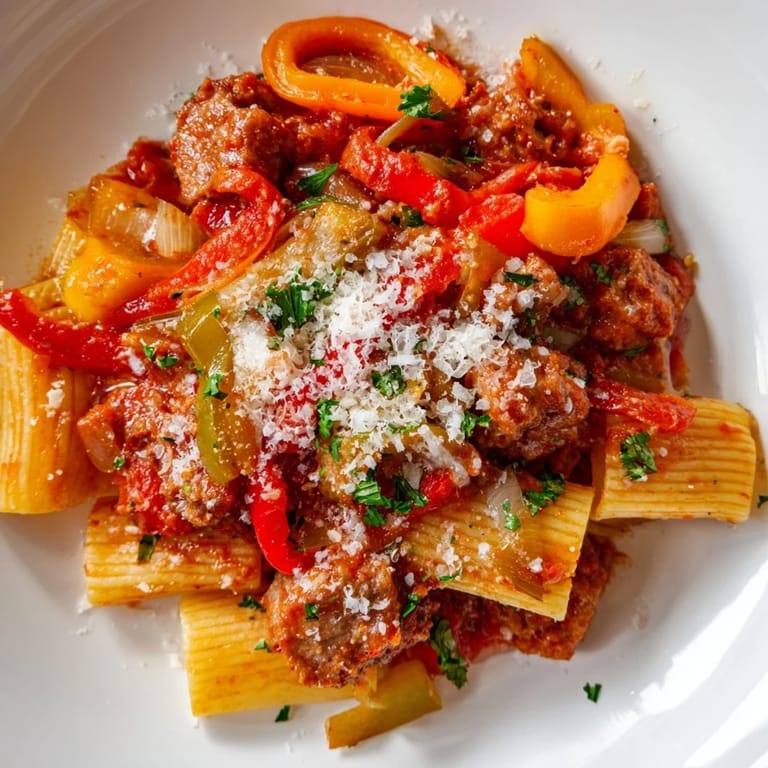
- Bell peppers (red, yellow, green): The trio gives you visual beauty and different subtle sweetness levels as they cook down. Red ones get sweetest, so don't skip any color.
- Onion: Slice it thin and let it caramelize slowly; this is where umami happens quietly in the background.
- Garlic: Just a minute in the hot pan with the oil, and your kitchen smells like something worth waiting for.
- Crushed tomatoes: Canned is perfect here—no need for fresh or jarred sauce. The tomato paste mixed in deepens the flavor without making it acidic.
- Dried oregano and basil: These Italian herbs are essential; they tie everything together and remind your palate this is comfort food with roots.
- Penne or rigatoni: The ridges catch the sauce beautifully. Cook it to al dente so it doesn't turn mushy when you toss it in.
- Olive oil: Use what you'd actually pour on bread. It's not just cooking fat here; it carries flavor.
- Fresh parsley and Parmesan: The finish that makes people lean in and smell the plate before eating.
Tired of Takeout? 🥡
Get 10 meals you can make faster than delivery arrives. Seriously.
One email. No spam. Unsubscribe anytime.
Instructions
- Get your pasta water ready:
- Fill a large pot with salted water—it should taste like a pleasant soup—and bring it to a rolling boil. This is your safety net later if the sauce gets too thick. Cook the pasta just until it resists slightly when you bite it, then drain, remembering to scoop out that half cup of starchy water before you dump the rest.
- Brown the sausage properly:
- Heat olive oil in a large skillet over medium heat and break the sausage into small, irregular pieces with a wooden spoon as it cooks. Don't rush this—it takes about 5 to 7 minutes for the meat to turn golden brown and render its fat. This is where flavor is being built.
- Soften the peppers and onions:
- Pour off excess fat if needed, then add your peppers and onion slices to the same skillet. Let them sit without stirring too much for a few minutes, then toss occasionally. They'll begin to char slightly at the edges and collapse into soft, sweet ribbons after about 5 to 6 minutes.
- Wake up the garlic:
- Stir in minced garlic and let it perfume the pan for exactly one minute—any longer and it burns, any less and you miss the bloom. You'll smell it shift from raw to aromatic.
- Build the sauce:
- Stir in tomato paste first to deepen it in the hot oil, then add crushed tomatoes, oregano, basil, and red pepper flakes if you like heat. Season generously with salt and pepper, then let it bubble gently for 5 minutes so the flavors soften and marry together.
- Bring it together:
- Return the cooked sausage to the skillet and fold everything together. Simmer for 3 to 4 minutes, adding splashes of that reserved pasta water if the sauce looks too thick or clings too heavily to the pan. The pasta will absorb more sauce as it sits.
- Finish with the pasta:
- Add the drained pasta directly to the skillet and toss gently for 1 to 2 minutes over low heat, letting the noodles absorb the sauce. This is when it transforms from components into a single, cohesive dish.
 Save
Save The first time I made this alone, my partner came home to find me standing over the stove breathing in the aroma like it was the most important thing happening that day. She didn't say anything—just wrapped her arms around me from behind and waited for it to finish. Some dishes become rituals without meaning to.
Why This Recipe Works
There's a reason this dish has lasted decades in Italian-American kitchens: it respects the sausage without overshadowing it, lets the peppers be sweet without being cloying, and uses the simplest sauce possible to tie everything together. Nothing competes; everything complements. The pasta absorbs every bit of flavor without disappearing into it.
Variations That Matter
I've tested this with chicken sausage when I wanted something lighter, and it works—though you lose that initial richness from pork fat. A splash of red wine added with the tomatoes deepens the sauce into something almost winey, which is lovely if you have it. Some nights I add a pinch of fennel seed to echo the Italian sausage's natural spice, or a small handful of chopped fresh basil at the very end for brightness.
Serving and Storage
This tastes best the day you make it, but reheats beautifully the next day—sometimes the flavors even deepen. Store it in an airtight container and warm it gently on the stovetop with a splash of water if it's dried out. Leftovers are honest food: no pretense, just straight-ahead flavor.
- Top each bowl with a generous handful of fresh parsley and freshly grated Parmesan—don't use the pre-shredded kind.
- A simple green salad with vinaigrette cuts through the richness beautifully.
- If you have crusty bread, use it to soak up every bit of sauce left behind.
 Save
Save This is the kind of recipe that asks very little but gives everything—a quiet, reliable friend on a weeknight when you need something real. Make it often.
Recipe FAQs
- → Can I use a different type of pasta?
Yes, penne and rigatoni work great, but you can also use other sturdy pasta shapes like fusilli or rotini to hold the sauce well.
- → How do I adjust the spice level in this dish?
Use mild or spicy Italian sausage according to preference and control heat by varying the amount of crushed red pepper flakes.
- → What’s the best way to cook the peppers and onions?
Sauté them until softened and slightly caramelized to bring out their natural sweetness before adding the garlic and tomato components.
- → Can I substitute sausage with another protein?
Turkey or chicken sausage are excellent lighter alternatives that still provide great flavor and texture.
- → How do I prevent the sauce from becoming too thick?
Reserve some pasta cooking water and add it gradually to the sauce to achieve the desired consistency.