 Save
Save The first time I bit into a proper sabich was on a sweltering afternoon in Tel Aviv, standing at a cramped counter while the vendor moved with practiced speed, assembling sandwiches like he was conducting an orchestra. I was hungry and skeptical—how could something so simple, just fried eggplant and eggs in pita, be this extraordinary? But that warm bread, the creamy tahini, the bright crunch of the salad, and the way everything came together in one messy, perfect bite changed my mind instantly. Now whenever I make it at home, I'm chasing that exact feeling of casual joy.
I served sabich to my skeptical cousin who claimed to hate eggplant, and watching his face light up when he took that first bite felt like winning an argument without saying a word. He went back for seconds, then thirds, and now it's become our thing—whenever he visits, he texts ahead asking if I'm making it. That's when I realized sabich isn't just food; it's permission to enjoy something simple without apology.
Ingredients
- Eggplant (2 medium, sliced 1/2-inch rounds): The star of the show—salting it first draws out bitter moisture, so don't skip that step, and the rounds need to be thick enough to fry without falling apart.
- Salt: Used both to cure the eggplant and season throughout, it brings out the sweetness hiding in those purple slices.
- All-purpose flour (1/2 cup): Just enough to create a delicate crust that fries up golden without making the eggplant heavy.
- Vegetable oil (1 cup for frying): You need enough depth to get that perfect crispy exterior, so don't skim on this.
- Large eggs (4): Hard-boiled and sliced, they add richness and protein that makes this meal genuinely satisfying.
- Tomatoes (2 medium, diced): Fresh and bright, they're the backbone of the Israeli salad's clean flavor.
- Cucumber (1 medium, diced): Adds cooling crunch that balances all the warm, rich components.
- Red onion (1/4, finely chopped): A little sharpness cuts through the tahini beautifully, but don't overdo it.
- Fresh parsley (2 tablespoons, chopped): This isn't decoration—it's essential for the fresh, herby note the salad needs.
- Fresh lemon juice (1 tablespoon): Squeezed at the last second, it keeps the salad tasting alive and bright.
- Extra-virgin olive oil (1 tablespoon): For the salad, this brings richness and ties flavors together.
- Tahini paste (1/2 cup): The creamy soul of the sandwich, worth seeking out good quality for a silkier sauce.
- Water (1/4 cup for tahini): Essential for loosening tahini to the right pourable consistency—you control the thickness here.
- Garlic (1 small clove, minced): Just enough to whisper through the tahini without shouting.
- Pita breads (4 large): Warm them gently so they stay soft enough to pocket without tearing.
- Amba (1/2 cup pickled mango sauce, optional): This traditional touch adds a tart, fruity depth that makes the whole sandwich sing, but it's optional if you can't find it.
- Fresh cilantro (1/4 cup, chopped): A final green note that adds brightness and a touch of herbaceous complexity.
- Pickles (1/4 cup sliced, optional): For extra tang and a second textural crunch layer.
- Hot sauce: To taste—it's your invitation to turn up the heat however you like.
Tired of Takeout? 🥡
Get 10 meals you can make faster than delivery arrives. Seriously.
One email. No spam. Unsubscribe anytime.
Instructions
- Salt and rest the eggplant:
- Lay your eggplant rounds on a cutting board and sprinkle generously with salt on both sides. Let them sit for 15 minutes—you'll actually see the moisture beading up on the surface. This step is non-negotiable if you want tender eggplant instead of spongy sadness.
- Dry and flour:
- Pat each slice thoroughly dry with paper towels, then give them a light, even dredge in flour on both sides, tapping off the excess. You want a whisper-thin coating, not a heavy crust.
- Fry until golden:
- Heat your oil to medium-high until it shimmers—you'll see the heat rippling across the surface. Working in batches so you don't crowd the pan, fry each slice for about 2 to 3 minutes per side until it's deep golden and the edges have started to crisp. The eggplant should feel tender when you press it with a fork.
- Drain and set aside:
- Transfer each batch to a paper towel-lined plate to absorb the excess oil while they're still hot—this keeps them from getting greasy.
- Cook the eggs:
- While the eggplant is frying, place your eggs in a saucepan and cover them with cold water. Bring to a boil, then immediately remove from heat, cover, and let sit for 9 minutes. This gives you perfectly jammy, creamy egg yolks that aren't rubbery.
- Cool and peel:
- Transfer the eggs to an ice water bath to stop the cooking, then gently tap and roll each one to crack the shell before peeling under cool running water—the water helps separate the shell from the white. Once cool, slice them into rounds.
- Make the Israeli salad:
- In a bowl, combine your diced tomatoes, cucumber, red onion, and parsley, then dress with lemon juice and olive oil. Taste and season with salt and pepper—this salad should taste bright and alive, not bland.
- Whisk the tahini sauce:
- In another bowl, whisk together tahini paste, minced garlic, and lemon juice until combined, then add water a little at a time, whisking constantly until you reach a pourable, creamy consistency. It should drizzle smoothly but not be watery. Taste and adjust salt as needed.
- Warm the pita:
- Just before serving, warm your pita breads gently—you can hold them over a gas flame for a few seconds per side, wrap them in foil and warm in a 350°F oven for a few minutes, or even warm them in the same skillet you used for eggplant if you want that subtle toasted flavor.
- Assemble and serve:
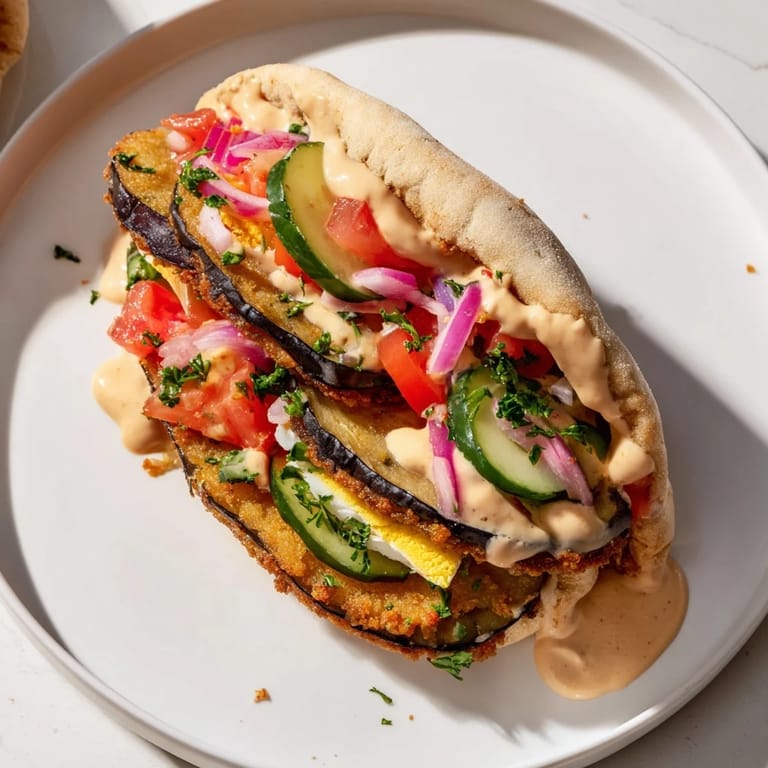
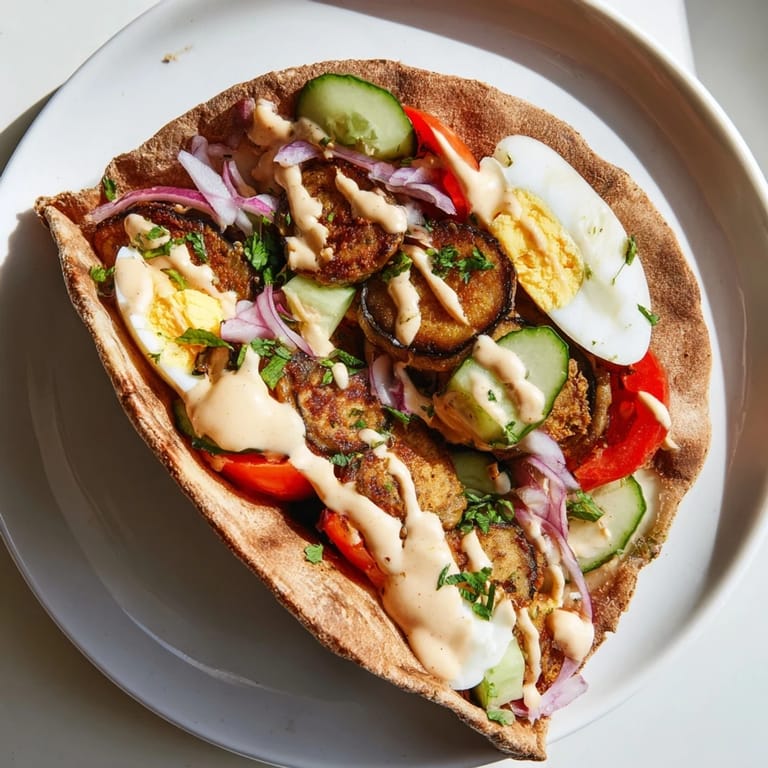
- Slice each pita open to create a pocket, then layer in warm fried eggplant, sliced hard-boiled eggs, a generous helping of Israeli salad, and a drizzle of creamy tahini sauce. Top with amba if you have it, scattered cilantro, sliced pickles, and a dash of hot sauce to your liking. Serve immediately while everything is still warm and the pita is pliable.
 Save
Save My neighbor smelled the fried eggplant one evening and appeared at my door asking what I was making, and I handed her a finished sabich almost without thinking. She bit into it standing in my kitchen doorway, eyes closed for just a second, then asked for the recipe. That moment taught me something simple: the best food isn't the most complicated—it's the one that makes someone pause and really taste it.
Why Texture Matters Here
Sabich lives and dies by contrast, and that's what makes it so satisfying to eat. The warm, creamy tahini and soft egg yolks against the crispy-edged eggplant and crunchy salad means every bite keeps your mouth engaged and interested. If everything was soft or everything was crunchy, it would feel one-note and forgettable. The pita ties it all together—warm and yielding enough to hold everything without falling apart, but sturdy enough that it doesn't dissolve into mush as you eat.
Timing and Temperature
The beauty of sabich is that you can do most of the prep work ahead, but the actual assembly needs to happen fast and hot. Your fried eggplant is best eaten within an hour of frying while it still has that golden exterior crispness. The eggs can be cooked hours ahead and eaten cold or gently reheated. The salad actually improves if it sits for 15 minutes—it softens slightly and the flavors marry together. But once you start assembling, eat immediately; a warm sandwich that cools down loses its charm.
Making It Your Own
Once you've made sabich a few times, you'll start seeing it as a template rather than a rigid rule, and that's exactly how it should be. Some people add roasted red peppers or zucchini alongside the eggplant. Others swap the Israeli salad for chopped mint and more herbs. Amba isn't essential if you can't find it—a splash of hot sauce or extra lemon does the job. The real magic is in building layers of flavor and texture that make you want another bite immediately.
- Vegan version: skip the eggs or replace them with crispy tofu cubes, and use tahini sauce generously as your rich component.
- Make-ahead tip: fry your eggplant and hard-boil your eggs the day before, then assemble fresh when you're ready to eat.
- Spice it up: mix hot sauce directly into the tahini for an even heat distribution, or drizzle it on after for more control.
 Save
Save Sabich has this quiet power to turn an ordinary Tuesday night into something memorable, and there's real comfort in a sandwich that tastes this good and asks so little from you. Make it once, and you'll find yourself craving it again.
Recipe FAQs
- → How do I prepare the eggplant for frying?
Slice eggplant into rounds, salt them to draw out moisture for 15 minutes, pat dry, dredge lightly in flour, then fry until golden and crispy.
- → What is the best way to make tahini sauce creamy?
Whisk tahini paste with lemon juice, minced garlic, water, and salt, adjusting water for a smooth, pourable consistency.
- → Can I substitute eggs in this dish?
For a vegan option, omit the hard-cooked eggs or replace them with tofu slices for added protein.
- → What ingredients make up the Israeli salad?
Chopped tomatoes, cucumber, red onion, fresh parsley, lemon juice, olive oil, salt, and pepper create the refreshing salad.
- → Are there optional condiments to enhance the flavor?
Yes, adding pickled mango sauce (amba), pickles, hot sauce, or fresh cilantro offers additional flavor layers.