 Save
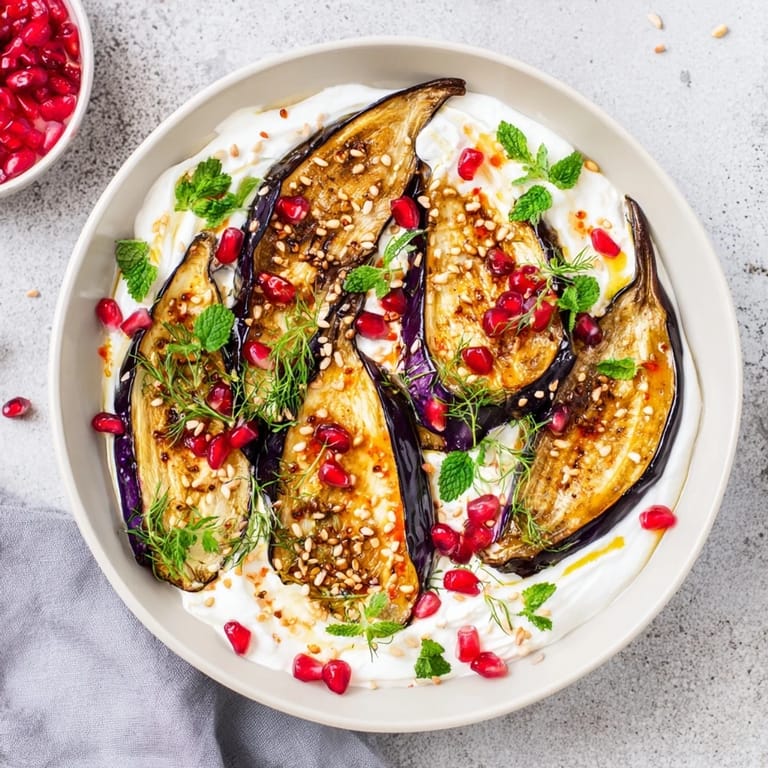
Save I sliced into my first eggplant on a sticky August evening, unsure if I was doing it right. The flesh turned brown almost instantly, and I panicked until a friend reminded me that roasting would fix everything. When it came out of the oven golden and collapsed into itself, I realized eggplant wasn't the enemy I'd imagined. The yogurt sauce, the pomegranate seeds catching the light, it all felt like something I'd been missing without knowing it.
I made this for a small dinner once where half the guests were vegetarian and the other half skeptical of anything without meat. By the end of the night, everyone had gone back for seconds, scraping the yogurt sauce off the platter with torn flatbread. One friend asked if I'd trained in a restaurant. I laughed and told her it was just eggplant, but I kept the recipe close after that.
Ingredients
- 2 large eggplants, halved lengthwise: Look for eggplants that feel heavy for their size with smooth, shiny skin, the fresher they are, the less bitter they'll taste after roasting.
- 2 tbsp olive oil: This is what turns the eggplant golden and soft, don't skimp or it'll dry out and stick to the pan.
- 1/2 tsp salt: Seasons the flesh as it roasts and draws out any lingering bitterness.
- 1/4 tsp freshly ground black pepper: Adds a subtle warmth that balances the sweetness of the pomegranate.
- 1 cup Greek yogurt: Full fat gives you the creamiest sauce, but low fat works if that's what you have on hand.
- 1 clove garlic, finely grated: Grating instead of mincing makes it melt into the yogurt without any harsh bite.
- 1 tbsp lemon juice: Brightens the yogurt and keeps the whole dish from feeling too rich.
- 1 tbsp extra virgin olive oil: Stirred into the yogurt, it adds body and a faint peppery note.
- 1/4 tsp salt: For the yogurt sauce, taste as you go, you might want a pinch more depending on your yogurt's tang.
- 1/2 cup pomegranate seeds: They burst with sweetness and look like little jewels scattered over the top.
- 2 tbsp chopped fresh mint: The cooling, bright flavor cuts through the richness beautifully.
- 2 tbsp chopped fresh parsley: Adds color and a mild herbal note that doesn't overpower.
- 2 tbsp toasted pine nuts: Optional, but they add a buttery crunch that makes the dish feel more complete.
- 1/4 tsp ground sumac: A tart, slightly fruity spice that's traditional in Middle Eastern cooking, if you can find it, use it.
Tired of Takeout? 🥡
Get 10 meals you can make faster than delivery arrives. Seriously.
One email. No spam. Unsubscribe anytime.
Instructions
- Preheat and prep:
- Set your oven to 220°C and line a baking sheet with parchment paper so the eggplant doesn't stick. This high heat is what gives you that caramelized, tender flesh.
- Score and season:
- Use a sharp knife to cut a crosshatch pattern into the cut sides of each eggplant half, going about halfway deep. Brush olive oil generously into the cuts, then season with salt and pepper.
- Roast until golden:
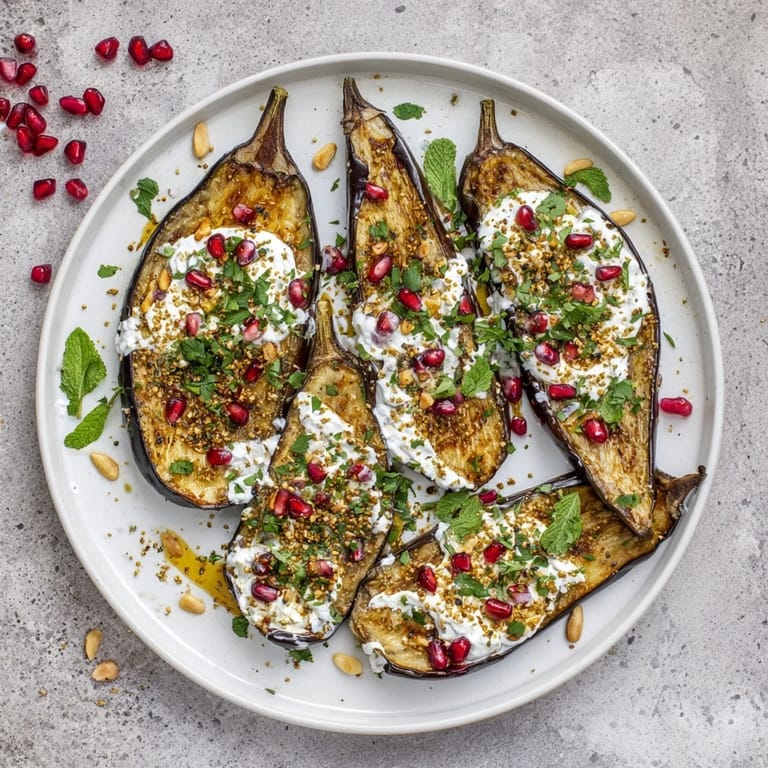
- Place the eggplant halves cut side up on the baking sheet and roast for 35 to 40 minutes. You'll know they're done when the flesh is golden, collapsed, and a fork slides in like butter.
- Make the yogurt sauce:
- While the eggplant roasts, whisk together Greek yogurt, grated garlic, lemon juice, olive oil, and salt in a bowl until smooth. Cover and refrigerate until you're ready to serve.
- Assemble and garnish:
- Let the roasted eggplant cool for a few minutes, then transfer to a serving platter. Spoon the yogurt sauce over each half, then scatter pomegranate seeds, mint, parsley, pine nuts, and sumac on top.
 Save
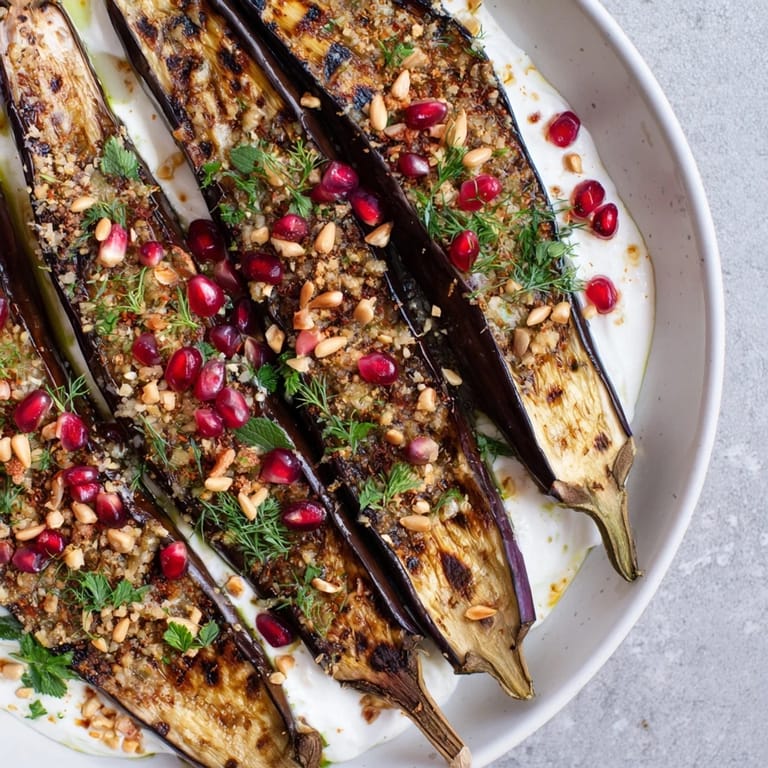
Save There was a night I served this as part of a mezze spread, and someone who claimed they hated eggplant asked what it was after finishing their portion. When I told them, they didn't believe me. That's the magic of roasting it right and dressing it with something creamy and bright, it stops being the spongy, bitter thing people avoid and becomes something they crave.
Choosing the Best Eggplant
Look for eggplants that feel firm and heavy, with skin that's tight and glossy. If the skin is wrinkled or the eggplant feels light, it's probably old and will taste bitter no matter how you cook it. I used to grab whatever was on top of the pile, but once I started paying attention to weight and texture, my roasted eggplant improved dramatically.
Serving Suggestions
This works beautifully as a main dish with warm flatbread and a simple salad, or as part of a larger mezze spread with hummus, baba ganoush, and olives. I've also served it as a side next to grilled chicken or lamb, and it holds its own without competing. Leftovers, if there are any, are wonderful cold straight from the fridge the next day.
Make Ahead and Storage Tips
You can roast the eggplant a few hours ahead and leave it at room temperature, then add the yogurt sauce and toppings just before serving. The yogurt sauce itself keeps in the fridge for up to three days, though you might need to stir in a splash of water to loosen it. Once assembled, the dish is best enjoyed within a few hours, the pomegranate seeds start to bleed and the herbs wilt if it sits too long.
- If making this vegan, swap Greek yogurt for a thick plant based yogurt and check the consistency.
- Toast your pine nuts in a dry pan over medium heat, watching them closely so they don't burn.
- A light drizzle of pomegranate molasses over the top adds another layer of sweet tart complexity if you have it.
 Save
Save This dish taught me that vegetables don't need to be complicated to feel special. Sometimes all it takes is good heat, a little patience, and the willingness to let simple ingredients speak for themselves.