 Save
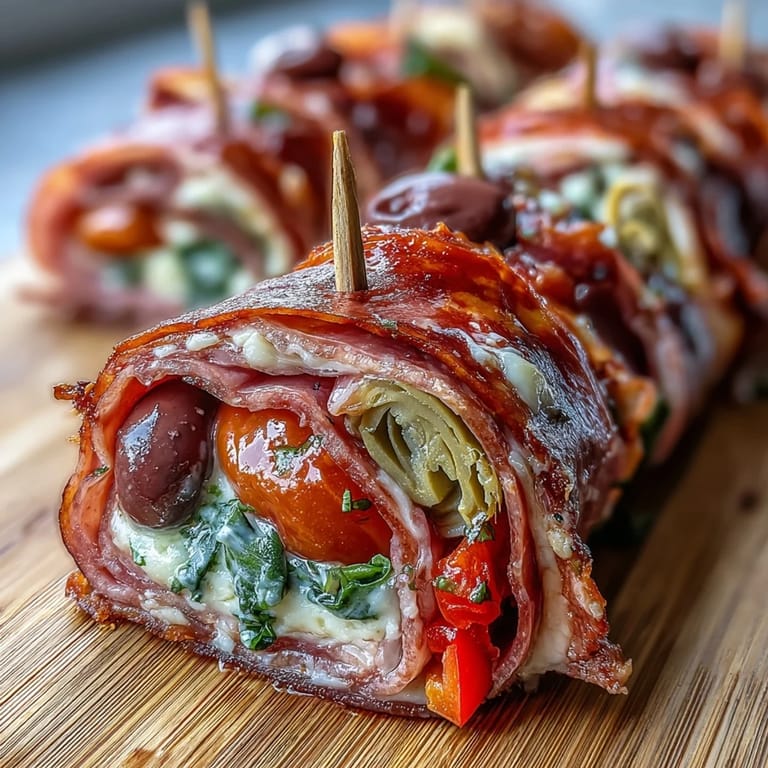
Save My cousin Marco showed up to a summer gathering with these skewers one July afternoon, and I watched them disappear faster than the ice in our coolers melted. He'd threaded everything with such care—the colors practically glowed in the sunlight—and when he pulled out a little container of homemade aioli, I understood why people were circling back for thirds. What struck me wasn't just how good they tasted, but how something so elegant could be eaten standing up, one-handed, while laughing with friends scattered across a lawn.
I made these for a potluck at work once, nervous they'd seem too fancy for the break room. A coworker who usually stuck to plain sandwiches tried one, then immediately asked for the recipe, which felt like a small victory. That's when I realized these skewers have this magical quality—they feel special but approachable, restaurant-quality but completely unpretentious.
Ingredients
- Genoa salami, deli ham, and mortadella: These three meats create layers of different flavors and textures; folding or rolling them prevents them from sliding around on the skewer.
- Fresh mozzarella balls (bocconcini): They're tender enough to bite through cleanly and provide a cool, creamy contrast to everything salty around them.
- Cherry tomatoes: Choose ones that are still slightly firm so they hold their shape when threaded and don't burst with juice.
- Pepperoncini or mild banana peppers: Drain them well before using, or they'll make your skewers weep and turn everything soggy.
- Marinated artichoke hearts: Chop them into bite-sized pieces so they stay on the skewer and contribute their tangy flavor without overpowering anything.
- Black olives and roasted red peppers: These add sweetness and depth; the peppers especially bridge the gap between the salty meats and bright vegetables.
- Romaine lettuce: Small pieces add a fresh crunch and help separate the heavier components so each bite feels balanced.
- Egg yolk, Dijon mustard, and garlic: These are the foundation of an emulsion, so they need to be at room temperature and whisked with intention.
- Lemon juice: It brightens the aioli and helps keep the emulsion stable as you whisk in the oils.
- Extra virgin and neutral oils: Using both gives you flavor from the olive oil without the bitterness that comes from whisking too much of it into an emulsion.
Tired of Takeout? 🥡
Get 10 meals you can make faster than delivery arrives. Seriously.
One email. No spam. Unsubscribe anytime.
Instructions
- Thread your skewers with intention:
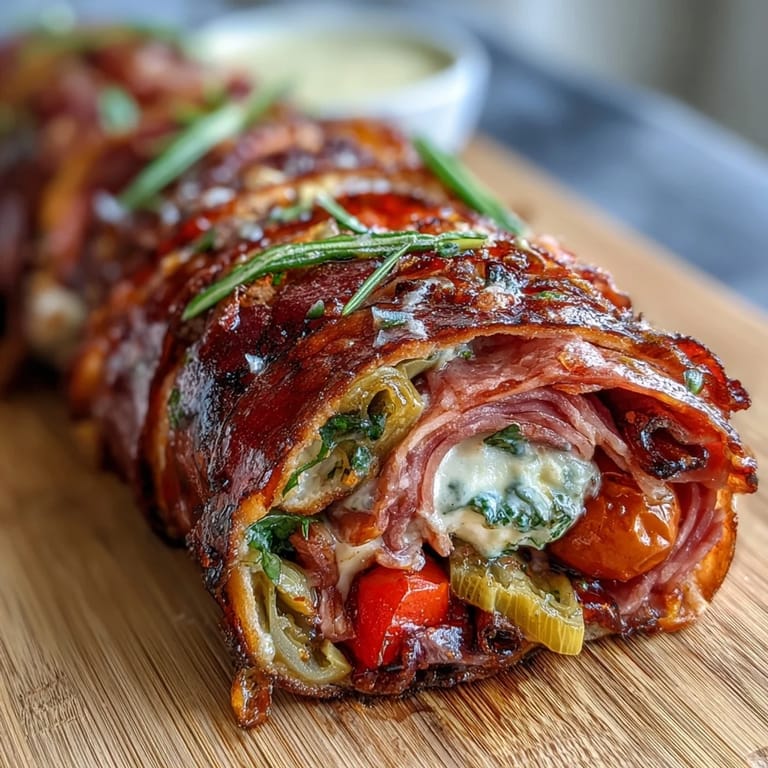
- Start by laying out all your ingredients so you're not hunting for things mid-assembly. Fold or roll each slice of meat so it doesn't bunch up, then alternate meats with veggies and cheese as you go—this creates that beautiful pattern and ensures every bite has a little of everything. If something feels like it's going to slide off, don't force it; just adjust the order slightly.
- Create an aioli that holds together:
- Make sure your bowl is completely dry and your egg yolk is room temperature; whisking cold ingredients over cold stainless steel can cause the emulsion to break. Whisk the yolk, mustard, garlic, and lemon juice until pale and thick, then add your oils so slowly at first that it's almost painful—just a few drops at a time—until you see it start to thicken, then you can be a bit more generous.
- Season and chill before serving:
- Taste the aioli and season it properly; salt brings out the garlic flavor in a way that feels almost magical. Keep everything refrigerated until the moment you serve, which keeps the mozzarella from softening and the lettuce from wilting.
 Save
Save There's something about serving food on skewers that makes people feel like they're at something special, even if they're standing in your backyard in cutoff shorts. My mom noticed that, too—she started bringing skewers to every family thing, and suddenly everyone was doing the same, which I take as a compliment but also proof that good food is worth copying.
The Art of Layering
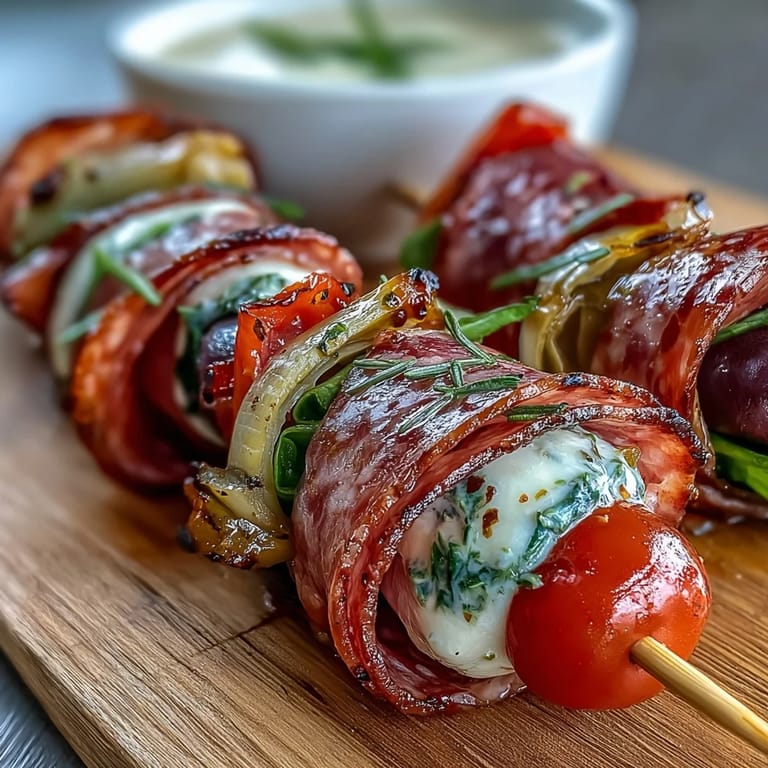
The order matters more than you'd think. Putting the softest items in the middle—like the cheese and tomato—protects them from being squished by the time someone picks up the skewer. Hard ingredients like olives and peppers can handle the ends, and the lettuce acts like a little cushion that keeps everything from getting compressed. Think of it like packing a suitcase: the delicate things go in the middle, the sturdy stuff around the edges.
Making Aioli Feel Effortless
The secret to an aioli that doesn't break is patience and respect for the process. I used to rush it, dumping oil in like I was making salad dressing, and it would split every time, leaving me frustrated and reaching for store-bought mayo. Once I slowed down and let the eggs and oil get to know each other gradually, it became nearly foolproof.
Variations and Flexibility
You can substitute any deli meat or even add turkey breast if that's what you have. Some people add fresh mozzarella slices instead of bocconcini, or swap the artichokes for sun-dried tomatoes. The framework stays the same—meats, cheese, vegetables, a fresh element, and a creamy dipping sauce—but you can shuffle the players based on what sounds good or what's in your fridge.
- For a vegetarian version, skip the meats entirely and add grilled zucchini, eggplant, or even chickpeas marinated in Italian dressing.
- If you're serving to kids, use turkey and ham instead of salami, and tone down the pepperoncini heat.
- Make the aioli a day ahead and store it in the refrigerator; it actually tastes better as the garlic mellows and the flavors meld.
 Save
Save These skewers are one of those dishes that look like you fussed, but really you just organized your ingredients and let them do the talking. Once you've made the aioli and threaded the first skewer, you'll feel like you've unlocked something simple and genuinely delicious.
Recipe FAQs
- → What meats are used on the skewers?
Genoa salami, deli ham, and mortadella are layered to provide a savory Italian flavor profile.
- → How is the aioli made?
The aioli is prepared by emulsifying egg yolk, Dijon mustard, garlic, lemon juice, and a blend of olive and neutral oils until thick and creamy.
- → Can the skewers be made vegetarian?
Yes, omit the meats and substitute with grilled vegetables such as zucchini or eggplant for a vegetarian option.
- → What fresh ingredients add brightness to the skewers?
Cherry tomatoes, pepperoncini rings, romaine lettuce, and marinated artichoke hearts contribute fresh and tangy notes.
- → How should the skewers be served and stored?
Arrange skewers on a platter alongside the aioli for dipping and keep chilled until ready to serve for best freshness.