 Save
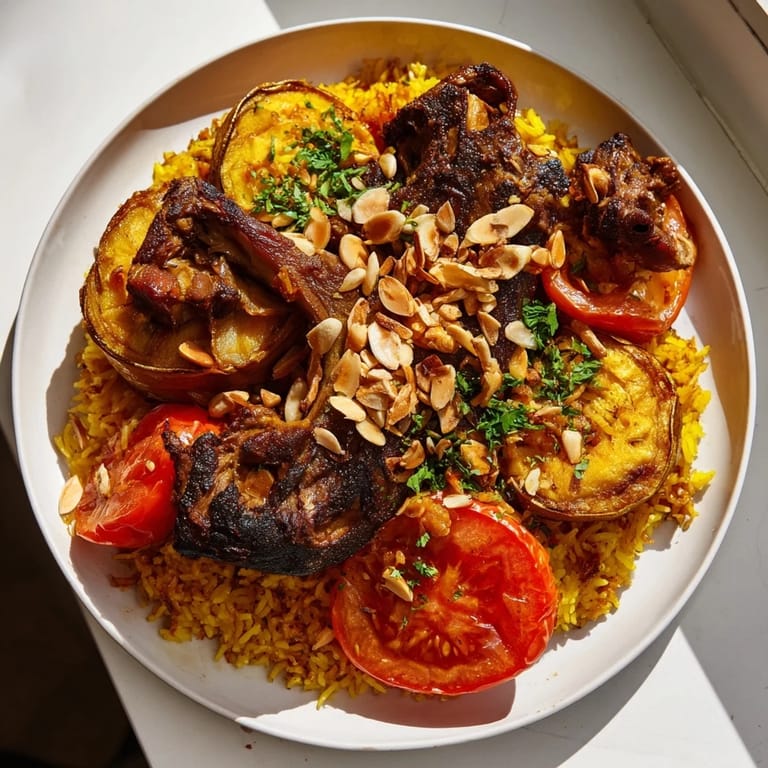
Save The first time I made maqluba, I was nervous about the flip. My grandmother had described it so many times—how the pot inverts to reveal this golden, layered crown of rice and meat—that I'd built it up in my mind as almost impossible. But standing in my kitchen with the aroma of turmeric and cinnamon rising from the pot, I realized that moment of inversion is exactly the point: it's when all that careful layering becomes something magical, something meant to be shared.
I made this for my roommate's birthday dinner once, and I'll never forget her face when I set that platter down and the whole table went quiet. Everyone was watching the rice and eggplant and meat in perfect layers, and suddenly she said, 'This is too beautiful to eat,' which made us all laugh until we actually tasted it.
Ingredients
- Lamb shanks or chicken pieces (900 g): Bone-in cuts give the broth incredible depth; if you're in a hurry, boneless thighs work beautifully and cook faster.
- Basmati rice (2 cups): The rinsing and soaking matter more than you'd think—it keeps each grain separate and lets the flavors in the broth shine through.
- Eggplant and potatoes: Roasting these first keeps them from getting waterlogged in the broth; it's the step that makes the difference between mushy and perfect.
- Turmeric, cumin, allspice, cinnamon: These spices are what make maqluba taste like home; don't skip or substitute them.
- Slivered almonds or pine nuts: Toasted until golden, they add a warm, nutty finish that catches the light as much as it catches your taste buds.
- Fresh parsley: A handful scattered on top is the final touch that says this was made with care.
Tired of Takeout? 🥡
Get 10 meals you can make faster than delivery arrives. Seriously.
One email. No spam. Unsubscribe anytime.
Instructions
- Prepare and season the rice:
- Rinse the rice in cold water several times—you'll watch the water go from cloudy to clear—then soak it for 30 minutes. This teaches the grains to stay separate and absorb the broth evenly.
- Season and sear the meat:
- Mix the spices directly onto the lamb or chicken pieces, then sear them in hot oil until the edges are caramelized and golden. You'll hear that sizzle that means flavor is building.
- Simmer the meat with broth:
- Once the meat is browned, add onion slices to the same pot, then cover everything with broth and let it simmer gently for 30 to 40 minutes. The meat should be almost cooked through when you lift it out; it will finish cooking in the rice layer.
- Roast the vegetables:
- While the meat cooks, brush eggplant and potato slices with oil and roast them until they're golden and tender. This step prevents them from turning into mush and keeps their shape in the final dish.
- Layer everything in the pot:
- Start with tomato slices on the bottom, then layer potatoes, eggplant, the cooked meat and onions, and finally the drained rice on top, pressing gently to settle it. Take a moment to appreciate how organized it looks before it all becomes one unified dish.
- Add the broth mixture:
- Stir turmeric, cumin, and salt into the reserved broth, then pour it over the rice until it just covers the top layer. Place a plate smaller than your pot directly on the rice—this keeps the layers from shifting—then cover the pot tightly with its lid.
- Cook and rest:
- Bring everything to a gentle simmer over medium heat, then lower to low and let it sit undisturbed for 35 to 40 minutes. When you lift the lid at the end, the rice should be tender and all the liquid absorbed, and the whole kitchen should smell like warmth and spice.
- The moment of truth—invert and serve:
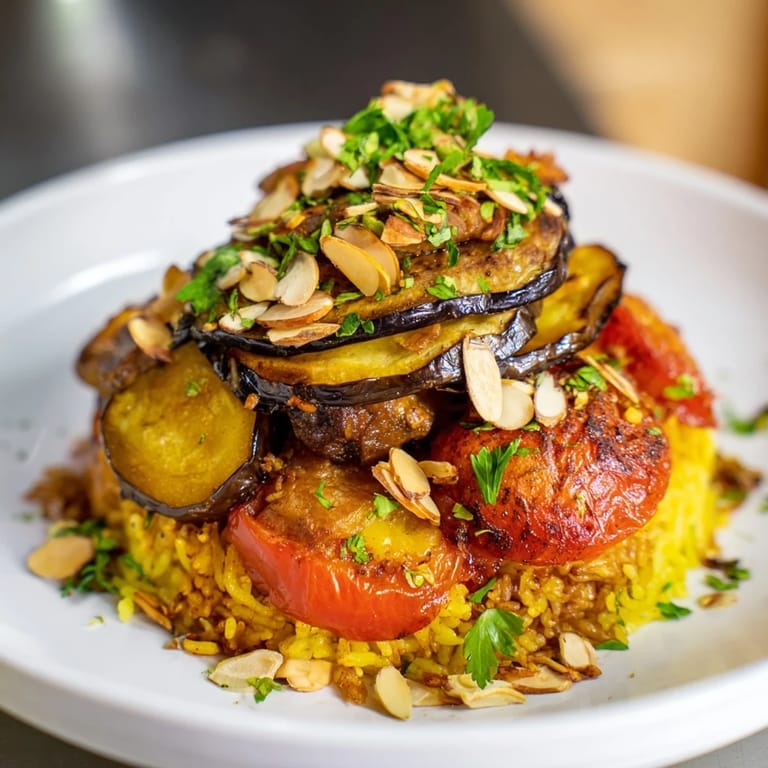
- Let the pot rest for 15 minutes after removing from heat, then place a large serving platter upside down over the pot and flip it with confidence. When you lift the pot away, you'll see all those layers perfectly formed, still steaming, waiting for a scatter of toasted nuts and fresh parsley.
 Save
Save There's something almost ceremonial about maqluba, the way it demands your attention and precision and then rewards you with something that looks like it took hours but was really just patience and one good pot. The first time someone tastes it, you see them understand why this dish is called what it's called—why it's about the flip, the reveal, the moment when everything you prepared becomes visible and whole.
The Spice Blend
The spices in maqluba—turmeric, cumin, allspice, and cinnamon—aren't just flavors, they're the soul of the dish. Together they create something warm and slightly sweet, slightly earthy, completely unforgettable. Allspice and cinnamon might seem unusual in a savory rice dish, but they're what make maqluba taste like itself and nothing else. Toast your spices briefly in a dry pan before adding them to the broth if you have time; it wakes them up.
Vegetables as Canvas
Eggplant and potatoes are traditional, but maqluba is flexible enough to welcome what you have on hand. Cauliflower florets work beautifully if eggplant isn't available, and zucchini slices add a lighter note. The key is to pre-cook whatever vegetables you choose so they hold their shape and don't release too much moisture into the rice. Roasting them gives them caramelized edges that add flavor and texture to each bite.
Timing and Temperature
The gentle simmer is the temperature that matters most—if the heat is too high, the rice on the bottom can scorch before the top is cooked through. Medium-low is your friend here. Some pots conduct heat differently, so if your rice seems stuck after 35 minutes, give it a few more minutes and listen for the broth to be quietly simmering, not aggressively bubbling.
- Start checking the rice after 30 minutes by carefully lifting the lid away from you so the steam doesn't startle you.
- If you're using boneless chicken thighs instead of lamb shanks, reduce the initial simmering time to 20 minutes since they cook faster.
- A heavy-bottomed pot prevents scorching and distributes heat evenly, making it worth digging out of your cabinet for this one.
 Save
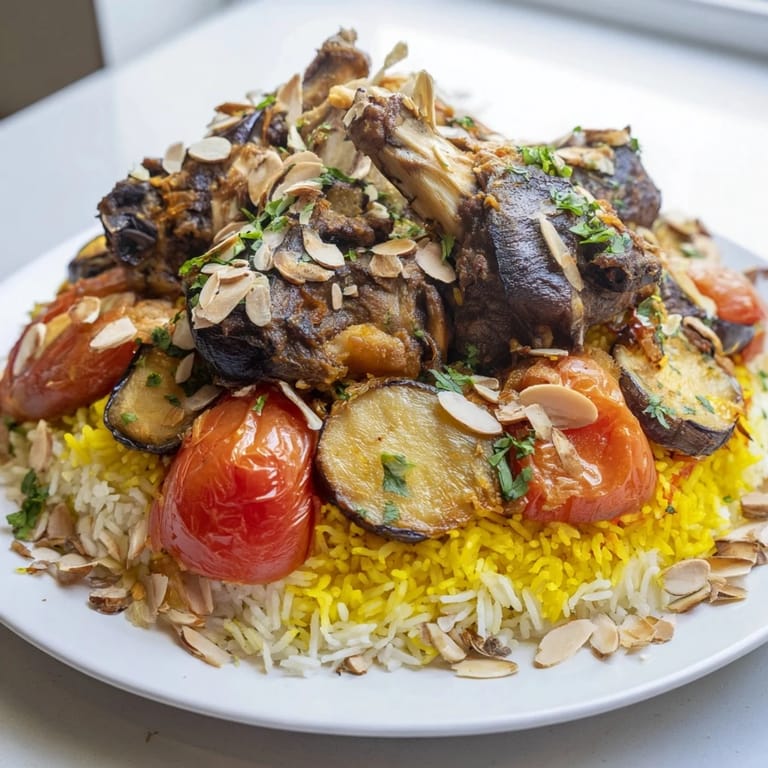
Save Maqluba is the kind of dish that brings people together without needing a special occasion. Serve it with plain yogurt, a cucumber-tomato salad, or pickled turnips, and watch how quickly the table empties and how the conversation lingers afterward.
Recipe FAQs
- → What meats can be used in this dish?
Bone-in lamb shanks or chicken pieces are traditional choices, offering tender, flavorful results when simmered.
- → How are the vegetables prepared?
Eggplants and potatoes are peeled, sliced, brushed with oil, and roasted until golden and tender for the best texture.
- → Why is the dish flipped before serving?
Flipping unveils the layered structure, showcasing a beautiful presentation with vegetables on top.
- → Can I substitute other vegetables?
Yes, cauliflower florets can replace eggplants for a different flavor profile while maintaining texture.
- → What spices enhance the dish's flavor?
Ground black pepper, allspice, cinnamon, turmeric, and cumin blend to create its signature aromatic and warm taste.
- → Is there a recommended garnish?
Toasted almonds or pine nuts, along with fresh chopped parsley, add crunch and color as a finishing touch.