 Save
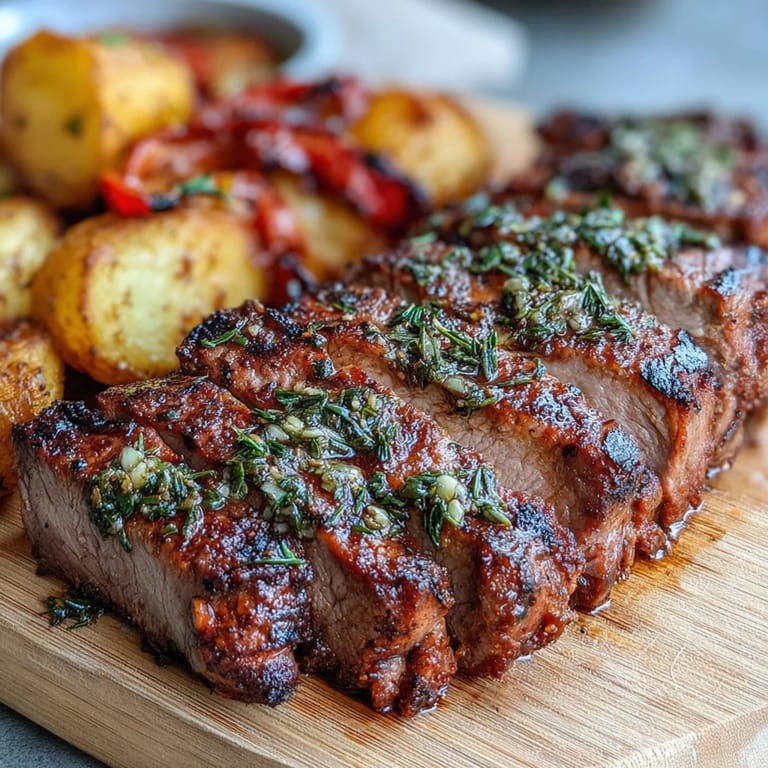
Save The smell of smoked paprika hit me before I even opened the fridge that morning. My neighbor had brought back pimentón from Extremadura, insisting I try it on proper Ibérico pork. I was skeptical about marinating anything overnight—seemed fussy—but one bite of that rosy, tender fillet changed everything. Now I plan dinner around it, clearing space on the top shelf, nudging aside the milk and leftover pasta to make room for the covered dish that perfumes the whole kitchen by dawn.
I made this for my sister's birthday last spring, convinced I'd mess up the timing. She arrived early, caught me frantically flipping potatoes, and poured herself a glass of Rioja while I panicked. By the time the pork rested and I sliced into it, revealing that perfect blush center, she raised her glass and said it smelled like a restaurant. I've never felt more smug in my own kitchen.
Ingredients
- Ibérico pork fillet: This marbled, acorn-fed pork is worth seeking out at specialty butchers; it has a rich, almost nutty flavor that regular tenderloin can't quite match, though regular works in a pinch.
- Extra virgin olive oil: Use a fruity, golden oil for the marinade—it carries the garlic and paprika into every fiber of the meat.
- Smoked paprika (pimentón): The soul of this dish; look for Spanish pimentón de la Vera, which has a deep, smoky sweetness that transforms the simplest ingredients.
- Fresh rosemary: Chop it fine so it doesn't overpower; too much and it tastes like pine, just enough and it whispers herbaceousness.
- Lemon zest and juice: Brightens the marinade and cuts through the richness of the pork, adding a citrus note that keeps each bite interesting.
- New potatoes: Small, waxy potatoes crisp up beautifully and don't need peeling, which is a weeknight miracle.
- Fresh thyme: Strip the leaves off the stems and toss them with the potatoes; they'll toast in the oven and release a warm, earthy aroma.
- Red bell peppers: Choose firm, glossy peppers; roasting concentrates their natural sugars and they turn jammy and sweet alongside the pork.
- Garlic: Slice it thin for the peppers so it melts into the olive oil, and mince it for the marinade so it permeates every bite of meat.
Tired of Takeout? 🥡
Get 10 meals you can make faster than delivery arrives. Seriously.
One email. No spam. Unsubscribe anytime.
Instructions
- Marinate the Pork:
- Whisk together the olive oil, minced garlic, rosemary, smoked paprika, lemon zest, lemon juice, salt, and pepper in a bowl until it looks like a rusty, fragrant paste. Coat the pork fillet completely, cover tightly with plastic wrap, and tuck it into the fridge overnight so the flavors soak deep into the meat.
- Prepare the Oven:
- Crank your oven to 220°C (425°F) and let it heat fully while you prep the vegetables. A hot oven is the secret to crispy potatoes and caramelized peppers, so don't rush this step.
- Roast the Potatoes:
- Tumble the quartered potatoes with olive oil, salt, pepper, smoked paprika, and thyme leaves until every piece glistens. Spread them in a single layer on a baking tray—no crowding—and roast for 35 to 40 minutes, shaking the tray halfway through so they brown evenly and develop crunchy golden edges.
- Roast the Red Peppers:
- Toss the pepper strips with olive oil, thin garlic slices, and a pinch of salt, then spread them on a separate tray. Roast for 20 to 25 minutes until they soften, wrinkle slightly, and start to char at the tips, releasing a sweet, smoky perfume.
- Cook the Pork:
- Lift the pork from the marinade, pat it dry with paper towels, and sear it in a hot ovenproof skillet with a tablespoon of olive oil for 2 to 3 minutes per side until a dark crust forms. Slide the whole skillet into the oven and roast for 12 to 15 minutes, checking with a thermometer for an internal temperature of 63°C (145°F), then let it rest on a board for 5 minutes while the juices redistribute.
- Serve:
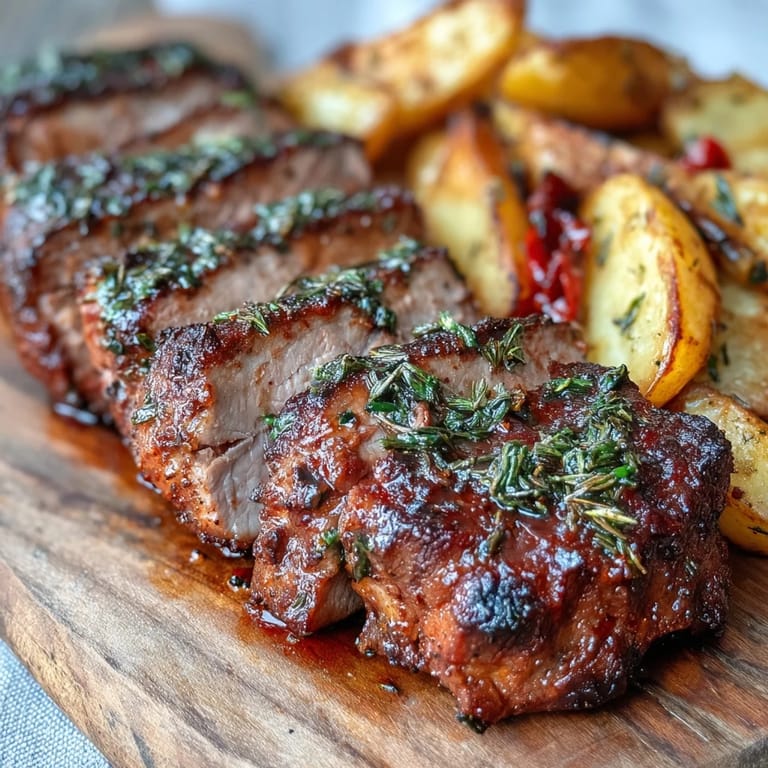
- Slice the pork into thick medallions and fan them out on warm plates alongside the crispy potatoes and tender peppers. Spoon any pan juices over the top for an extra hit of garlicky, smoky flavor.
 Save
Save The first time I served this to friends, one of them scraped the pan for the last bits of paprika oil and garlic. No one talked much during the first few minutes, just the sound of forks on plates and someone murmuring something in Spanish they'd picked up on holiday. It's the kind of dish that makes people lean back in their chairs afterward, full and quiet, like they've been somewhere warm and far away.
Choosing Your Pork
Ibérico pork comes from acorn-fed pigs in Spain, and the marbling makes it almost impossible to dry out. If you can't find it, a regular pork tenderloin works, but watch it closely because it's leaner and cooks faster. I've also used pork loin in a pinch, though it needs a few extra minutes and benefits from a quick baste halfway through roasting. The marinade does wonders for any cut, lifting even supermarket pork into something special.
Timing Your Roast
The potatoes take the longest, so I start them first and add the peppers about 15 minutes later. While everything roasts, I sear and finish the pork, and it all comes together at roughly the same time. If you're running behind, keep the potatoes and peppers warm in a low oven while the pork rests. I learned this the hard way after serving lukewarm potatoes once and watching everyone's disappointment, polite as it was.
Serving Suggestions
This dish doesn't need much else, but a handful of chopped parsley or a drizzle of good olive oil over the top makes it look like you tried harder than you did. A crisp green salad with sherry vinegar dressing cuts through the richness, and crusty bread for mopping up juices is non-negotiable. I've served it with a Spanish Rioja, but a chilled rosé works beautifully in summer when you're eating outside and the peppers are at their sweetest.
- Add a squeeze of fresh lemon over the sliced pork just before serving for a bright, acidic lift.
- Serve with a simple arugula salad dressed in olive oil and lemon to balance the richness.
- Leftover pork makes an incredible next-day sandwich with aioli and roasted peppers on a baguette.
 Save
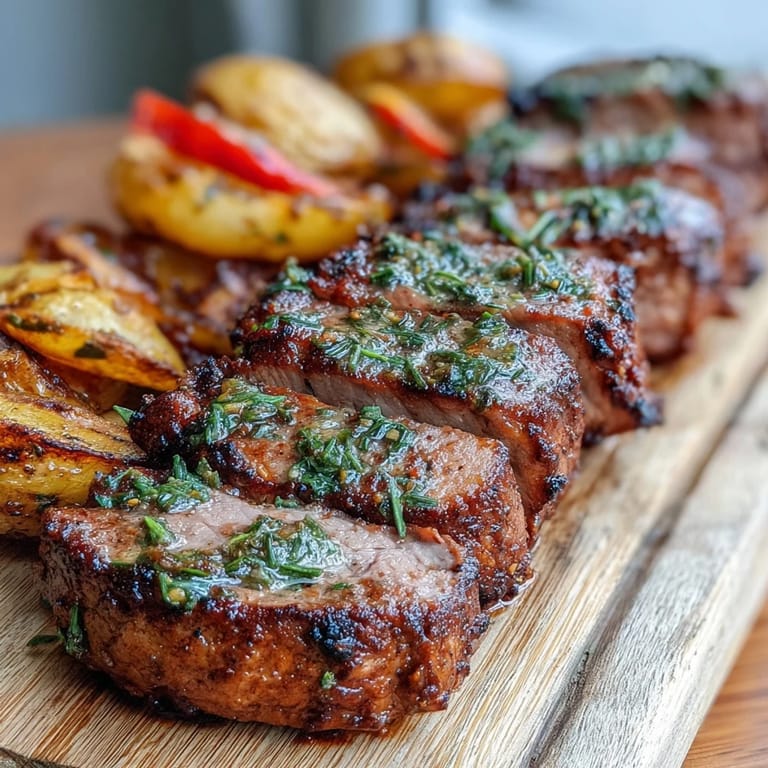
Save This is the kind of meal that feels like an occasion even on a Tuesday. Make it once, and you'll find excuses to make it again—birthdays, surprise guests, or just because the fridge smells like rosemary and you can't wait any longer.
Recipe FAQs
- → Can I use regular pork tenderloin instead of Ibérico?
Yes, regular pork tenderloin works well as a substitute. Adjust cooking time as needed since it may cook slightly faster than Ibérico pork.
- → How long should I marinate the pork?
Marinate the pork overnight for best results, with a minimum of 8 hours to allow the flavors to fully penetrate the meat.
- → What internal temperature should the pork reach?
Cook the pork until it reaches an internal temperature of 63°C (145°F) for perfectly tender and juicy results. Always rest the meat for 5 minutes before slicing.
- → Can I prepare the potatoes and peppers ahead of time?
While best served fresh, you can cut and season the vegetables a few hours ahead. Keep them refrigerated and bring to room temperature before roasting for even cooking.
- → What wine pairs well with this dish?
A Spanish Rioja pairs beautifully with the smoky paprika and rosemary flavors. Other medium-bodied red wines also complement the rich Ibérico pork nicely.
- → How do I know when the potatoes are done?
The potatoes should be golden brown and crispy on the outside after 35-40 minutes. Stir them halfway through roasting for even browning.