 Save
Save The first time I made shakshuka, I wasn't even trying to make it perfectly. I had a can of tomatoes, some peppers from the market, and four eggs, and I just started cooking without a plan. Halfway through, my friend walked in asking what smelled so good, and before I knew it, we were sharing the pan straight from the stove with torn pita bread. That chaotic, unplanned dinner taught me more about cooking than any recipe could—sometimes the best meals happen when you stop overthinking and just let the ingredients talk to each other.
I made this for a Sunday brunch once when I had nothing but leftovers and a desperate hope to feed five people with almost no groceries. The shakshuka turned into the star of the meal—people were fighting over the last bits of sauce with their bread, and suddenly I realized why this dish has been feeding families across the Middle East for generations. It's unpretentious and honest, but it has this quiet confidence that makes everyone at the table slow down.
Ingredients
- Olive oil (2 tbsp): The foundation—it carries the flavor and doesn't burn, so use good quality if you have it.
- Yellow onion (1 medium, finely chopped): The sweet backdrop that keeps the heat in check and prevents the spices from becoming one-note.
- Red bell pepper (1, diced): It adds body and sweetness; don't skip it even if you think it's redundant with the tomatoes.
- Garlic (3 cloves, minced): Let it cook just enough to soften without browning, or it turns bitter and ruins the whole sauce.
- Red chili (1 small, finely chopped, optional): Adds living heat that cayenne alone can't deliver; if you skip it, don't feel obligated to add extra spice later.
- Crushed tomatoes (1 can, 400g): The backbone—canned is better here than fresh because you need the acidity and structure to hold up to simmering.
- Fresh tomatoes (2 medium, chopped): These add brightness and texture; they break down into the sauce and remind you that this started with real fruit.
- Tomato paste (1 tsp): A concentrated whisper of umami that deepens everything without announcing itself.
- Ground cumin (1 tsp): Warm and slightly earthy; this is what makes people say they can't quite identify what they're tasting but know it's special.
- Sweet paprika (1 tsp): The color and the comfort—it softens the heat and adds a subtle sweetness.
- Ground cayenne pepper (¼ tsp, optional): Use it only if you like your food to speak up; it's sharp and direct.
- Ground coriander (½ tsp): The secret flourish that no one mentions but everyone tastes; it's citrusy and bright.
- Salt and black pepper (to taste): Season as you go, not at the end, so you can taste how the sauce develops.
- Large eggs (4): Use the best eggs you can find; the yolk becomes the sauce's condiment.
- Fresh parsley (2 tbsp, chopped): The final green note that cuts through the richness and reminds you that this is alive.
- Fresh cilantro (2 tbsp, chopped): If you like it, it adds a brightness that parsley alone can't touch; if you don't, skip it without apology.
- Crumbled feta (optional): The salt and tang balance everything; it's optional but once you add it, you'll wonder why you ever made it without.
Tired of Takeout? 🥡
Get 10 meals you can make faster than delivery arrives. Seriously.
One email. No spam. Unsubscribe anytime.
Instructions
- Heat your oil and soften the vegetables:
- Pour the olive oil into a large skillet over medium heat and let it warm until it shimmers slightly. Add the onion and red pepper, stirring occasionally, for about five to seven minutes until they've lost their raw edge but still have some texture. You'll know it's ready when the kitchen smells sweet and you can hear the gentle sizzle.
- Wake up the garlic and chili:
- Push the onions to the side, add the minced garlic and chopped chili (if using) to the hot oil for just one minute—you want it fragrant, not brown. The chili's heat will start to release into the oil and signal the rest of the ingredients that something good is about to happen.
- Build the sauce:
- Pour in both the canned and fresh tomatoes along with the tomato paste, stirring everything together until you have a unified mixture. Sprinkle in the cumin, paprika, cayenne (if using), coriander, salt, and pepper, then let it all simmer for ten to twelve minutes, stirring occasionally. Watch how the sauce darkens and thickens, and how the raw tomato flavor mellows into something deeper.
- Create wells for the eggs:
- Using the back of a spoon, make four small indentations in the sauce, spacing them out so the eggs won't touch each other. Crack one egg into each well and cover the pan with a lid.
- Cook the eggs to your liking:
- Let the eggs poach in the residual heat for six to eight minutes; the whites will set first while the yolks stay soft and golden. You can peek under the lid at the five-minute mark if you're nervous, but resist the urge to stir—the eggs need stillness.
- Finish and serve:
- Remove from heat, scatter the fresh parsley and cilantro over the top, and add crumbled feta if you're using it. Serve straight from the pan with warm pita or crusty bread that's ready to soak up every drop of sauce.
 Save
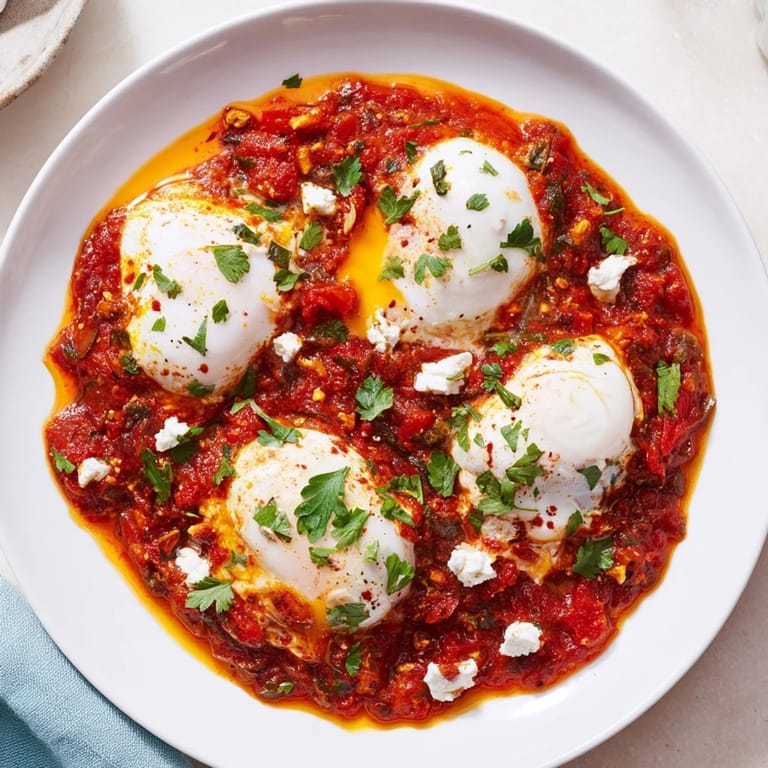
Save There's a moment when you serve shakshuka where everyone goes quiet for a second before they dig in—not because they're being polite, but because they're admiring it. That slight pause tells you that what you've made looks beautiful and tastes like home, even if home for someone else is half a world away.
Spice Variations and Flavor Play
Shakshuka is forgiving enough to taste like itself with almost any spice adjustment, but it's also flexible enough to become something new if you want it to. I've made it with smoked paprika instead of sweet paprika and suddenly it tasted like someone had held it over a fire for just a moment. I've added a pinch of cayenne that made my eyes water and my lips tingle in the best way, and I've also made it so mild that children asked for seconds without hesitation. The baseline spices—cumin and coriander and paprika—they're the skeleton, and you can adjust the flesh around them however you want.
Vegetables and Creative Additions
The tomatoes and peppers are not negotiable, but almost everything else is fair game. I've stirred in a handful of sautéed spinach at the last minute and watched it melt into the sauce like it had been planned all along. I've added slices of eggplant cooked separately until they were golden and tender, then nestled them alongside the eggs. Some nights I've added crumbled chorizo or sautéed mushrooms if I had them, and none of these additions ever felt wrong—they felt inevitable, like the dish had been waiting for them all along.
The Secret to Serving and Storage
Shakshuka tastes best the moment it's finished, but it doesn't mind being reheated as long as you treat it gently. The sauce keeps for three or four days in the refrigerator—just store it without the eggs, then poach fresh eggs when you're ready to eat. For the warmest, most forgiving serving experience, bring everything to a gentle simmer before adding fresh eggs at the last moment, so each bowl gets a just-cooked yolk.
- Serve it in shallow bowls or straight from the cast iron pan so people can catch every drop of sauce.
- Warm your pita or bread separately so it doesn't get soggy before it hits the table.
- A dollop of Greek yogurt or labneh alongside turns it into something even more substantial without overshadowing the eggs.
 Save
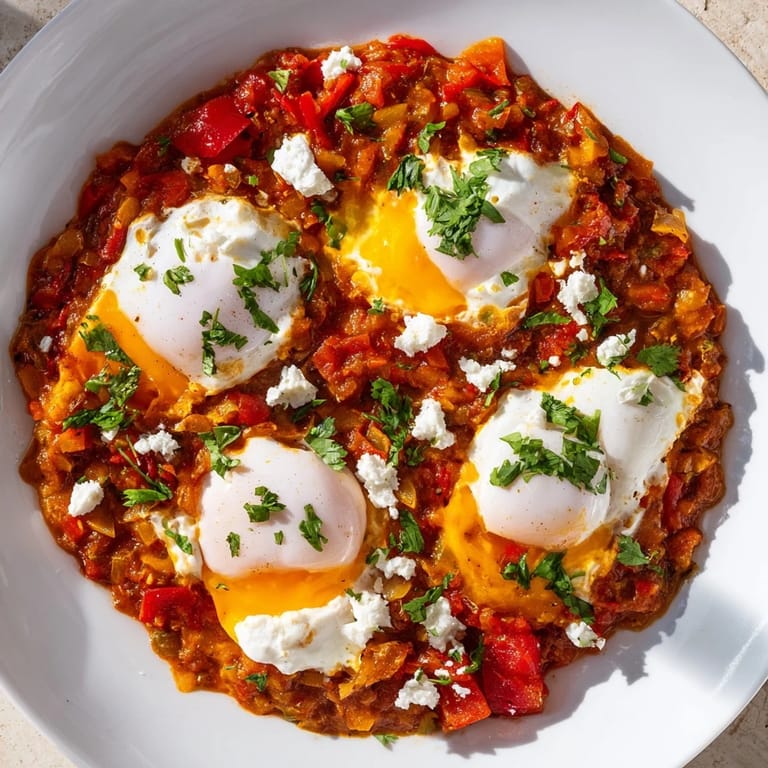
Save Shakshuka is one of those dishes that asks almost nothing of you but gives back everything in return. Make it when you have ten minutes and the right ingredients, or make it when you need to feed people something that feels like you've known them your whole life.
Recipe FAQs
- → What type of pan is best for cooking this dish?
A large skillet or cast-iron pan with a lid works best to evenly cook the sauce and poach the eggs gently.
- → Can I adjust the spice level?
Yes, adding or omitting the red chili and cayenne pepper allows control over the heat to suit your taste.
- → What are common garnishes for this dish?
Fresh parsley, cilantro, and optionally crumbled feta cheese add brightness and a creamy texture upon serving.
- → How should the eggs be cooked in the sauce?
Make wells in the simmering sauce, crack eggs into them, cover, and cook until whites are set but yolks remain soft.
- → What can I serve alongside this dish?
Warm pita bread, crusty bread, or side dips like labneh or Greek yogurt complement the flavors well.
- → Are there vegetarian or gluten-free considerations?
Yes, this dish is vegetarian and naturally gluten-free, but check feta or other extras if adding.