 Save
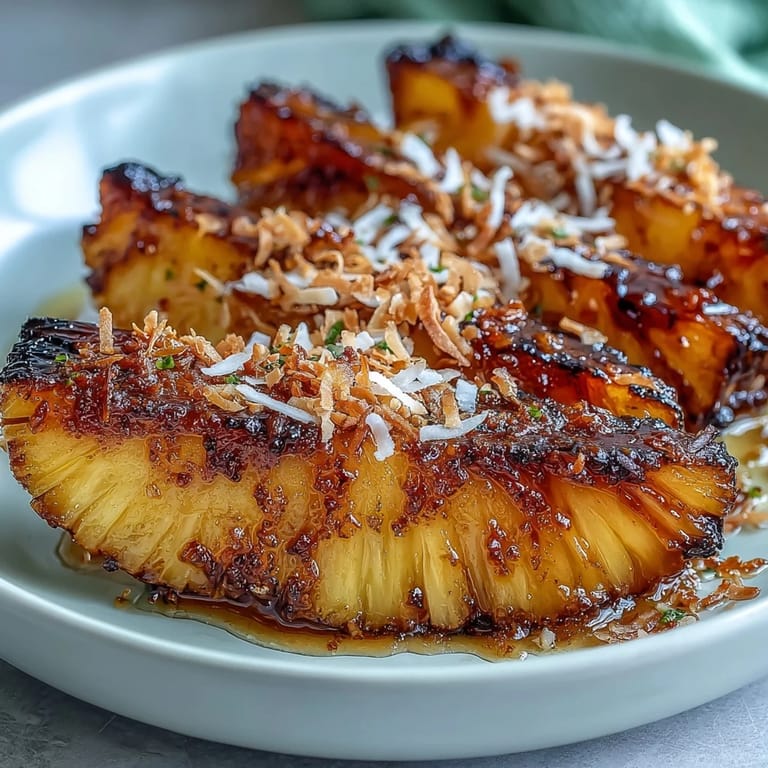
Save There's something about the smell of caramelizing pineapple that stops me mid-task every single time. A friend brought a version of this to a summer potluck years ago, and I watched people literally pause their conversations to ask what that golden, tropical aroma was coming from. It turns out that when you roast pineapple with honey and lime, something magical happens in the oven—the fruit becomes tender and concentrated, almost like a different ingredient altogether.
I made this for someone who claimed they didn't like pineapple, mostly out of stubbornness. By the time those caramelized edges hit their plate, they were asking if I'd somehow invented a new fruit. That's when I realized this dish does something unexpected—it transforms the everyday into something that feels like a celebration, even on a Tuesday night in your kitchen.
Ingredients
- Fresh pineapple: One whole fruit, peeled, cored, and cut into thick wedges—the key is letting the fruit get properly golden in the oven, so don't slice it too thin or it'll dry out.
- Honey: Three tablespoons of pure honey creates the base of your glaze; it caramelizes at high heat and brings natural sweetness without overwhelming the fruit.
- Fresh lime juice: Two tablespoons add brightness and cut through the richness, keeping the dessert from feeling heavy.
- Lime zest: One teaspoon scattered into the glaze delivers little bursts of citrus flavor throughout.
- Unsalted butter: One tablespoon melted butter helps the glaze coat the pineapple evenly and adds a subtle richness.
- Salt: Just a pinch brings out all the other flavors and prevents the dessert from tasting one-dimensional.
- Unsweetened shredded coconut: One-third cup toasted until golden—this is your textural surprise, adding crunch and nutty depth that balances the juicy fruit.
Tired of Takeout? 🥡
Get 10 meals you can make faster than delivery arrives. Seriously.
One email. No spam. Unsubscribe anytime.
Instructions
- Get your oven ready and prep your stage:
- Preheat to 425°F and line a baking sheet with parchment paper so your pineapple doesn't stick and you won't have to scrub later. Think of this moment as setting yourself up for success.
- Arrange the pineapple with intention:
- Lay your wedges in a single layer, giving each one breathing room so the heat can reach all sides and create those caramelized edges you're after. If they're crowded, they'll steam instead of roast.
- Make your glaze:
- Whisk honey, lime juice, zest, melted butter, and salt in a small bowl until it's smooth and unified. The warmth of the butter helps everything blend together seamlessly.
- Coat the fruit generously:
- Use a pastry brush to paint the glaze all over each wedge—don't be shy about it. You want enough glaze so it caramelizes into sticky, golden patches on the pineapple.
- Roast until golden:
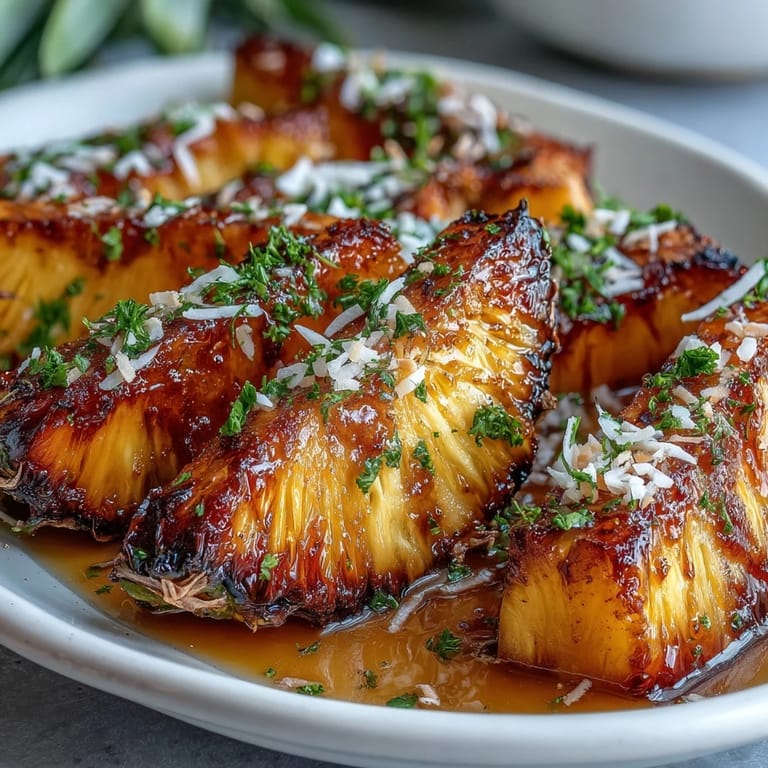
- Slide the baking sheet into the oven for 18–22 minutes, turning the wedges halfway through so both sides get that caramelized treatment. You'll know it's done when the edges are burnished and the fruit looks juicy and tender.
- Toast the coconut while the fruit roasts:
- Put shredded coconut in a dry skillet over medium heat and stir constantly for 2–3 minutes until it turns golden and smells absolutely toasted. The moment it's fragrant, move it to a plate so it stops cooking—burnt coconut is bitter and ruins the whole dish.
- Bring it all together:
- Arrange warm roasted pineapple on a serving platter and sprinkle that toasted coconut over the top right before serving. The warm fruit slightly softens the coconut texture while keeping it just crispy enough to matter.
 Save
Save There was an afternoon when I served this to my grandmother, who grew up in Puerto Rico and had strong opinions about how fruit should be treated. She took one bite and smiled in a way that told me I'd done something right—not because I invented anything revolutionary, but because I respected the pineapple enough to let it be itself, just better.
Why High Heat Matters Here
The 425°F temperature isn't arbitrary—it's hot enough to create the Maillard reaction, which is fancy chemistry speak for caramelization. When you roast fruit at this temperature, the natural sugars break down and reform into new flavor compounds that taste richer and more complex than raw pineapple ever could. I learned this the hard way after trying to roast pineapple at a lower temperature and ending up with warm fruit that tasted like itself, just hotter.
The Lime Matters More Than You Think
Fresh lime juice and zest aren't just garnish—they're structural to this dessert. The acidity cuts through the honey's sweetness and prevents your palate from getting tired after a few bites. I once made this with bottled lime juice out of laziness, and the result was flat and one-dimensional in a way that made me realize how much character those fresh citrus elements were carrying.
Serving Suggestions and Variations
Serve this warm on its own if you want the pineapple's natural juices to be the star, or pair it with vanilla ice cream or Greek yogurt if you're feeling indulgent. The cold creaminess against the warm, caramelized fruit creates a textural conversation that elevates the whole experience. If you're curious about flavor play, try a light sprinkle of chili powder for heat, or drizzle with a touch of dark rum for an adult twist.
- For a vegan version, swap honey for maple syrup and use coconut oil instead of butter—the results are nearly identical and just as delicious.
- Make this ahead by roasting the pineapple earlier in the day and reheating gently in a 350°F oven for about five minutes before serving.
- Don't stress about the size of your pineapple wedges as long as they're consistent; even thickness means even cooking.
 Save
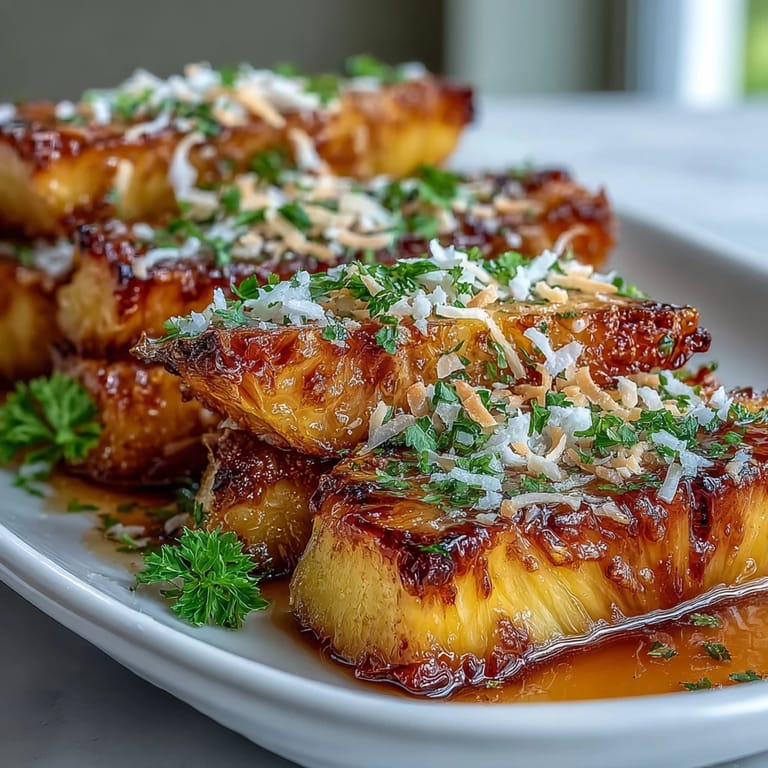
Save This dessert has become my answer to the question of what to bring when you want to show up for people without fussing for hours. It's straightforward, it smells incredible, and it gives you something warm and golden to set on the table that tastes like you care.
Recipe FAQs
- → How do I achieve caramelized pineapple edges?
Roast pineapple wedges at a high temperature (425°F/220°C) for 18–22 minutes, turning once to ensure even caramelization.
- → Can I substitute maple syrup for honey?
Yes, maple syrup can replace honey for a vegan-friendly glaze with a slightly different sweetness profile.
- → How is the toasted coconut prepared?
Toast shredded coconut in a dry skillet over medium heat for 2–3 minutes, stirring frequently until golden and fragrant.
- → What are good accompaniments for this dish?
Serve warm pineapple with vanilla ice cream or Greek yogurt to enhance its tropical flavor and add creaminess.
- → Is there a way to add a spicy note to this dish?
Sprinkle a pinch of chili powder over the roasted pineapple for a subtle, spicy twist that balances the sweetness.