 Save
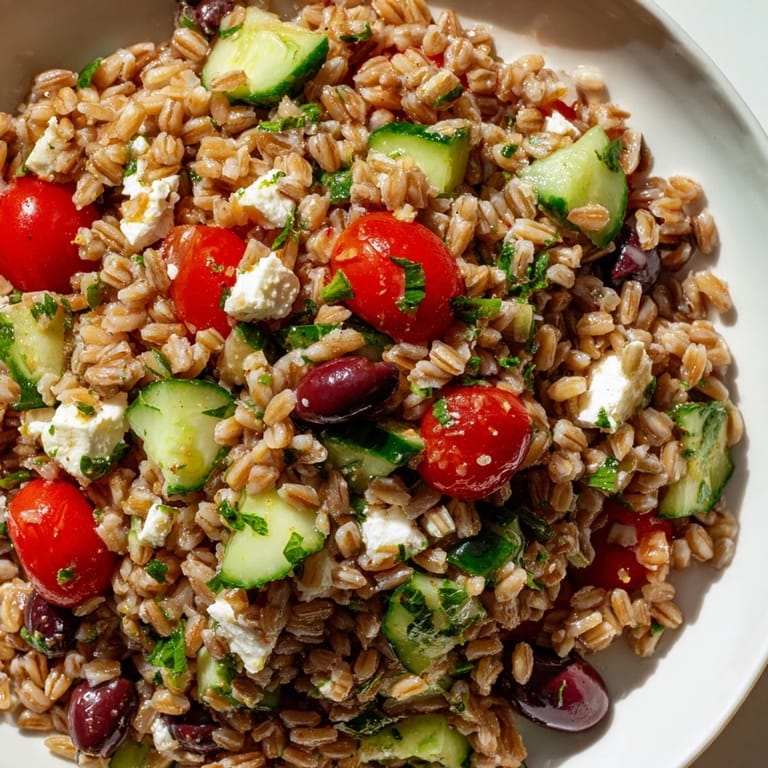
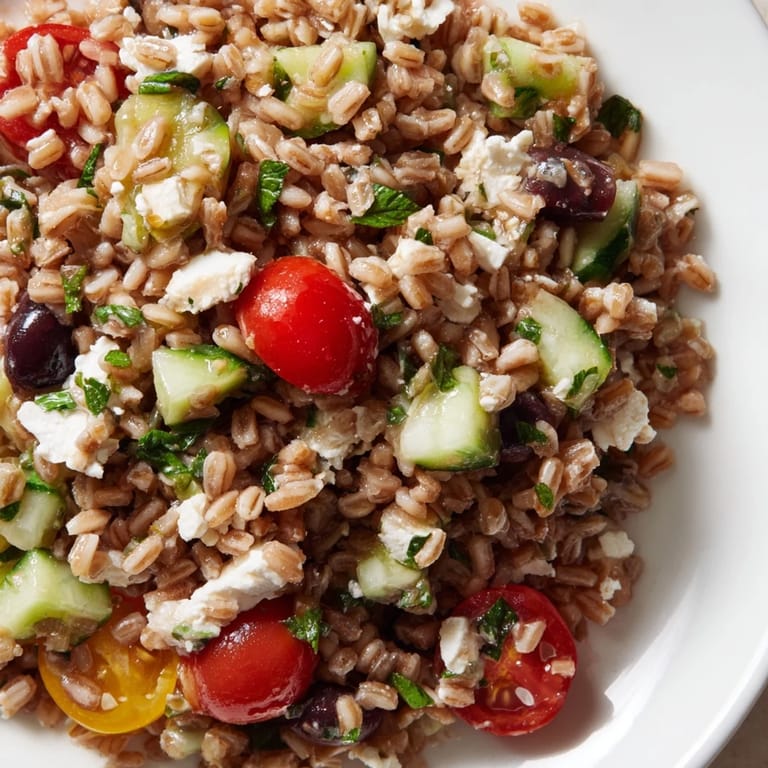
Save My neighbor brought this to a block party last summer, and I hovered near the bowl like a guard dog until I could scrape up thirds. The farro had this wonderful chew, and the lemon dressing clung to every grain. I cornered her by the grill and demanded the recipe, then made it twice that week. It's become my go-to whenever I need something that looks impressive but doesn't chain me to the stove.
I packed this for a hiking trip once, and my friend who claims to hate grain salads ate half the container before we even reached the trailhead. She kept muttering about how the olives and feta made it taste like vacation. By the time we stopped for lunch, I was scraping the bottom and she was taking photos of the empty bowl like it was some kind of betrayal. Now she texts me every few weeks asking if I've made more.
Ingredients
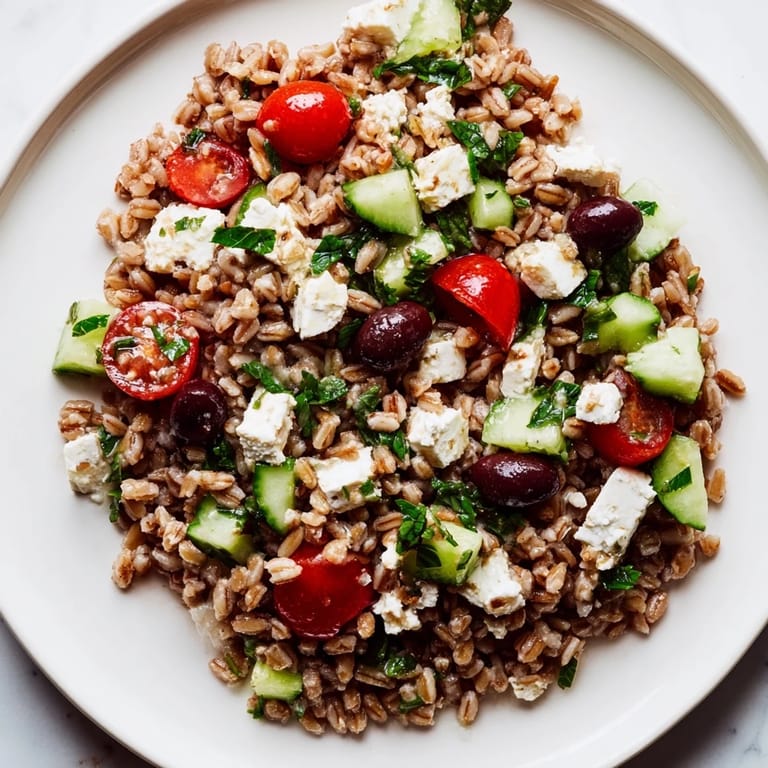
- Farro: This ancient grain has a nutty flavor and stays pleasantly chewy even when cold, unlike quinoa which can turn gummy. Rinse it well to remove any dust or debris before cooking.
- Cherry tomatoes: Their concentrated sweetness bursts against the briny olives and creates little pockets of juice throughout the salad. Halve them so the flavor distributes instead of rolling around whole.
- Cucumber: I prefer English cucumbers because they have fewer seeds and less water, which keeps the salad from getting soggy after a few hours in the fridge.
- Red onion: Chop it fine so you get flavor without overpowering crunch, and if it's too sharp, soak the pieces in cold water for five minutes before adding.
- Fresh parsley and mint: The herbs add bright, grassy notes that wake up the whole dish. Mint is optional, but it makes the salad taste more summer and less like something from a deli case.
- Kalamata olives: Their meaty texture and wine-dark brininess anchor all the lighter flavors. Slice them so every forkful gets a bit of that salty punch.
- Feta cheese: Crumble it yourself from a block instead of buying pre-crumbled, which is coated in anti-caking powder and tastes like chalk.
- Extra-virgin olive oil: Use something you'd actually want to dip bread into, because this is a simple dressing and there's nowhere for cheap oil to hide.
- Fresh lemon juice: Bottled juice tastes flat and bitter compared to the bright zing of a freshly squeezed lemon. Roll the lemon on the counter before cutting to get more juice out.
- Dried oregano: It adds that classic Mediterranean warmth without needing to hunt down fresh oregano, which can be oddly hard to find.
- Garlic: Mince it fine or use a press so it dissolves into the dressing instead of leaving harsh chunks that ambush you mid-bite.
Tired of Takeout? 🥡
Get 10 meals you can make faster than delivery arrives. Seriously.
One email. No spam. Unsubscribe anytime.
Instructions
- Cook the farro:
- Rinse the farro under cold water until it runs clear, then simmer it with water and salt until it's tender but still has a pleasant chew, about 20 to 25 minutes. Drain off any extra water and spread it on a plate to cool faster, or you'll be waiting forever and everything else will get warm and sad.
- Prep the vegetables:
- While the farro cools, chop your tomatoes, cucumber, onion, and herbs, keeping your cuts roughly the same size so every bite has balance instead of one giant chunk of cucumber stealing the show. Toss everything into a big bowl along with the olives and feta.
- Make the dressing:
- Whisk together the olive oil, lemon juice, oregano, garlic, salt, and pepper in a small bowl until it looks creamy and emulsified instead of separated and oily. Taste it with a piece of lettuce or your finger, because a good dressing should make you want to drink it.
- Combine and toss:
- Pour the dressing over the cooled farro and vegetables, then toss gently with a big spoon or clean hands until everything is coated and glistening. Be gentle with the feta so it doesn't turn into a mushy paste.
- Chill and serve:
- Let the salad hang out in the fridge for at least 15 minutes so the flavors can mingle and the farro can soak up some of that lemony dressing. Taste again before serving and add more salt, lemon, or olive oil if it needs it.
 Save
Save I brought this to a family reunion where my aunt usually dominates the buffet table with her famous potato salad. She took one bite, paused, then asked me to write down the recipe on a napkin. My cousin leaned over and whispered that this was the first time in 30 years anyone had asked for a recipe that wasn't Aunt Linda's. I framed that napkin.
Storing and Making Ahead
This salad keeps beautifully in an airtight container in the fridge for up to four days, though the cucumbers may release a bit of water over time. If you're making it more than a day ahead, hold back the cucumbers and feta, then stir them in an hour before serving so they stay crisp and creamy. The flavors deepen as it sits, so day-two salad often tastes better than day-one salad. Let it come to room temperature for about 20 minutes before serving if you want the olive oil to loosen up and the flavors to wake up.
Variations and Substitutions
If you can't find farro or need a gluten-free option, substitute with cooked quinoa, brown rice, or even couscous, though the texture won't have that same satisfying chew. For a heartier meal, toss in grilled chicken, shrimp, or chickpeas to boost the protein. Swap the feta for goat cheese if you want something tangier, or leave out the cheese entirely and add more olives and a handful of toasted pine nuts for a vegan version. Roasted red peppers, marinated artichoke hearts, or sun-dried tomatoes all fold in beautifully if you want to stretch the salad or use up what's lurking in your fridge.
Serving Suggestions
This salad shines as a light lunch on its own, especially with a hunk of crusty bread to soak up any dressing pooled at the bottom of the bowl. It's also a reliable side dish for grilled lamb, chicken souvlaki, or baked fish, and it travels well to potlucks and picnics without needing to be kept icy cold. Pair it with a crisp white wine like Sauvignon Blanc or a chilled rosé if you're feeling fancy, or just serve it with iced tea and call it a summer afternoon.
- Serve it on a bed of arugula or spinach for extra greens and a peppery bite.
- Top each portion with a drizzle of balsamic glaze for a touch of sweetness that plays off the salty feta.
- Pack it in mason jars with the dressing on the bottom and the grains and veggies layered on top for grab-and-go lunches that don't get soggy.
 Save
Save This salad has rescued me from more last-minute dinner panics than I can count, and it always makes people think I had my act together. Keep the ingredients on hand, and you'll never be stuck serving sad takeout again.
Recipe FAQs
- → Can I prepare this salad in advance?
Yes, you can prepare all components ahead and refrigerate separately. Toss with dressing just before serving to keep the farro from becoming mushy. The salad actually tastes better after chilling for at least 15 minutes, as flavors meld together.
- → How do I cook farro properly?
Rinse farro under cold water first, then combine with water and salt in a ratio of about 1 cup farro to 3 cups water. Bring to a boil, reduce heat, cover, and simmer 20-25 minutes until tender but still chewy. Drain excess water and cool completely before mixing with other ingredients.
- → What are good substitutes for feta cheese?
Crumbled goat cheese, ricotta salata, or halloumi work beautifully for a different flavor profile. For a vegan version, use dairy-free feta or add roasted chickpeas for protein and creaminess. Adjust salt levels based on your cheese choice.
- → How can I make this salad more filling?
Serve alongside grilled chicken, fish, or shrimp for a complete meal. You can also add roasted vegetables like zucchini or bell peppers, white beans, or diced artichoke hearts for extra substance and nutrition.
- → What dressing alternatives work with this salad?
The lemon-oregano dressing is classic, but try balsamic vinaigrette, tahini-lemon dressing, or red wine vinaigrette. A simple olive oil and garlic drizzle also complements the Mediterranean flavors beautifully.
- → Does this salad contain gluten?
Yes, farro is a wheat product containing gluten. For a gluten-free version, substitute with quinoa, millet, or couscous alternatives like corn-based varieties. Always verify labels for cross-contamination if you have celiac disease or gluten sensitivity.