 Save
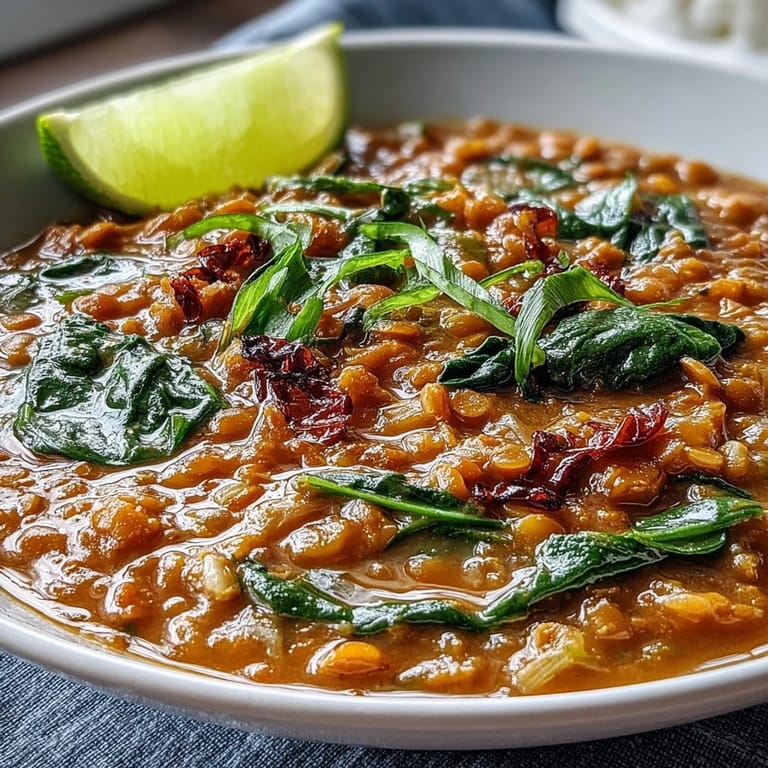
Save One weeknight, my flatmate came home looking absolutely worn out, and I realized I had maybe twenty minutes to pull together something that felt both nourishing and special. I opened the cupboard, found red lentils, coconut milk, and a handful of spices, and something just clicked. That one-pot dahl became our Thursday night ritual, the kind of meal that fills your kitchen with warmth and your bowl with actual comfort. There's something almost magical about how a simple combination of aromatics and spices transforms humble lentils into something deeply satisfying.
I made this for a small dinner party once, nervous because I was cooking vegan for the first time in front of friends who weren't. As that lime-bright dahl bubbled away on the stove, filling the room with cumin and coriander, I watched skepticism turn into genuine appreciation. Someone asked for seconds, then thirds, and suddenly it wasn't about what was missing from the meal—it was about what made it complete on its own terms.
Ingredients
- Red lentils (1 cup): These split quickly into creamy softness, creating a naturally thick sauce without any cream or butter—they're the foundation that makes everything work.
- Yellow onion (1 medium): Dicing it finely lets it almost disappear into the base, building sweetness and depth that balances the spices beautifully.
- Garlic and ginger (3 cloves and 1-inch piece): The aromatic duo that wakes up your palate; fresh ginger especially adds a warmth that powdered versions never quite capture.
- Curry powder, cumin, turmeric, coriander (1 tbsp plus individual spices): Each spice has its own voice, and toasting them together for just thirty seconds unlocks flavors that feel almost impossible in raw form.
- Cayenne pepper (1/4 tsp optional): Heat is personal; start conservative and add more at the end if your crowd enjoys it, rather than regretting it halfway through.
- Coconut milk and vegetable broth (1 can plus 2.5 cups): The liquid ratio matters more than you'd think—too much and it becomes soup, too little and the lentils won't soften evenly, so trust the measurements here.
- Fresh spinach (3 cups): Baby spinach wilts almost instantly and adds brightness without competing with the warm spices; frozen works in a pinch but add it earlier so it releases water gradually.
- Tomato (1 medium diced): This adds subtle acidity that lifts the whole dish and prevents it from tasting one-dimensional.
- Lime and cilantro (1 lime plus fresh bunch): Don't skip these garnishes; they're not decoration but rather the final note that ties everything together.
- Coconut oil or olive oil (1 tbsp): Either works, though coconut oil echoes the milk's flavor and adds richness without heaviness.
Tired of Takeout? 🥡
Get 10 meals you can make faster than delivery arrives. Seriously.
One email. No spam. Unsubscribe anytime.
Instructions
- Heat your oil and build the base:
- Warm the coconut oil over medium heat, then add your diced onion. Watch it transform from opaque to soft and glassy over three to four minutes—this is your aromatics developing their sweetness. Once it smells almost candy-like, you'll know you're ready for the next step.
- Wake up the garlic and ginger:
- Stir in your minced garlic and grated ginger, letting them cook just long enough to become fragrant without browning. The kitchen will smell absolutely alive at this moment; trust that signal.
- Toast your spices:
- Add all your spices at once and stir constantly for about thirty seconds. You're not cooking them deeply here, just releasing their essential oils so they bloom into the oil rather than sitting dormant in the lentils.
- Combine lentils and tomato:
- Pour in your rinsed red lentils and diced tomato, stirring to coat everything in the spiced oil. This moment of coating ensures every lentil will absorb flavor as it cooks.
- Add liquids and bring to a simmer:
- Pour in the coconut milk and vegetable broth, stirring gently to combine. Bring everything to a gentle boil, watching for the surface to shimmer and bubble—not a rolling boil, which can break down the lentils unevenly.
- Simmer low and slow:
- Lower the heat, cover the pot, and let it bubble gently for twenty to twenty-five minutes. Stir occasionally so nothing sticks to the bottom, and you'll watch the lentils soften and the liquid reduce into a creamy sauce. Toward the end, the mixture should look luscious and cohesive, not watery.
- Fold in spinach and finish:
- Add the fresh spinach and stir gently for about two minutes until it's completely wilted and has disappeared into the warm dahl. Taste at this point and adjust seasoning—some broths are saltier than others, and you might want a pinch more lime juice or spice.
- Serve with brightness:
- Ladle the dahl into bowls while it's still steaming, and let everyone squeeze lime wedges and scatter cilantro over their own bowls. That final fresh citrus and herb component transforms comfort food into something that feels both grounded and alive.
 Save
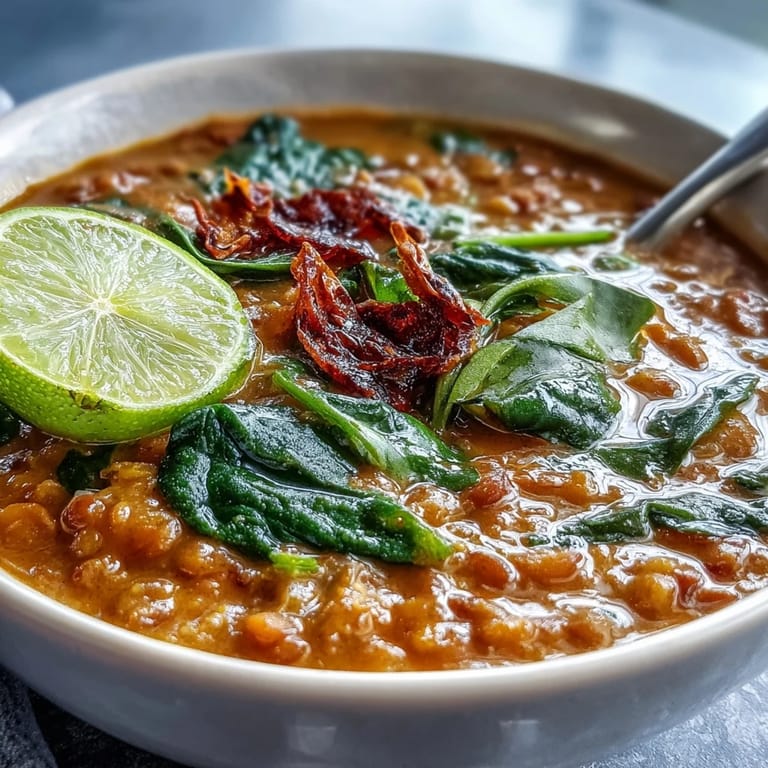
Save The first time someone brought a container of this to a potluck and mentioned it was vegan, I watched people genuinely surprised when they realized it tasted that rich and satisfying without dairy. That moment taught me that comfort food isn't about restriction or what you're missing—it's about what you intentionally choose to put in the bowl.
Scaling and Doubling
This recipe doubles beautifully if you're feeding more people or want leftovers that actually taste better the next day as the flavors deepen. Just use a larger pot and add a few extra minutes to the simmering time so the lentils have room to cook evenly. I've made six servings in a Dutch oven without any issues, and honestly, the dahl seems to improve as it sits.
Serving and Pairing
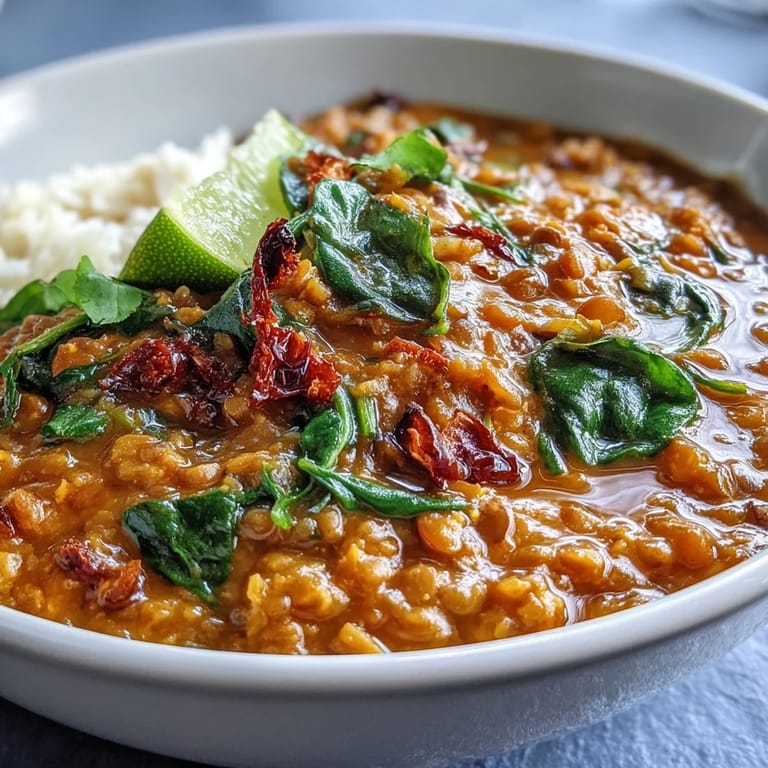
On its own, this dahl is complete and satisfying, but it also transforms into something entirely different when you serve it alongside warm basmati rice or fluffy naan. The rice absorbs the sauce and becomes almost risotto-like, while naan lets you scoop and wrap, turning dinner into something more interactive and playful. I've also served it over quinoa for a protein boost, which works surprisingly well.
Making It Your Own
The beauty of dahl is that it's inherently flexible and forgiving, inviting you to play with what you have on hand. One evening when my fridge was nearly empty, I added diced carrots and bell peppers, and suddenly it became a completely different dish with more texture and vegetable substance. The spice level is entirely in your hands too; I've learned to taste as I go rather than commit to the full quarter teaspoon of cayenne upfront, letting people customize their own heat.
- Add cooked chickpeas for extra protein and earthiness without changing the cooking time.
- Experiment with different aromatics like shallots instead of onion, or add a splash of coconut vinegar for tanginess.
- Stir in a handful of diced carrots, bell peppers, or even sweet potato alongside the tomato if you want more substance and texture.
 Save
Save This dahl has become the meal I make when I want to feel nourished without fuss, or when I'm cooking for people and want them to feel genuinely cared for. It's proof that simple, honest food made with intention and a few good spices can be more satisfying than anything fancy.
Recipe FAQs
- → How long does it take to cook the lentils?
The lentils simmer for about 20-25 minutes until they become soft and creamy, perfect for soaking up the flavors of the spices and coconut milk.
- → Can I adjust the spice level?
Yes, you can increase or reduce cayenne pepper according to your preferred heat level without affecting the main flavors.
- → What can I serve alongside this dish?
It pairs well with basmati rice or warm naan bread, which help balance the creamy texture and intense spices.
- → Is it possible to add extra protein?
Adding cooked chickpeas along with the lentils boosts the protein content and adds texture variety.
- → How should I store leftovers?
Store any leftovers in an airtight container in the refrigerator for up to three days. Reheat gently on the stove or microwave.