 Save
Save My neighbor Sarah handed me a takeout container one summer afternoon, insisting I try her soba noodle bowl before the heat made cooking feel impossible. I'll never forget how the cold noodles felt almost rebellious in July, how the sesame dressing tasted like a secret I'd been missing. That one bowl changed how I thought about lunch, turning what could've been a tired desk meal into something I actually craved. Now whenever I make this, I taste that moment of discovery, that instant when food stopped being obligation and became pure relief.
I made this for my friend Marcus on a sticky evening when he'd just finished his first week of night shifts. He sat at my kitchen counter looking absolutely drained, and I watched his whole face change after the first bite, like the cool noodles and bright vegetables were somehow resetting his entire mood. He ate two bowls and asked for the recipe before he even finished, which tells you everything you need to know about how satisfying this actually is.
Ingredients
- Dried soba noodles (250 g): These buckwheat beauties have a subtle earthiness that regular pasta just can't match, and they cook in about 5 minutes so don't wander off or you'll overcook them.
- Shelled edamame (1 cup): Fresh or frozen works equally well here, and they add a pop of protein and that satisfying bite that makes every spoonful feel complete.
- Cucumber (1 medium): Julienne it thin so it gets silky against the noodles, and the cooler it is straight from the fridge, the better.
- Carrots (2 medium): Peeled and cut into matchsticks, they add sweetness and that gentle crunch that keeps things interesting.
- Scallions (2): Slice them thin and they become like little flavor fireworks scattered across each bowl.
- Toasted sesame seeds (2 tbsp): Don't skip the toasting step if yours aren't already toasted, because the difference between raw and toasted sesame is honestly life-changing.
- Fresh cilantro or mint (1/4 cup, optional): This is your permission slip to make the bowl feel like yours, so add it if herbs make you happy.
- Soy sauce (3 tbsp): Use tamari if gluten is a concern, though the regular stuff is what the dressing was really built around.
- Rice vinegar (2 tbsp): This gentle acid brightens everything without being sharp or aggressive about it.
- Toasted sesame oil (1 tbsp): A little goes a long way here because sesame oil has opinions, and those opinions are delicious.
- Tahini or smooth peanut butter (1 tbsp): This is what makes the dressing creamy and luxurious instead of just a salty liquid.
- Honey or maple syrup (1 tbsp): A small amount of sweetness balances the salt and acid into something you'll actually think about all week.
- Fresh ginger (1 tsp, grated): This wakes everything up from the inside, so don't be shy with it.
- Garlic clove (1 small, minced): One is enough, trust me, because garlic can take over if you let it.
- Water (1 tbsp, plus more as needed): Sometimes the dressing needs a little loosening up so it coats the noodles instead of pooling at the bottom.
Tired of Takeout? 🥡
Get 10 meals you can make faster than delivery arrives. Seriously.
One email. No spam. Unsubscribe anytime.
Instructions
- Get the noodles going:
- Bring a pot of water to a rolling boil and cook your soba noodles according to the package instructions, usually around 4 to 5 minutes. The moment they're tender, drain them and rinse under cold running water, using your hands to gently separate them so they don't clump together.
- Wake up the edamame:
- While the noodles finish, drop your edamame into salted boiling water and let them blanch for just 2 to 3 minutes until they're heated through and still bright green. Drain and set them aside, and they'll cool down pretty quickly on their own.
- Build the dressing:
- Grab a small bowl and whisk together the soy sauce, rice vinegar, sesame oil, tahini, honey, ginger, and garlic until it's smooth and cohesive. If it looks thick, add water a teaspoon at a time until it's the consistency of something you'd actually want to pour.
- Prep your vegetables with intention:
- Julienne your cucumber and carrots so they're thin enough to bend slightly, and slice your scallions so they're almost see-through. This is where your knife skills become part of the recipe, because uniform cuts mean everything cooks and eats evenly.
- Dress the noodles:
- Put your cooled soba noodles into a large bowl and pour about half the dressing over them, tossing gently so each noodle gets a coating without breaking. This step matters because the noodles need time to absorb some of that sesame flavor.
- Build your bowls with care:
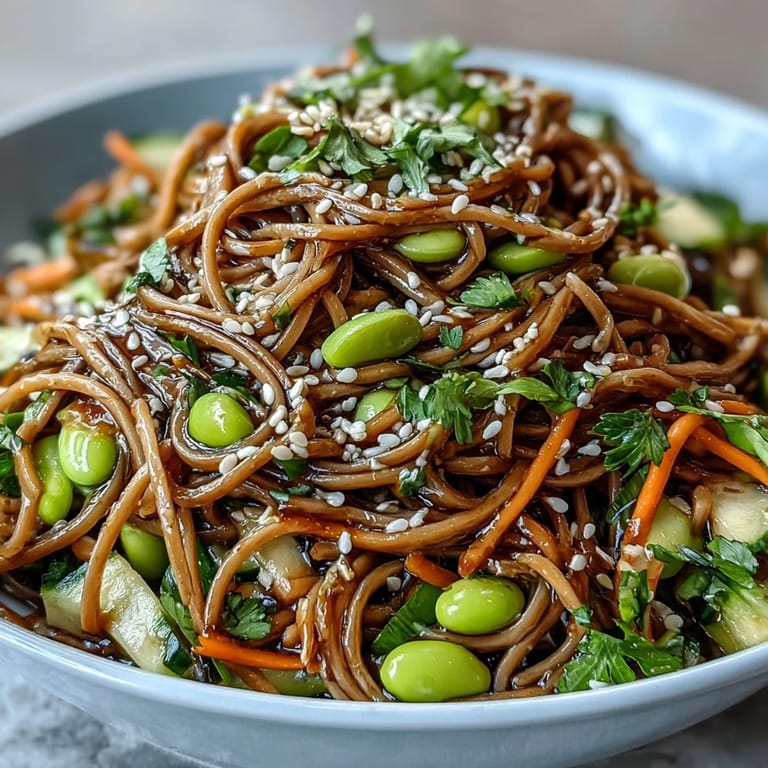
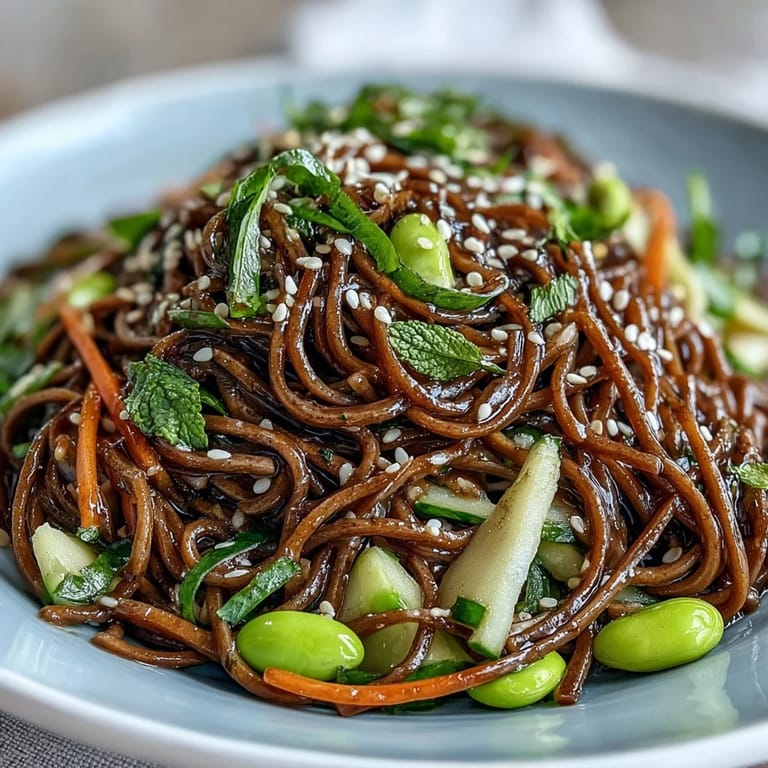
- Divide the dressed noodles among four bowls, and then arrange your edamame, cucumber, and carrots on top in whatever pattern makes you happy. Pour a little of the remaining dressing over each bowl, letting it pool around the vegetables.
- Finish and serve:
- Scatter toasted sesame seeds across the top and add fresh herbs if you're using them, then serve immediately while everything is still cool and crisp.
 Save
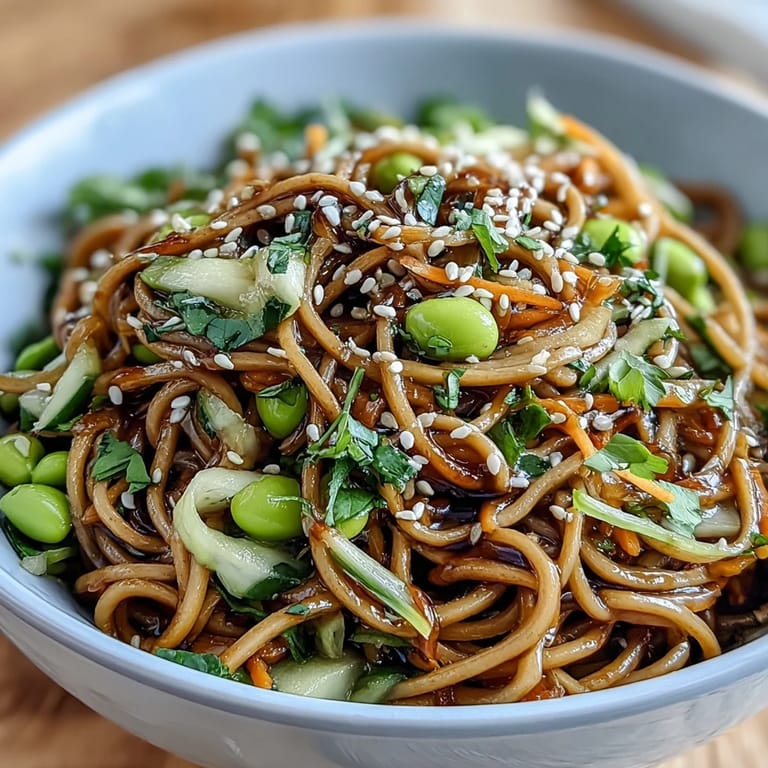
Save There's something about serving bowls at the table that makes people slow down and actually look at what they're eating. I watched my sister take a photo of her bowl before eating it, and I realized that sometimes food doesn't just nourish you, it makes you want to pay attention to the moment you're in.
When You Want to Add Protein
The beauty of this bowl is that it's already quite filling with the edamame, but if you're hungry or feeding someone with bigger appetites, you have options. A soft-boiled egg sliced in half and settled on top adds creaminess and richness, or grilled tofu cut into cubes brings earthiness that complements the sesame dressing beautifully. I've also seen people add leftover rotisserie chicken torn into bite-sized pieces, which turns this into something heartier while keeping that fresh, summery feel.
Making It Your Own
The vegetables here are a starting point, not a rulebook, so feel free to swap in whatever sounds good to you. Snap peas bring a bright crunch, bell peppers add sweetness and color, and thinly sliced radishes give you this peppery snap that keeps things interesting. The only thing I'd caution is to keep raw vegetables raw and crisp instead of adding anything cooked, because the whole point is that temperature and texture contrast that makes you feel alive.
Storage and Make-Ahead Tips
This bowl is genuinely better eaten the moment it's assembled, but I understand that's not always realistic. You can cook the noodles and prepare the vegetables the night before, storing them separately in airtight containers and assembling everything fresh when you're ready to eat. The dressing keeps for about a week in the fridge and actually gets better as the flavors meld, so that's one less thing to stress about.
- Never dress the noodles more than a few hours ahead or they'll get mushy and lose their appeal.
- Keep the sesame seeds separate until the very last moment because they'll lose their crunch if they sit in any moisture.
- If you're packing this for lunch, dress the bowl right before you eat it rather than at home, using a small container of dressing to shake over everything.
 Save
Save This bowl has become my answer to almost every mealtime question, the go-to that never disappoints and always feels like I actually took care of myself. Make it once and I promise you'll understand why it showed up on my kitchen counter that summer day and never really left.
Recipe FAQs
- → Are soba noodles gluten-free?
Traditional soba noodles contain both buckwheat and wheat flour. For a gluten-free version, look for 100% buckwheat noodles and substitute tamari for soy sauce.
- → Can I make this bowl ahead of time?
Yes! Prepare the components separately and store in the refrigerator. Toss with dressing just before serving to maintain the best texture and freshness.
- → What vegetables work best in this bowl?
Cucumber, carrots, and scallions provide great crunch and color. You can also add snap peas, bell peppers, radishes, or shredded cabbage based on what's in season.
- → How do I prevent soba noodles from sticking together?
Rinse the cooked noodles thoroughly under cold water immediately after draining. This removes excess starch and keeps them separate. Tossing with a small amount of sesame oil also helps.
- → Can I add protein to this bowl?
Absolutely! Grilled tofu, baked teriyaki chicken, shrimp, or a soft-boiled egg make excellent protein additions. Edamame already provides 13 grams of plant-based protein per serving.
- → What can I substitute for tahini?
Smooth peanut butter, almond butter, or even sunflower seed butter work well as alternatives. Each brings a slightly different flavor profile but maintains the creamy texture.