 Save
Save The first time I made kabsa, my kitchen filled with such a cloud of spice-scented steam that my roommate thought something was burning. It wasn't—it was the cardamom, cinnamon, and cloves hitting the hot oil all at once, a fragrance so alive it made my chest tight with anticipation. I'd learned the recipe from a friend's grandmother who insisted that kabsa wasn't just about feeding people; it was about telling them they mattered. That day, I understood why.
I made this for my sister's engagement party, and watching people go quiet after that first bite—truly quiet, just eating and nodding—taught me that sometimes the best celebration isn't loud, it's delicious. She still asks me to make it every time her friends visit.
Ingredients
- 1 kg bone-in lamb or chicken pieces: The bones add richness that boneless meat simply can't deliver; lean toward lamb if you want deeper, more luxurious flavors.
- 1 tbsp vegetable oil: Any neutral oil works, but keep the heat medium-high so the onions turn golden without burning.
- 1 large onion, finely sliced: This is your flavor foundation; don't rush this step or skip the golden color.
- 3 cloves garlic, minced: Mince it fine so it dissolves into the oil rather than leaving harsh chunks.
- 2 tsp ground cumin: The warm, earthy backbone of the whole dish.
- 2 tsp ground coriander: Bright and slightly citrusy; don't substitute or reduce this.
- 1 ½ tsp ground cinnamon: Adds sweetness and depth that keeps people guessing what makes it taste so good.
- 1 ½ tsp ground black pepper: Fresh ground is worth the extra minute; pre-ground loses its punch.
- 1 tsp ground turmeric: Gives the rice a gentle golden hue and earthy warmth.
- 1 tsp ground cardamom: This is the spice that makes people stop and ask what you did; don't omit it.
- ½ tsp ground cloves: Just enough to add mystery without overpowering.
- ½ tsp ground allspice: A quiet player that brings everything into focus.
- 2 dried bay leaves: Add them whole; you'll fish them out later.
- 1 dried black lime (loomi), pierced (optional): If you can find it, pierce it with a knife so the flavor releases into the broth; it's the secret that makes this taste authentic.
- 2 medium tomatoes, chopped: Fresh is better, but canned works if that's what you have.
- 1 medium carrot, grated: It softens into the broth and adds natural sweetness.
- 3 cups basmati rice, rinsed and soaked 20 minutes: Rinsing removes the starch so your rice stays separate; soaking helps it cook evenly.
- 5 cups chicken or lamb stock: Use homemade if you can, but good quality store-bought won't disappoint.
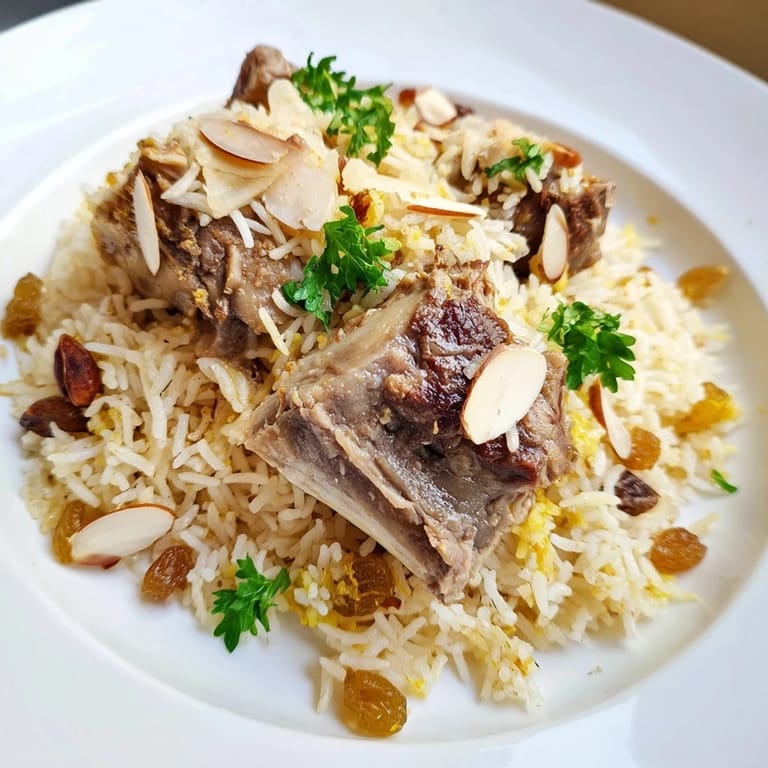
- ½ cup golden raisins: They plump up and turn glossy as they cook; scatter them on top just before the final simmer.
- ½ cup slivered almonds, toasted: Toast them yourself in a dry pan for 3-4 minutes until fragrant; it makes all the difference.
- ¼ cup fresh parsley, chopped (optional): A bright finish if you want it, but not essential.
- Salt, to taste: Taste as you go, especially since your stock might already be seasoned.
Tired of Takeout? 🥡
Get 10 meals you can make faster than delivery arrives. Seriously.
One email. No spam. Unsubscribe anytime.
Instructions
- Build your aromatics:
- Heat the oil in your heavy-bottomed pot over medium-high heat and add the sliced onions. You want them to turn a deep golden color, which takes about 5-7 minutes of patient stirring—this is where the foundation of flavor begins.
- Wake the spices:
- Once your onions are golden, add the minced garlic and cook for just 1 minute until it smells incredible. Then add all your spices, bay leaves, and black lime if using, and stir constantly for 1-2 minutes to release their essential oils; you should smell every layer of warmth at this point.
- Brown the meat:
- Add your meat pieces and let them sear on all sides for about 8 minutes total, stirring occasionally so they don't stick. You're not looking for a perfect crust, just color and contact with all those spices.
- Add the vegetables:
- Stir in your chopped tomatoes and grated carrot, then cook for 4-5 minutes, letting them start to soften into the spice mixture and deepen the color of everything.
- Simmer the meat tender:
- Pour in your stock, bring everything to a boil, then lower the heat to low, cover with a lid, and let it simmer gently for 35-40 minutes if using chicken, or a full 60 minutes for lamb until the meat is so tender it nearly falls off the bone. This is the point where patience becomes flavor.
- Drain and prepare for rice:
- Remove the meat with a slotted spoon and set it aside on a warm plate, keeping it covered. The broth left behind is liquid gold.
- Add the rice:
- Stir your drained, soaked rice and salt into the broth, then nestle the meat back into the top of the rice. The rice will cook underneath the meat, absorbing all those flavors.
- Let it finish cooking:
- Scatter the raisins across the top, cover the pot tightly, reduce heat to low, and cook undisturbed for 25-30 minutes until the rice is fluffy and all the liquid has been absorbed. You'll know it's ready when you hear a few grains popping gently against the bottom of the pot.
- Fluff and finish:
- Remove from heat, discard the bay leaves and black lime, and gently fluff everything with a fork to separate the grains. Transfer to a serving platter and crown it with toasted almonds and fresh parsley.
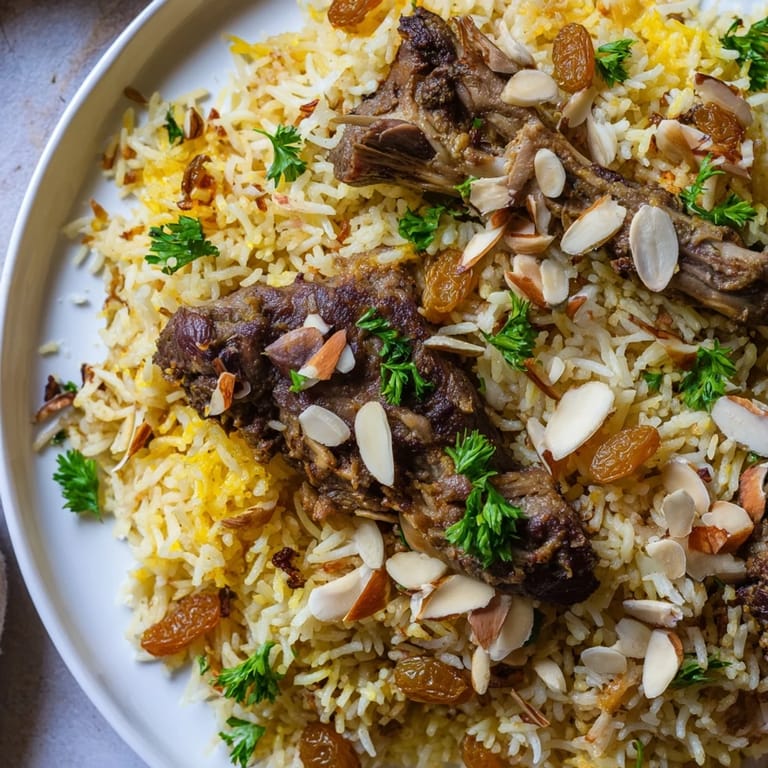 Save
Save What strikes me most about kabsa is how it transforms a dinner table into something ceremonial without anyone planning it that way. There's a generosity in this dish, a sense that whoever eats it has been honored.
The Story Behind the Spices
Every spice in this dish has traveled a long way to get to your kitchen, and that journey matters. The cardamom comes from Kerala, the cinnamon from Ceylon, the cloves from the Spice Islands—and when you combine them, you're not just making dinner, you're tasting history. The black lime, if you can find it, is grown and dried in the Gulf, and it brings a tartness that no other ingredient can replace, a flavor so distinctly Middle Eastern that once you taste it, you'll understand why it's worth seeking out.
Timing and Temperature Matter
The biggest mistake I made early on was cooking the whole dish too fast, thinking speed meant efficiency. But kabsa needs low, gentle heat once the stock goes in—it's not stew, and it's definitely not a rice cooker situation. The meat needs time to become tender, and the rice needs time to drink in all that spiced broth without the bottom layer burning. If your kitchen runs hot or your burner is aggressive, you might need to add a few extra minutes or even place a heavy diffuser under the pot.
Serving and Sides
Kabsa is almost complete as a one-pot meal, but it loves company. A simple tomato-and-cucumber salad with lemon dressing cuts through the richness, and yogurt—especially a thick, tangy kind—becomes a cooling counterpoint to all those warm spices. Some people serve it with a raw onion and lemon wedge on the side, which feels sharp and cleansing between bites. The dish is substantial enough to stand alone, but these light accompaniments make it feel balanced and generous.
- A crisp salad is your friend here; it refreshes the palate between bites.
- Yogurt or labneh adds creaminess without needing dairy mixed into the rice itself.
- If you have fresh herbs like cilantro or mint, scatter them on top just before serving for brightness.
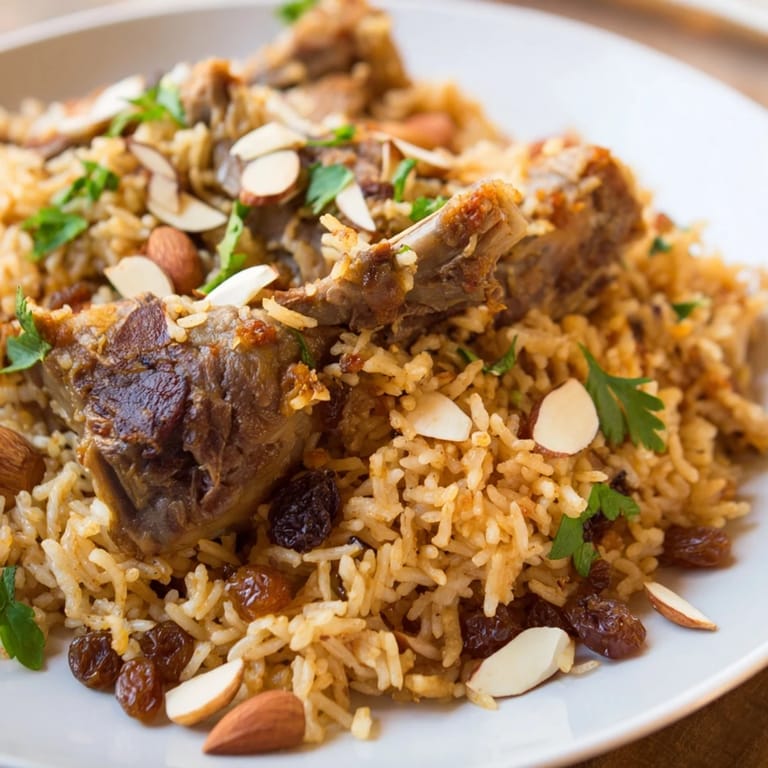 Save
Save Every time I make kabsa, I'm reminded that the best meals aren't about perfection—they're about intention and care, the decision to slow down and let flavors speak for themselves. Make this for people you want to feed well.